
Key takeaways
What's inside
Best meat for sous vide cooking can transform tough cuts into gourmet masterpieces, yet many home chefs struggle with choosing raw options that deliver ideal flavor and tenderness. This comprehensive guide helps you select perfect cuts by evaluating fat content, thickness, and collagen breakdown for unmatched culinary success.
🛒 Best Price Today on Amazon
Prime members get fast, free shipping on everything above, plus member-only deals. New members get a 30-day free trial — cancel anytime.
How to Choose the Best Meat for Sous Vide
Selecting the best meat for sous vide cooking requires understanding how low temperature water baths interact with muscle tissue over extended periods. You need to consider specific physical properties like thickness, fat distribution, and connective tissue to achieve restaurant quality results every single time you cook.
As an Amazon Associate we earn from qualifying purchases at no extra cost to you. Product prices and availability are accurate as of the date shown and are subject to change.


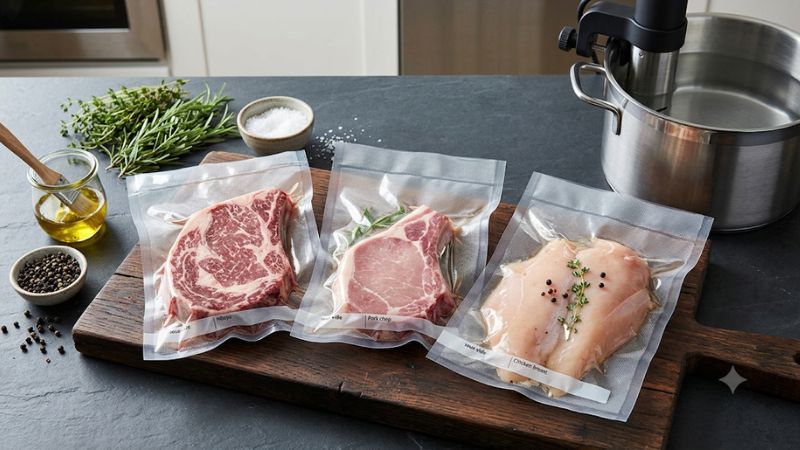
Fat Content and Marbling Quality
Intramuscular fat adds essential moisture and rich flavor during low temperature cooking processes. High marbling levels protect protein fibers from drying out during long water bath sessions, which produces juicy results. Look for cuts with fine white lines distributed evenly throughout the muscle rather than thick outer fat caps.
Lean cuts require precise timing because excessive bath exposure can weaken muscle structure without adding richness. Choosing meats with rich internal marbling guarantees that rendering fat bathes the protein continuously. This process yields exceptional tenderness while enhancing the natural flavor profile of your final dish.
Thickness and Cut Dimensions
Thicker cuts perform significantly better in precision temperature cooking compared to thin steaks. A thickness of at least one and a half inches allows the heat to penetrate slowly and evenly toward the center without overcooking outer layers. Thin cuts often overcook during the final searing phase in hot cast iron pans.
Purchasing thick roast portions or custom cut chops ensures that your vacuum sealed bags lie flat in the rack. Uniform shape promotes consistent heat transfer across the entire piece of protein. This structural stability prevents cold spots and produces uniform edge to edge doneness across your meal.
Connective Tissue and Collagen Levels
Tough cuts laden with heavy connective tissue undergo a magnificent transformation inside a steady water bath. Collagen gradually dissolves into gelatin at sustained lower temperatures, turning inexpensive portions into silky delicacies. Selecting cuts high in collagen delivers maximum value for budget conscious home cooks.
Conversely, tender cuts like beef tenderloin require much shorter cooking times because they contain minimal collagen. Prolonged exposure for tender cuts can result in mushy textures that lack satisfying bite. Matching your cooking duration to the tissue structure of each cut remains essential for success.
Bone In Versus Boneless Options
Bone in cuts offer excellent flavor depth and visually impressive presentation for special dinner occasions. However, exposed bone edges can puncture vacuum seal bags during long thermal processing cycles. You must wrap sharp bone edges in parchment paper or choose boneless options for convenience and safety.
Boneless cuts allow tighter vacuum seals and more uniform contact between the bag and heating liquid. This seamless contact ensures rapid thermal conductivity throughout the cooking duration. Selecting boneless portions simplifies storage inside your bath vessel while minimizing the risk of bag leaks.
Top Picks for Sous Vide Cooking
Exploring top protein selections highlights how different cuts respond to steady thermal immersion. The following recommendations represent prime choices available for home chefs seeking reliable results, superior texture, and deep flavor development across various price points and culinary preparation styles.
| Cut Name | Ideal Temperature | Bath Time | Best Feature |
| Beef Ribeye Steak | 137 Degrees F | 2 to 3 Hours | Rich Fat Rendering |
| Beef Chuck Roast | 135 Degrees F | 24 to 36 Hours | Extreme Tenderness |
| Thick Pork Chops | 140 Degrees F | 2 to 4 Hours | Moisture Retention |
| Lamb Shoulder | 138 Degrees F | 18 to 24 Hours | Deep Savory Flavor |
Beef Ribeye Steak Selection
Ribeye remains a favored choice among enthusiast cooks due to its luxurious fat content and heavy marbling. Cooking ribeye at slightly higher temperatures renders internal fat pockets thoroughly into liquid gold. This cut provides an extraordinary balance of rich beefy taste and buttery tenderness on every plate.
When shopping for ribeye, select prime or high choice grades with substantial center eye thickness. Using the best meat for sous vide ensures that your steak retains maximum juice after a quick post bath sear. The resulting crust complements the tender interior to create an unforgettable steakhouse dinner at home.
Beef Chuck Roast Cut
Chuck roast showcases the true magic of long duration immersion cooking by converting tough muscle into tender steak. This budget friendly selection benefits immensely from a full day in warm water. Extended bath times breakdown connective fibers without drying out the meat, creating expensive steaklike textures.
Select chuck roasts with deep red color and thick lines of intramuscular fat throughout the cut. Preparing this portion allows home cooks to enjoy premium dining quality at a fraction of steakhouse costs. Proper seasoning before vacuum sealing enhances deep beef flavors that permeate the entire roast cleanly.
Thick Cut Pork Chops
Pork chops frequently become dry and tough when cooked using traditional high heat stove methods. Low temperature water baths eliminate this risk by maintaining exact moisture levels inside double thick pork chops. The precise heat control preserves delicate juices while pasteurizing the meat safely for consumption.
Choose bone in or boneless pork chops cut at least one and a half inches thick for optimal outcomes. Using the best meat for sous vide pork guarantees tender chops that pair wonderfully with pan sauces. A rapid sear in hot oil adds a crispy outer edge without altering the pink moist center.
Boneless Lamb Shoulder Cut
Lamb shoulder offers robust flavor profiles that stand up well to fresh herbs and aromatic garlic spices. The high collagen content in shoulder portions softens beautifully during extended immersion sessions. This cut delivers incredible rich notes while absorbing seasonings deeply into every layer of muscle.
Select boneless lamb shoulder portions that are tightly netted or tied with butcher twine for uniform cooking. The consistent shape prevents uneven heating while facilitating smooth vacuum packaging before insertion. Serving tender lamb shoulder slices impresses guests with professional quality texture and aromatic savoriness.
Frequently Asked Questions
Navigating precision temperature cooking often brings up practical questions regarding preparation, food safety, and ideal equipment usage. Addressing common inquiries helps clarify best practices so you can achieve consistent culinary excellence while expanding your everyday meal prep menu with absolute confidence.
Can You Sous Vide Frozen Cut Options
Cooking frozen meat directly in a water bath is both safe and remarkably convenient for busy households. You simply need to extend the total cooking time by roughly fifty percent to allow thorough thawing. The water bath transfers heat efficiently into frozen tissue without compromising overall food quality.
Ensure that frozen portions are vacuum sealed individually before initial freezing to prevent ice crystal formation. Pre seasoning frozen meats before sealing saves valuable preparation time on busy weeknights. This method delivers juicy results that taste identical to fresh never frozen cuts of high quality protein.
How Long Should You Searing After Bath
Searing should be extremely fast to prevent overcooking the precisely heated interior of your protein cut. Limit your pan sear to approximately one minute per side using a scorching hot iron skillet. Thoroughly drying the surface of your meat with paper towels beforehand is vital for rapid crust creation.
Adding high smoke point oil or clarified butter helps transfer intense heat quickly across the entire surface. Chilling the sealed bag in cold water briefly before searing also creates a protective thermal barrier. This technique allows you to achieve a dark golden crust without raising internal core temperatures.
Is Searing Necessary Before Precision Bath
Pre searing meat before placing it into the vacuum bag is completely optional but offers distinct flavor advantages. Lightly searing raw surfaces creates complex flavor compounds that infuse into the protein during immersion. However, a final post bath sear remains mandatory to build appealing visual crust and texture.
Most home cooks prefer skipping the pre sear step to save time without sacrificing final meal quality. Using the best meat for sous vide and focusing on an aggressive post bath sear yields fantastic results. This approach keeps preparation straightforward while still delivering professional brown crusts every single time.
What Temperature Works Best for Tough Cuts
Tough cuts containing abundant collagen require bath temperatures between one hundred thirty five and one hundred forty five degrees. Maintaining these temperatures over twenty four hours transforms tough collagen into silky rich gelatin seamlessly. Higher temperatures accelerate tenderization but may release additional internal moisture into the bag.
Selecting your exact temperature depends on whether you prefer a firm steaklike texture or fall apart tender meat. Lower temperatures preserve medium rare pinkness while longer durations guarantee complete structural softening. Experimenting within this temperature range reveals ideal settings for your personal taste preferences.
Final Thoughts
Finding the best meat for sous vide involves balancing fat marbling, portion thickness, and connective tissue to suit your culinary goals. Thicker cuts with rich internal fat yield extraordinary flavor and tenderness in precision water baths. Explore various options today to elevate your everyday home cooking with complete confidence.




Write Your Review
No reviews yet. Be the first to share your experience!