
Key takeaways
- Disassemble lightly: Remove the plunger unit and discard grounds. The easiest method is to add 4-6 oz of water, swirl, and pour through a fine sink strainer or into compost. Never dump grounds directly down the drain.
- Rinse all parts with hot water: Use water at 130-150°F. Separate the plunger into its 3 parts — lid, spiral plate, and mesh filter — and rinse each. A quick backflush of the mesh under running water removes 90% of trapped fines.
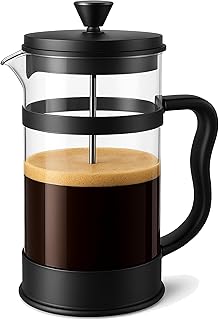
- Soft wash: Add a drop of fragrance-free dish soap and use a non-scratch sponge. Avoid abrasive pads on borosilicate glass like the Utopia Kitchen Borosilicate Glass French Press Coffee Maker 34 Oz, which can create micro-scratches that cloud over time.
- Dry completely: Air-dry disassembled on a rack. Trapped moisture under the lid cap causes musty odors and can corrode lower-grade stainless hardware in 24-48 hours.
What's inside
- Watch: How to Clean and Maintain Your French Press Coffee Maker — Video Review
- Daily Cleaning: The 60-Second Rinse That Prevents Buildup
- Weekly Deep Clean: Degreasing the Mesh and Carafe
- Monthly Descaling and Stain Removal
- Maintaining the Plunger, Filters, and Seal
- Tips
- Frequently Asked Questions
- Conclusion
- Related Articles
- Related Guides
A French press makes exceptionally rich coffee, but that same immersion brewing traps oils and fine grounds in every component. If you only rinse it, rancid coffee oils build up within days, dulling flavor and leaving a cloudy film on glass or stainless steel. In 2026, with borosilicate and double-walled stainless models dominating the market, proper maintenance is what separates a bright, clean cup from a bitter, muddy one.
- Watch: How to Clean and Maintain Your French Press Coffee Maker — Video Review
- Daily Cleaning: The 60-Second Rinse That Prevents Buildup
- Weekly Deep Clean: Degreasing the Mesh and Carafe
- Monthly Descaling and Stain Removal
- Maintaining the Plunger, Filters, and Seal
- Tips
- Frequently Asked Questions
- Conclusion
- Related Articles
- Related Guides
This guide covers the exact daily, weekly, and monthly routine to keep your press tasting fresh and functioning flawlessly. You’ll learn how to clean without cracking the glass, when to deep clean versus descale, how to maintain the mesh plunger assembly, and which cleaners are safe for each material so your press lasts for years, not months.
As an Amazon Associate we earn from qualifying purchases at no extra cost to you. Product prices and availability are accurate as of the date shown and are subject to change.



⚡ Save on Your Next PC — Amazon Prime
Prime members get fast free shipping on the systems above, plus early access to Prime Day & Black Friday PC deals. New members get a 30-day free trial.
Watch: How to Clean and Maintain Your French Press Coffee Maker — Video Review
Daily Cleaning: The 60-Second Rinse That Prevents Buildup
Do this immediately after every brew while grounds are still wet. Letting coffee sit for more than 30 minutes bakes oils onto the carafe and mesh.
- Disassemble lightly: Remove the plunger unit and discard grounds. The easiest method is to add 4-6 oz of water, swirl, and pour through a fine sink strainer or into compost. Never dump grounds directly down the drain.
- Rinse all parts with hot water: Use water at 130-150°F. Separate the plunger into its 3 parts — lid, spiral plate, and mesh filter — and rinse each. A quick backflush of the mesh under running water removes 90% of trapped fines.
- Soft wash: Add a drop of fragrance-free dish soap and use a non-scratch sponge. Avoid abrasive pads on borosilicate glass like the Utopia Kitchen Borosilicate Glass French Press Coffee Maker 34 Oz, which can create micro-scratches that cloud over time.
- Dry completely: Air-dry disassembled on a rack. Trapped moisture under the lid cap causes musty odors and can corrode lower-grade stainless hardware in 24-48 hours.
Weekly Deep Clean: Degreasing the Mesh and Carafe
Even with daily rinsing, coffee oils polymerize into a sticky, bitter residue you can feel as a slick film. A weekly degreasing is essential, especially if you brew dark roasts.
- The cleaning soak: Fill the carafe with hot water to the max line and add a dedicated coffee cleaner instead of dish soap, which cannot cut polymerized oils. For glass presses, the Urnex Clearly Coffee Pot Cleaner is ideal as a liquid formula made for glass bowls and thermal servers; its bundled Sparklen Curved Coffee Pot Cleaning Brush reaches under the spout and base where oils collect. For stainless models, use a powder like ESPRO Deep Clean Coffee Maker Cleaner & Descaler Powder, which dissolves both coffee oils and milk residue without leaving a scent.
- Soak time and technique: Add cleaner per label directions (typically 1/4 oz liquid or 1/2 scoop powder per 34 oz), insert the plunger and pump it 10-15 times to force solution through the mesh layers, then let soak for 15-20 minutes.
- Scrub and rinse thoroughly: Use the curved brush or a bottle brush on the carafe interior, and a soft toothbrush on the mesh screens and spiral plate. Rinse with 2-3 full carafes of clean hot water. Any cleaner residue will ruin the next brew.
- Frequency: 1 time per week for daily drinkers, or after every 7-10 brews for occasional use.
Monthly Descaling and Stain Removal
Hard water minerals and tannin stains are different from oils. If you see white scale near the waterline or brown rings that don’t wash off, you need a descaler or stain remover.
- For scale (cloudy, chalky deposits): Scale forms faster if your water is over 120 ppm hardness. Use a dual-action product like ESPRO Deep Clean Coffee Maker Cleaner & Descaler Powder, which both descalcs and degreases in one step, or run a cycle with equal parts white vinegar and hot water, soaking for 30 minutes before scrubbing. Rinse 3 times afterward.
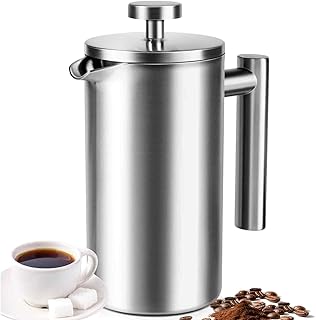
- For stubborn brown stains and oily residue: Stainless steel carafes such as the French Press 34 oz Full Stainless Steel Double-Walled Insulated French Press respond exceptionally well to Bar Keepers Friend Coffee Maker Cleaner. Its oxalic acid formula lifts tannin stains and oily film from steel, carafes, thermoses, and drip pots without bleaching. Make a paste with 1 oz powder and a few teaspoons of water, apply with a soft sponge, let sit 1-2 minutes, then rinse completely. Do not use it on exposed aluminum parts.
- Never use: Bleach, steel wool, or dishwasher pods with harsh citric acid boosters on plunger screens — they pit the fine mesh and degrade the silicone seal.
Maintaining the Plunger, Filters, and Seal
Most French press failures come from the plunger assembly, not the carafe. A loose or clogged mesh is why you get sludge and difficult plunging.
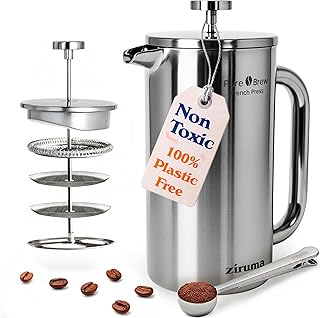
- Disassemble monthly: Unscrew the plunger rod and lay out the filter components in order: spiral plate, mesh, cross plate. Take a photo before you start so reassembly is correct. Soak all metal parts in your weekly cleaning solution for 15 minutes.
- Inspect the mesh: Hold it up to light. If you see bent wires, tears, or a permanently bowed shape, replace it. Most 34 oz presses include 2 extra filters, like those supplied with the Full Stainless Steel French Press, and you should expect to replace a mesh every 6-12 months with daily use.
- Check the seal and rod: The silicone or spring ring around the edge should be pliable, not cracked. Tighten the plunger nut firmly by hand — over-tightening with pliers warps the mesh and causes grounds to bypass.
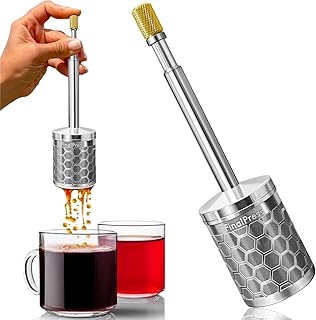
- Special care for travel presses: The FinalPress Original Coffee & Tea Maker uses a patented 3-in-1 micro-filter system for hot, iced, and cold brew. Its finer assembly traps more oils, so invert it and flush the inner chamber with hot clean water for 20 seconds after each use, and deep clean weekly to prevent clogging of the micro-perforations.
Tips
- Use water between 195-205°F for brewing and at least 140°F for cleaning. Cold water rinses solidify oils instead of removing them.
- If you have hard water, wipe the exterior and spout dry after each wash to prevent mineral spots, especially on brushed stainless.
- Dishwasher safe does not mean dishwasher best. Even on models labeled dishwasher safe, hand washing the plunger mesh extends its life by 3-4x compared to machine heat and detergents.
- Replace glass carafes at the first sign of a hairline crack near the spout or base. Thermal shock from adding cleaner with boiling water can expand a small flaw into a break.
Frequently Asked Questions
How often should I deep clean my French press?
For daily use, do a detergent-free degreasing soak once a week and a descaling soak once a month. If you brew only 2-3 times per week, deep clean every 10 brews and descale every 2-3 months. If coffee starts tasting bitter or the glass looks hazy after a soap wash, you are overdue.
Can I use vinegar or baking soda instead of a coffee cleaner?
Vinegar helps dissolve mineral scale but does not effectively remove polymerized coffee oils. Baking soda is a mild abrasive that can deodorize but will not degrease the mesh. For flavor, a purpose-built cleaner like Urnex Clearly Coffee Pot Cleaner or Bar Keepers Friend Coffee Maker Cleaner is more effective and leaves no residual odor if rinsed properly.
Why is my French press hard to plunge or lets grounds through?
Hard plunging is usually a clogged or over-tightened mesh. Disassemble, soak, and brush the screens clear, then reassemble hand-tight. Grounds in the cup mean the mesh is torn, warped, or assembled out of order, or your grind is too fine. Use a coarse grind resembling coarse sea salt and ensure the spiral plate and mesh are flat and centered before tightening.
Is it safe to clean a glass French press with powder cleaners?
Yes, if fully dissolved first. Dissolve powders like ESPRO Deep Clean in hot water before adding to a borosilicate carafe such as the Utopia Kitchen model, and avoid scouring the glass with undissolved granules. Liquid cleaners are inherently safer for glass, while powders are excellent for stainless steel where light scrubbing is acceptable.
Conclusion
A great French press routine takes less than two minutes a day and twenty minutes a week. Rinse and dry daily, degrease the mesh and carafe weekly with a proper coffee cleaner, and descale monthly to protect against hard water. With consistent care and the right cleaner for your material — liquid for glass, powder for stainless — your press will pour cleaner, sweeter coffee and last for years of daily brewing.



Write Your Review
No reviews yet. Be the first to share your experience!