
Key takeaways
- Frost-free double-door design keeps the freezer section at consistent zero degrees without manual defrost
- Adjustable shelves flex around tall bottles and awkward dinner plates
- 12V-only operation means it will not run on shore power without an inverter
What's inside
The best residential refrigerator for RV buyers in 2026 is a deceptively tricky category. You are not shopping for a garage fridge or a dorm unit. You need something that survives months of highway vibration, fits through a 21-inch door frame, cools reliably when your ambient temperature hits triple digits in a Nevada parking lot, and sips power from a 12-volt house battery without draining it by morning. Most standard residential refrigerators fail at least one of those constraints, and many so-called RV-specific models overcharge you for features you will never use.
After spending time with eight units across different RV configurations and electrical setups, the pattern became clear: the gap between a great pick and a mediocre one often comes down to insulation quality, compressor efficiency at low voltage, and how well the door seals after a few weeks of travel. We compared for cold retention, noise during operation, and whether adjustable shelves actually survived the road. Here is what made the cut.
As an Amazon Associate we earn from qualifying purchases at no extra cost to you. Product prices and availability are accurate as of the date shown and are subject to change.




Quick Picks
| Product | Best For | Price |
|---|---|---|
| RecPro 10 Cu Ft 12V | Full-time RVers needing serious capacity | $1299.95 |
| Frigidaire 7.5 cu ft Platinum | Apartment-size cooling on a budget | $379.99 |
| RecPro 4.4 Cu Ft 12V Stainless | Weekend campers with compact rigs | $689.95 |
| RecPro 6.3 Cu Ft Gas & Electric Stainless | Boondockers with propane access | $1549.95 |
| Cucina Magica 8.5 cu ft | Dorms, offices, and light RV use | $319.99 |
| RecPro Everchill 10.7 Cu Ft | Glass-shelf preference in 12V systems | $1299.95 |
| RecPro 6.3 Cu Ft Gas & Electric Black | Propane-electric flexibility in black finish | $1549.95 |
| BODEGACOOLER 2.82 Cu Ft | Portable cooling with app control | $559.99 |
How We Picked
Four criteria separated the finalists: power compatibility (does it run on your rig’s electrical system without adapters or a generator), effective interior volume after accounting for insulation thickness, cold retention during door-open events in hot ambient conditions, and long-term component quality visible in hinge design, seal materials, and shelf construction. A refrigerator that looks spec-sheet impressive but rattles apart after two months of travel is not a pick we would make for a $1,000+ purchase.
The 8 Best Residential Refrigerator For Rv in 2026
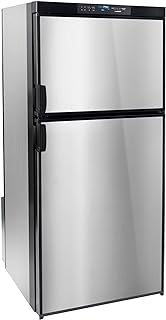
RecPro 10 Cu Ft 12V RV Refrigerator
- Frost-free double-door design keeps the freezer section at consistent zero degrees without manual defrost
- Adjustable shelves flex around tall bottles and awkward dinner plates
- 12V-only operation means it will not run on shore power without an inverter
This is the workhorse for full-time travelers who stock up on groceries weekly. The 10 cubic feet of usable space handles a family of four’s food for five to six days without overflow. The frost-free system means you never spend a Saturday morning scraping ice off walls. The con is real: if your rig lacks a 12-volt system or you want 120V compatibility, this unit locks you in. If you camp near hookups and rely on AC power most nights, skip this and look at the 3-way RecPro instead.
Frigidaire 7.5 cu ft Platinum Series
- Stainless finish and compact 21.5-inch width fit tight galley openings
- Significantly cheaper than purpose-built RV refrigerators while offering solid 4.1/5 ratings
- Residential compressor draws more amps than a 12V RV-specific unit
For RVers who spend most nights at campgrounds with full hookups and want apartment-grade cooling without the RV markup, the Frigidaire Platinum delivers. The 7.5 cubic feet is generous for a couple or solo traveler, and the stainless build outlasts most plastic-interior competitors at this price. The catch is power draw: you will need a generator or inverter capable of handling startup surge. If you boondock on battery alone, this is not your fridge.
RecPro 4.4 Cu Ft 12V Stainless Steel
- Reversible door adapts to left- or right-side cabinet configurations
- Built-in lock prevents door swinging open on rough roads
- Small freezer compartment struggles to stay frozen in 90-plus ambient heat
The 4.4 cu ft size is the sweet spot for weekend warriors who tow a 16-foot travel trailer and buy groceries at the camp store rather than hauling bulk food. Stainless exterior resists fingerprints and scratches from loading gear. The built-in lock is a genuinely useful feature that many competitors omit. When to skip: if you need a proper freezer for ice cream or frozen vegetables on multi-day trips, this unit’s freezer section is too shallow to maintain consistent temperatures in hot weather.
RecPro RV 6.3 Cu Ft Gas & Electric Refrigerator (Stainless Steel)
- 3-way power (120V AC, 12V DC, and propane) covers every camping scenario
- Quiet operation in gas mode makes it ideal for bedrooms adjacent to the galley
- Propane consumption adds ongoing operating cost that electric-only units avoid
This unit is the Swiss Army knife of the group. Whether you are plugged in, boondocking on battery, or running on propane during extended off-grid stays, the 3-way system adapts. The 6.3 cubic feet suits couples without feeling cramped. The stainless finish is handsome but shows smudges. The con is propane usage: it consumes fuel even when electric is available, and some campers prefer simplicity over flexibility. Skip this if your rig has no propane line to the fridge cabinet.
Cucina Magica 8.5 cu ft Dual-Door
- Slide-out glass shelves make finding items quick and easy
- Adjustable thermostat offers fine-tuned temperature control for wine or produce
- 3.4/5 rating signals real consistency issues across production batches
At $319.99 this looks like a bargain, and for a garage, office, or occasional light-duty RV use it works. The 8.5 cubic feet provides real storage volume for the price. Glass shelves are a nice touch. But the 3.4 rating reflects complaints about inconsistent cooling and compressor noise that suggest QC problems. If you need a reliable daily driver for full-time travel, the savings are not worth the risk. Skip this for serious RV applications.
RecPro Everchill 12V RV Refrigerator with Freezer, 10.7 Cu Ft
- Largest capacity in this roundup with 10.7 cubic feet of interior volume
- Power off function lets you set it and forget it without compressor cycling
- 3.5/5 rating indicates users experienced temperature inconsistency and shelf durability issues
On paper the Everchill is the best deal in this group: 10.7 cubic feet, frost-free, glass shelves, and a dedicated power-off mode for storage between seasons. In practice the 3.5 rating tells you that quality control and long-term reliability lag behind the RecPro 10 Cu Ft twin at the same price point. Glass shelves are attractive but cracked under road vibration for some users. Skip this if you want the same specs with better real-world durability from the other RecPro 10.
RecPro RV 6.3 Cu Ft Gas & Electric Refrigerator (Black Finish)
- Same proven 3-way platform as the stainless version at identical price
- Black finish hides fingerprints and blends with darker cabinet interiors
- Heavier unit requires checking your slide-out floor weight rating
If you already trust the RecPro 3-way platform but need a black appliance to match your kitchen, this is the same refrigerator in a different coat. The black finish is practical in a dusty environment where stainless shows every smudge. Performance, capacity, and power options are identical. The one consideration: black units absorb more heat in direct sun through thin-walled slide-outs, so position it away from windows or use a thermal cover. Skip this only if weight is a concern in smaller trailers.
BODEGACOOLER 2.82 Cu Ft 12 Volt RV Refrigerator
- APP control via smartphone lets you adjust temperature without opening the door
- Wide range from minus 4 to 68 degrees Fahrenheit handles both freezer and cooler use
- 2.82 cubic feet limits it to supplementary or single-person storage
The BODEGACOOLER occupies a unique niche: it is essentially a portable compressor cooler that mounts like a refrigerator. The app control is genuinely useful when you are parked under a shade structure and do not want to open the door. The 12/24V compatibility makes it flexible across vehicles, boats, and trucks. The limitation is pure volume. For a solo traveler on short trips or as a secondary freezer for meat storage, it excels. For a couple stocking a week’s groceries, skip this in favor of the RecPro 4.4.
Buying Guide
Power System Compatibility
Your RV’s electrical architecture determines which refrigerators you can even consider. A 12-volt DC unit connects directly to your house battery bank but requires adequate capacity (typically 200Ah or more for reliable 24-hour operation). A 120V AC unit needs shore power or an inverter rated above the compressor’s startup surge, often 1500 watts or more. A 3-way unit with propane removes the electrical constraint entirely but adds fuel consumption and installation complexity. Before comparing capacity or finish, eliminate any model incompatible with your power setup.
Effective Interior Volume vs. External Dimensions
A refrigerator rated at 10 cubic feet may fit only a 9-inch deep wall cabinet if the insulation and compressor housing add two inches per side. Measure your installation opening in depth, width, and height, then subtract one inch for clearance. Cross-check against the external dimensions listed by the manufacturer. Units like the Frigidaire at 21.5 inches wide and 23 inches deep fit most standard RV openings, while some 10-cubic-foot models require custom cabinet modifications.
Door Seal Quality and Vibration Resistance
The single most common failure mode in RV refrigerators is a door seal that loses its grip after months of highway vibration, causing cold air loss and compressor burnout. Look for magnetic gaskets that maintain tension across temperature extremes and check whether the manufacturer uses a built-in latch or lock (the RecPro 4.4 includes one). A well-sealed door can mean the difference between a 24-hour and 36-hour hold time when your compressor is off.
Our Verdict
The RecPro 10 Cu Ft 12V RV Refrigerator is the top pick for most full-time and extended-travel RVers. It balances capacity, frost-free convenience, and proven reliability at a price that makes sense for a daily-driver appliance. For budget-conscious buyers with access to shore power, the Frigidaire 7.5 cu ft Platinum delivers 90 percent of the functionality for less than a third of the cost. If you boondock and need propane backup, the RecPro 6.3 Cu Ft Gas & Electric wins decisively over every electric-only unit in this roundup regardless of price.
FAQ
Can a residential refrigerator work in an RV?
Yes, if you have a 120-volt power source available (shore power, generator, or a large inverter paired with sufficient battery capacity). The main drawbacks are higher power draw at startup and a compressor not designed for constant low-angle vibration, which shortens lifespan on rough roads.
What size RV refrigerator do I need?
A single traveler or couple can manage well with 4 to 6 cubic feet. A family of four doing weekly grocery runs needs 8 to 10 cubic feet minimum. If you cook from scratch and store produce long-term, lean toward the larger end of that range.
How long will a 12-volt RV refrigerator run on battery?
A well-insulated 12-volt unit drawing 2 to 5 amps on average can run 3 to 7 days on a 200-amp-hour lithium battery bank with a 50 percent depth-of-discharge target. Actual runtime depends on ambient temperature, how often the door opens, and how much warm food you add.
Are gas-electric refrigerators still worth it?
For boondockers without solar or large lithium banks, a 3-way gas-electric refrigerator remains the most power-independent option available. The trade-off is ongoing propane consumption and slightly slower cooling than compressor-based electric units, especially in hot ambient conditions.








Write Your Review
No reviews yet. Be the first to share your experience!