
Key takeaways
- Pro: Highest output of any machine here at 48 cups per batch.
- Pro: Tempered glass doors and steel frame give it commercial durability.
- Con: Large footprint; it dominates a standard countertop and needs dedicated storage space.
What's inside
The difference between a great popcorn night and a disappointing one usually comes down to the machine sitting on your counter. Oil popcorn makers deliver that rich, buttery flavor and theater-quality texture that air poppers simply cannot replicate, but they demand more cleanup and carry a higher price tag. Air poppers, meanwhile, win on convenience and health but produce a lighter, less satisfying kernel that many people find bland without heavy seasoning.
This roundup is for the buyer who wants clarity, not confusion. We compared published specifications, current prices, and owner feedback across eight machines ranging from a $20 hot-air unit to a $180 commercial-grade kettle popper. The goal is to help you match a machine to your actual usage pattern, whether that is a quiet Tuesday movie or a weekend party for thirty guests.
As an Amazon Associate we earn from qualifying purchases at no extra cost to you. Product prices and availability are accurate as of the date shown and are subject to change.





Quick Picks
| Product | Best For | Price |
|---|---|---|
| VEVOR Commercial Popcorn Machine | Large gatherings and volume popping | $149.86 |
| Dash Fresh Pop | Healthy snacking on a budget | $19.99 |
| West Bend Stir Crazy 4-Qt | Easy oil popping for movie nights | $89.99 |
| Nostalgia Vintage Theater Cart | Decor-forward family fun | $139.99 |
| Great Northern Little Bambino | Compact countertop theater flavor | $75.95 |
| Great Northern Matinee | Event hosting and serious parties | $179.95 |
| West Bend Stir Crazy 6-Qt | Big batches with minimal splatter | $45.87 |
| Elite Gourmet EPM330R | Small households wanting classic taste | $25.99 |
How We Picked
Four criteria shaped this list. First, capacity relative to price, because a machine that makes only four cups in a batch is a poor value at $140 but an excellent one at $20. Second, ease of cleanup, since oil kettle machines that require full disassembly discourage regular use. Third, build quality visible in the spec sheet, specifically kettle material, frame construction, and whether glass doors are tempered. Fourth, owner-reported consistency, meaning whether the machine produces evenly popped kernels batch after batch or leaves a high percentage of unpopped seeds on each cycle.
The 8 Best Home Popcorn Machines in 2026
VEVOR Commercial Popcorn Machine
The VEVOR is the closest thing to a genuine concession-stand machine you can put on a home countertop. Its 8-ounce kettle produces 48 cups per batch, making it ideal for anyone who regularly entertains groups or runs a small business. The three-switch control lets you run the kettle, warming light, and stirrer independently, which gives real flexibility during long events. The steel frame and tempered glass doors feel robust at this price point.
- Pro: Highest output of any machine here at 48 cups per batch.
- Pro: Tempered glass doors and steel frame give it commercial durability.
- Con: Large footprint; it dominates a standard countertop and needs dedicated storage space.
Skip this if you only make popcorn once a week for one or two people, because you will be cleaning more kettle surface than you actually use.
Dash Fresh Pop
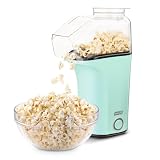
The Dash is the simplest entry point into home popcorn. It uses hot air instead of oil, producing up to 16 cups of light, low-calorie popcorn with almost no mess. Owners praise how quickly it works and how easy it is to wipe down. For anyone watching their fat intake or wanting a quick snack without preheating a kettle, it does the job without fuss.
- Pro: No oil, minimal cleanup, and under $20.
- Pro: Compact footprint that stores easily in a cabinet.
- Con: Popcorn texture is noticeably lighter and less flavorful than oil-popped kernels.
Skip this if buttery, dense theater-style popcorn is the specific experience you are after.
West Bend Stir Crazy 4-Qt
This is the classic home oil popper that many people grew up with, and the 4-quart model remains a solid choice for families of three or four. The nonstick kettle and automatic stirring mechanism prevent burning, while the included measuring tool and scoop make batch prep straightforward. Red is its signature color, and it looks good on a counter without pretending to be a theater cart.
- Pro: Nonstick kettle cleans quickly and resists oil buildup.
- Pro: Built-in stirrer eliminates the guesswork of manual agitation.
- Con: Smaller capacity means multiple batches for gatherings over eight people.
Skip this if you need volume or if you want the theatrical display of a glass-door unit.
Nostalgia Vintage Theater Cart
The Nostalgia cart is part appliance, part decoration. The rolling cart base and vintage styling make it a conversation piece at birthday parties, holiday gatherings, and movie nights. Its 2.5-ounce stainless steel kettle produces up to 10 cups, which is adequate for a group of six to eight without feeling like a commercial unit.
- Pro: Eye-catching design that elevates any event setting.
- Pro: Stainless steel kettle is easier to maintain than coated alternatives.
- Con: The cart assembly is fiddly and adds setup time before first use.
Skip this if you care primarily about popcorn output and would store the machine in a cabinet after use.
Great Northern Popcorn Little Bambino
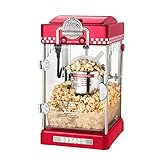
The Little Bambino is Great Northern’s answer to buyers who want theater-style glass doors and a kettle popper but lack the counter space for the Matinee. With a 2.5-ounce kettle in a compact red housing, it produces a respectable batch suitable for a family movie night. Owners appreciate the warm lighting and the satisfying popping sound behind the glass.
- Pro: Genuine theater aesthetic in a small footprint.
- Pro: Great Northern’s reputation for kettle reliability carries over here.
- Con: 2.5-ounce kettle limits output to roughly 9 or 10 cups per cycle.
Skip this if you regularly need more than 10 cups in a single batch.
Great Northern Popcorn Matinee
The Matinee is the 8-ounce sibling to the Little Bambino and the closest competitor to the VEVOR in raw capacity. Its 8-ounce kettle handles large batches while the warm-keeping light ensures popcorn stays fresh throughout a long event. At $179.95, it carries a premium over the VEVOR, but Great Northern’s build quality and brand support justify the gap for buyers who want durability alongside output.
- Pro: Same 48-cup-per-batch capacity as the VEVOR with polished retail presentation.
- Pro: Known for consistent kettle performance across many batches in one session.
- Con: Highest price on this list, which is hard to justify for occasional use.
Skip this if you make popcorn fewer than twice a month; the cost per use becomes steep.
West Bend Stir Crazy 6-Qt
At $45.87, the 6-quart Stir Crazy offers the best balance of oil-popped flavor, capacity, and price in this group. The larger serving bowl doubles as a lid, which cuts cleanup and lets you bring popcorn straight to the couch. The stirring rod keeps kernels moving without splatter, and owners report it handles butter-heavy recipes without burning.
- Pro: Large 6-quart capacity at a price under $50.
- Pro: Bowl-lid design means less equipment to wash after a movie night.
- Con: Lacks the warm-keeping light of glass-door models, so popcorn cools between batches.
Skip this if display-style theater popping is essential to the experience you want.
Elite Gourmet EPM330R
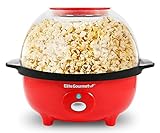
The Elite Gourmet fills a specific gap: a small-batch oil popper for one or two people that still delivers that classic kettle flavor. The ceramic nonstick 12-cup capacity is generous for solo or duo snacking, and the $25.99 price makes it a low-risk addition to any kitchen. The stirring element is gentle enough to avoid the scorching that plagues cheaper oil poppers.
- Pro: Ceramic nonstick surface is the easiest to clean among oil models here.
- Pro: Best value under $30 for genuine oil-popped popcorn.
- Con: Small capacity means running multiple batches for any group larger than two or three.
Skip this if your household regularly eats more than 12 cups of popcorn in a sitting.
Buying Guide
Kettle Size and Batch Output
Kettle size in ounces refers to how much unpopped kernel the machine can hold per cycle. A 2.5-ounce kettle typically yields 9 to 10 cups; an 8-ounce kettle yields around 48 cups. Match this to your realistic group size, not your biggest party ever. Buying an 8-ounce commercial machine for a household of two means more oil, more cleanup, and more wasted kernels than you need on a typical evening.
Oil Versus Air Popping
Air poppers use a heating element and fan to puff kernels with no fat, producing a light, dry result. Oil kettle poppers coat each kernel with a thin layer of heated oil, which creates the dense, savory texture most people associate with theater popcorn. If buttery flavor matters to you, oil is non-negotiable. If convenience and calorie control matter more, an air popper saves you from preheating, measuring oil, and scrubbing a kettle.
Cleanup and Maintenance
Oil residue builds up quickly on kettle surfaces, especially if you use coconut or canola oil at high heat. Nonstick and ceramic coatings make wiping far easier than bare aluminum. Tempered glass doors on theater-style units should be cleaned with a soft cloth and mild detergent to avoid scratching. For machines without a warming light, plan to transfer popcorn to a serving bowl immediately after each batch to prevent sogginess from trapped steam.
Our Verdict
The West Bend Stir Crazy 6-Qt at $45.87 is our top pick for most households because it delivers oil-popped theater flavor, a generous capacity, and a bowl-lid design that keeps cleanup minimal. The Dash Fresh Pop at $19.99 is the budget pick for anyone whose priority is a quick, healthy snack with zero oil management. However, if you regularly host events of fifteen or more people, the VEVOR Commercial at $149.86 wins outright because no other machine on this list matches its 48-cup batch output without pushing you past $179.
FAQ
Can I use popcorn kernels and oil from the grocery store?
Yes. Every machine on this list uses standard yellow or white popcorn kernels and common cooking oils. You do not need specialty products. For the best texture, use a high-smoke-point oil like coconut or canola rather than butter, and add melted butter after popping.
Why does my popcorn have many unpopped kernels?
Unpopped kernels usually indicate that the oil was not hot enough when you added the corn, the kettle was overloaded beyond its rated capacity, or the kernels had lost moisture from long storage. Fresh kernels sealed in a bag and a properly preheated kettle resolve most cases.
How often should I clean an oil popcorn machine?
Wipe the kettle interior with a warm damp cloth after every single use while it is still slightly warm. Perform a deeper clean with mild soap once a week if you pop more than three times per week. Neglecting oil buildup leads to rancid flavors and uneven heat distribution.
Are air poppers quieter than oil kettle machines?
Air poppers produce a steady fan hum but very little popping noise because kernels hit a plastic chamber rather than bouncing off a metal kettle. Oil machines are louder during the popping phase, though theater-style models with glass doors muffle some of that sound compared to open kettles.





Write Your Review
No reviews yet. Be the first to share your experience!