
Key takeaways
- Table of Contents 6 sections 9 min read 1 Quick Picks 2 How We Picked 3 The 8 Best Preschool Pitching Machines in 2026 3.1 Little Tikes 2-in-1 Pop ‘n Pitch Trainer 3.2 Franklin Sports MLB Pitching Machine 3.3 SunwyxTek…
What's inside
A parent with a three-year-old who wants to hit a ball has a narrow set of real options. The best preschool pitching machines solve one concrete problem: delivering a soft, slow, predictable pitch at a height a small child can connect with, without requiring an adult to hand-toss thousands of repetitions. Good machines in this category share a few traits — low release height, gentle speed, durable but light construction, and a loading method a small child can manage independently. Bad ones pitch too fast, wobble after a few sessions, or demand assembly that frustrates everyone before the first ball is launched.
This roundup compares eight models across published specs, street prices, and recurring themes in owner feedback. The price range spans under $30 to over $360, and that spread reflects a genuine gap between toddler-safe pop-up trainers and full-speed machines designed for teenagers. If you are shopping in 2026 for a young child’s first batting setup, the right machine costs far less than most people assume — but only if you match the release height and speed to your child’s actual size rather than the box copy.
As an Amazon Associate we earn from qualifying purchases at no extra cost to you. Product prices and availability are accurate as of the date shown and are subject to change.




Quick Picks
| Product | Best for | Price |
|---|---|---|
| Little Tikes 2-in-1 Pop ‘n Pitch | Ages 3+ outdoor beginners | $32.99 |
| Franklin Sports MLB Pitching Machine | Casual backyard play | $34.97 |
| SunwyxTek Automatic Pitching Machine | Multi-age households, tee ball | $27.95 |
| Franklin Sports MLB Power Pitcher | Progressive skill development | $74.50 |
| Franklin MLB Superstar 4 in 1 | Versatility, multiple game modes | $67.99 |
| PowerNet Launch F-lite | Advanced training, older kids | $365.49 |
| Furlihong 3801BH Electronic | Electronic controls under $100 | $97.99 |
| Franklin Sports MLB Pop A Pitch | Lowest-cost entry point | $29.99 |
How We Picked
We evaluated these models on four criteria: age-appropriate release height and pitch speed, build quality at the price point, ease of independent loading for a small child, and overall value relative to competitors with similar output. A machine that pitches too fast for a preschooler fails the first criterion regardless of extra features, so we weighted that heavily above all else.
The 8 Best Preschool Pitching Machines in 2026
Little Tikes 2-in-1 Pop ‘n Pitch Trainer
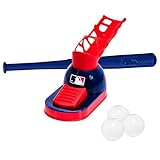
Little Tikes built this for the youngest end of the range — ages 3 and up — and its dual-mode design lets a toddler alternate between a pop-up tee and a gentle pitch in one unit. The outdoor-rated shell handles sun and light rain without warping. Pros: loading is intuitive enough for a child to manage alone, and the pitch height is calibrated for short arms. Con: the limited speed range means it is quickly outgrown by age five or six. Skip it if your child is already past preschool or you want a machine that lasts more than two seasons.
Franklin Sports MLB Pitching Machine
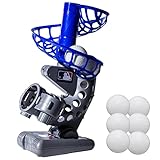
Franklin’s entry-level MLB-branded machine sits just under $35 and fills the gap between toy and tool. It launches a soft ball at a moderate pace suitable for young children building hand-eye coordination. Pros: the recognizable MLB branding motivates kids who are into teams, and the compact footprint fits small yards. Con: owners note the power cord is awkward outdoors, and the unit needs a flat surface to feed reliably. Skip it if your yard is uneven or you have no nearby outlet.
SunwyxTek Automatic Baseball Pitching Machine with 8 Balls
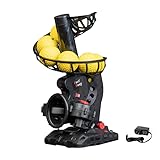
The SunwyxTek covers the broadest age span here, from toddlers 3-5 through kids 12, by bundling a tee ball set with an automatic pitch mechanism and including eight balls. Pros: one purchase serves siblings at different skill levels, and the included balls remove an extra expense. Con: plastic joints feel less durable than metal-framed competitors, and some owners report alignment drift after repeated setup and teardown. Skip it if you expect daily use through multiple seasons without repositioning.
Franklin Sports MLB Power Pitcher Pitching Machine
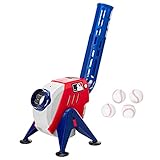
At $74.50, the Power Pitcher doubles down on speed and distance relative to Franklin’s cheaper models. It targets children who have outgrown toddler-soft pitches and want realistic delivery for swing practice. Pros: higher pitch velocity keeps older siblings engaged, and the adjustable angle simulates varied trajectories. Con: the release height is too high for a true three-year-old, stretching the “preschool” label. Skip it if your primary user is under four — a lower-profile pop-up trainer is safer at that age.
Franklin MLB Superstar 4 in 1 Pitching Machine
The Superstar packs multiple play modes — pitching, batting practice, fielding drills, and a toss-back function — into one frame for under $70. It is the most versatile option for families wanting a single unit that adapts as a child grows. Pros: the four modes extend useful life well past preschool, and the price undercuts dedicated single-purpose machines. Con: no single mode performs as well as a focused alternative, and assembly takes noticeably longer. Skip it if you want a dead-simple experience for a three-year-old.
PowerNet Launch F-lite Baseball & Softball Pitching Machine
The F-lite is the outlier: adjustable height, speeds up to 90 MPH, and a price near $365 place it in teen-to-adult training territory, not preschool. It is included here only as a ceiling reference. Pros: the speed range and build quality are unmatched for serious practice. Con: even at the lowest setting, pitch velocities exceed what a preschooler can safely track, making it inappropriate for children under ten. Skip it unless you are shopping for a high-school-age athlete.
Furlihong 3801BH Upgraded Electronic Pitching Machine
The Furlihong 3801BH offers electronic speed and angle controls for under $100, a feature set budget mechanical machines lack. For a child transitioning out of the toddler bracket, it bridges the gap. Pros: electronic adjustment removes the need to manually tilt or reposition between pitches. Con: the release height is not ideal for the youngest preschoolers, and reviews flag inconsistent ball-to-ball accuracy on the lowest settings. Skip it if your main user is three and just needs a simple, low, slow pop-up pitch.
Franklin Sports MLB Pop A Pitch Baseball Pitching Machine
At $29.99, the Pop A Pitch is the cheapest option that still functions as a pitching machine rather than a pure tee. It serves children at the very start of their batting journey. Pros: the low price makes it an easy first purchase, and pop-up loading is simple enough for a four-year-old. Con: the lightweight plastic frame tips easily on grass or in wind, and pitch path can drift over extended use. Skip it if you want a machine that feels solid by summer two.
Buying Guide
Match Release Height to Your Child’s Swing Arc
A preschooler’s bat swings through a much smaller arc than an older child’s. If the pitch release sits above their chest, they cannot get the bat underneath the ball cleanly and frustration sets in fast. Look for machines rated for ages 3-5 or those with a pop-up tee option that brings the ball to knee-to-waist height. The Little Tikes and Franklin Pop A Pitch are designed around this constraint specifically.
Pitch Speed: Slow Is the Correct Speed
Owners of preschool equipment consistently rank pitch speed as the single most important usability factor. Anything under ten feet per second suits a three- or four-year-old; faster speeds turn practice into a guessing game. Machines advertising “variable speed up to 90 MPH” are not built for your toddler. The best preschool pitching machines keep top speeds well under what even a recreational adult would need, and that limitation is a feature, not a compromise.
Loading Method Determines Whether the Child Plays Alone
If a parent must kneel and drop every ball into a funnel, the machine becomes a two-person activity and usage drops within a week. The SunwyxTek’s automatic tray and the Little Tikes pop-up mechanism let a child load and fire repeatedly without help. Check that the loading opening is wide enough for small fingers and that balls seat without perfect alignment.
Our Verdict
The Little Tikes 2-in-1 Pop ‘n Pitch Trainer is the top pick for a true preschool user: the age range is honest, the release height matches a three-year-old’s swing, and the outdoor-rated shell survives a full season of abuse for $33. The budget pick is the Franklin Sports MLB Pop A Pitch at $30 — fewer features, but a young child still makes contact and feels like they are doing real practice. If you have siblings spanning ages 4 through 8, the SunwyxTek wins because one unit covers both ends of that gap without a second purchase.
FAQ
Can a three-year-old use a pitching machine safely?
Yes, provided the machine is rated for that age group and the pitch speed is low enough for the child to track visually before contact. Avoid any unit launching at speeds designed for older children or adults.
Do preschool pitching machines work with real baseballs?
Most models in this category are designed for soft, foam, or reduced-compression balls. Using a regulation baseball in a machine built for lightweight foam can damage the feeding mechanism or produce unsafe ball flight.
How much should I spend on a preschool pitching machine?
Between $28 and $35 covers the best value for a single young user. Spending more is justified only if you need multi-age flexibility or electronic controls, which serve a family with children beyond the preschool range.
Will my preschooler outgrow the machine quickly?
Most dedicated preschool machines are productive for one to two seasons before height and swing speed exceed the design range. A tee-style or adjustable-height unit extends usability slightly, but the core limitation is pitch speed, not stature.



Write Your Review
No reviews yet. Be the first to share your experience!