
Key takeaways
- Vague slot measurements: “Extra wide” means little without a stated width and length.
- No independent controls: A four-slice capacity is less useful if all slots share one setting.
- A missing crumb tray: Cleaning becomes inconvenient and crumbs can accumulate inside the appliance.
- Unstable levers or feet: These are signs of weak construction and can make daily use frustrating.
- Unusually high wattage with no explanation: More power alone does not prove better browning.
- Claims of “perfect” or “professional” results: Treat marketing language cautiously when there are no meaningful specifications.
- Limited seller information: Make sure the warranty and return policy come from a recognizable manufacturer or retailer.
Buying a four-slice toaster sounds simple until you compare slot lengths, wattage, controls, and countertop dimensions. Many shoppers focus on the number of slices or the lowest price, then discover that the toaster cannot fit their preferred bread, takes up more room than expected, or browns two slices differently from the other two.
The right answer depends on how you toast, not just how many people eat breakfast. Before buying, measure your available counter space, check the dimensions of your bread, and decide whether you want four independent slots or two long slots that can handle larger slices. This guide explains what to look for in a 4 slice toaster in 2026, including the specifications that matter and the features that are mostly marketing.
Our top picks
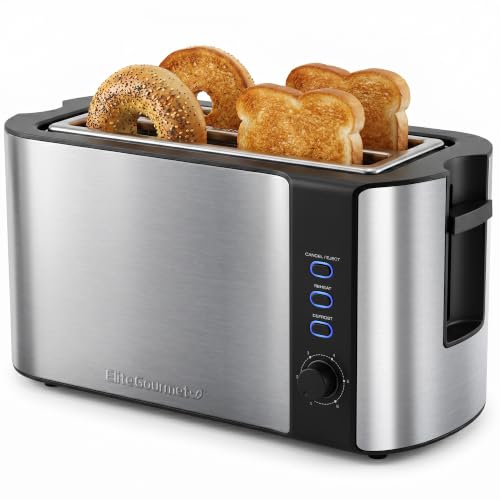


As an Amazon Associate we earn from qualifying purchases at no extra cost to you. Ratings are shown as listed on Amazon.
Decide These 3 Things First
- What bread do you use? Standard sandwich bread usually fits a traditional four-slot toaster. Sourdough, bakery loaves, bagels, Texas toast, and homemade slices are better suited to extra-wide or extra-long slots.
- Do you need four independent controls? Two separate pairs of slots are useful when household members prefer different browning levels. A two-slot long toaster may be more flexible for oversized bread but may have less control.
- How much counter space can you give up? A four-slice toaster commonly measures about 10 to 13 inches wide, 7 to 12 inches deep, and 7 to 9 inches tall. Long-slot models can be narrower but deeper, while traditional four-slot designs are often wider.
Size and Slot Dimensions
Overall dimensions are only the starting point. The slot dimensions determine whether the toaster works with your bread. Look for slot lengths of at least 5.5 inches if you regularly buy larger slices. Extra-long slots measuring roughly 9 to 10 inches can accommodate a full slice of artisan bread more easily, although the bread may still need repositioning if it is unusually tall.
Slot width matters for bagels and thick-cut bread. A practical range is 1.25 to 1.5 inches. Models advertised as extra-wide may offer about 1.5 inches or slightly more. That is helpful for Texas toast, English muffins, and bagels, but it does not guarantee that every thick slice will brown evenly.
Also check the space around the toaster. Leave at least 4 inches of clearance on each side where possible and several inches above it, especially if the toaster sits beneath cabinets. A model weighing 4 to 6 pounds is easier to move for storage, while a 7- to 9-pound stainless-steel toaster is less likely to slide when you press the lever.
Material and Exterior Finish
Most affordable toasters combine plastic housing with stainless-steel panels. This keeps prices in roughly the $30 to $50 range and reduces weight. Plastic sides are not automatically a problem, but they can show heat discoloration or feel less substantial over time.
Stainless steel or metal-heavy construction is common in the $70 to $150 range. It can provide a more durable exterior and a steadier base, though stainless steel shows fingerprints and may become hot during use. A cool-touch exterior is useful in busy kitchens, but “cool touch” should not be interpreted as completely cold; the slot area and upper metal surfaces can still heat up.
Inspect the finish around the slots. Thin, uneven trim can catch crumbs and be difficult to clean. A removable crumb tray should slide out fully rather than stopping halfway. A tray with a metal handle or a firm plastic grip is easier to use than one that sits nearly flush with the body.
Construction and Controls
A well-designed four-slice toaster should sit securely on nonslip feet and should not rock when you operate the levers. Press each lever in the store, if possible, or look for buyer photos showing the base and controls. Independent levers are important if you toast different types of bread at the same time.
Look for at least six browning settings. Fewer settings can work, but the jump between light and dark may be too large for some users. More settings are not automatically better; a dial marked from 1 to 7 or 1 to 9 is useful only if the heating system responds consistently.
Useful controls include cancel, reheat, and defrost. A bagel function should toast the cut side while warming or lightly heating the outside. Check the wording carefully: some models include a dedicated bagel button, while others simply offer a manual setting that does not change the heating pattern.
Extra-lift levers are worthwhile for English muffins and small slices. The bread should rise high enough to remove without reaching into the slots. A cord-storage feature under the base helps keep the counter tidy, and a cord of about 28 to 36 inches is generally long enough for most kitchen layouts.
Comfort and Everyday Performance
When judging performance, focus on evenness, ease of use, and recovery between batches rather than assuming a higher wattage guarantees better toast. Four-slice models commonly use about 1,400 to 1,800 watts. Higher wattage can help the toaster recover heat after a batch, but it may also increase energy use and does not replace good temperature control.
Test whether the slots center different bread thicknesses. Self-centering guides should hold thin slices upright and prevent thick slices from pressing hard against one side. A slice that leans can develop dark edges while remaining pale in the middle.
Listen for a clear end-of-cycle signal, but do not choose a toaster solely because it has a loud alert. More important is whether the levers stay down reliably and whether the toaster cancels smoothly. If a model requires multiple cycles to produce your preferred color, its controls may not be well matched to your kitchen routine.
Crumb management is another overlooked detail. Shake out loose crumbs only when the toaster is unplugged and cool. A removable tray makes routine cleaning easier, but the toaster should never be submerged or cleaned by inserting tools into the slots.
Price Tiers: What You Get
Budget: about $25 to $45. This category includes many plastic-and-metal four-slice and long-slot models, often with six browning settings, extra-wide slots, cancel, and defrost controls. For example, comparable Elite Gourmet and bella models are commonly positioned around $30 to $35. Expect basic levers, lighter construction, and more variation in finish quality. These models can be a sensible choice for occasional use.
Mid-range: about $50 to $90. You may get sturdier feet, better controls, improved slot centering, a more substantial housing, and clearer independent settings. The exterior may still combine plastic and stainless steel. This tier is often the best value for households that use a toaster daily but do not need premium styling.
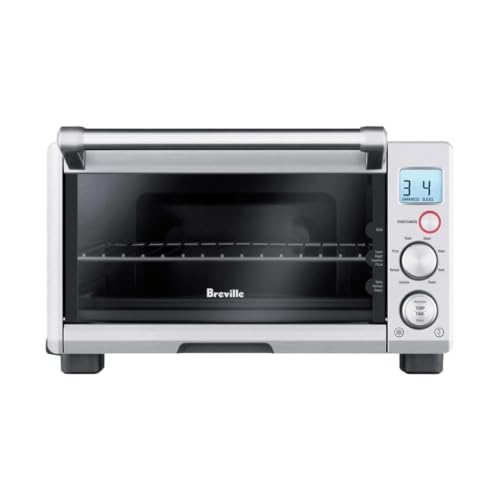
Premium: about $100 to $180. Premium models typically emphasize metal construction, smoother controls, refined design, and features such as countdown displays or more precise lift mechanisms. A Breville four-slice model priced near $120 represents this category. Pay for features you will use; a polished finish and display do not guarantee more even toast.
Warranty and Repair Support
A one-year limited warranty is common and should be considered the minimum acceptable coverage for a frequently used countertop appliance. Some brands offer two years, which provides more confidence if the toaster is used every morning. Read what the warranty covers: shipping, cosmetic damage, misuse, and damage caused by voltage problems are often excluded.
Look for a clearly identified manufacturer, customer-service contact, and a return period of at least 30 days. Keep the receipt and packaging until you are satisfied with the toaster. A replacement-only warranty may be less convenient than repair support, particularly for a heavy premium model.
Delivery, Returns, and Assembly
There is normally no assembly beyond removing packaging and setting the toaster on a level surface. However, delivery still matters. Confirm the package dimensions if you live in a small apartment or use a parcel locker, and inspect the toaster for dents, cracked plastic, bent levers, or loose feet before plugging it in.
Do not use a damaged toaster, a unit with a frayed cord, or a model that smells strongly of burning plastic after the initial warm-up period. A brief manufacturing odor can occur during first use, but it should not persist. Buy from a seller with a straightforward return window, especially when purchasing a budget model online and unable to assess the controls in person.
Spec Checklist
| Spec | Budget | Mid | Premium |
|---|---|---|---|
| Typical price | $25–$45 | $50–$90 | $100–$180 |
| Width | 10–13 inches | 10.5–13 inches | 11–13.5 inches |
| Depth | 7–12 inches | 8–12 inches | 8.5–13 inches |
| Slot width | 1.25–1.5 inches | 1.25–1.5 inches | 1.25–1.6 inches |
| Power | 1,400–1,700 watts | 1,500–1,800 watts | 1,600–1,800 watts |
| Browning settings | 6–7 | 6–9 | 6–9 |
| Weight | 4–6 pounds | 5–8 pounds | 6–10 pounds |
| Warranty | 1 year | 1–2 years | 1–2 years |
Red Flags
- Vague slot measurements: “Extra wide” means little without a stated width and length.
- No independent controls: A four-slice capacity is less useful if all slots share one setting.
- A missing crumb tray: Cleaning becomes inconvenient and crumbs can accumulate inside the appliance.
- Unstable levers or feet: These are signs of weak construction and can make daily use frustrating.
- Unusually high wattage with no explanation: More power alone does not prove better browning.
- Claims of “perfect” or “professional” results: Treat marketing language cautiously when there are no meaningful specifications.
- Limited seller information: Make sure the warranty and return policy come from a recognizable manufacturer or retailer.
FAQ
Is a four-slice toaster better than a two-slice toaster?
It is better if you regularly toast for two or more people or want to prepare four slices in one batch. A four-slice toaster usually costs more and takes up more counter space, so a two-slice model may be the smarter choice for one person or a small kitchen.
Are long slots better than four separate slots?
Long slots are often better for sourdough, bakery bread, and irregularly shaped slices. Four separate slots provide more independent control and may be more convenient when several people want different browning levels. Choose based on your bread first.
How many watts should a four-slice toaster have?
Most shoppers should look for about 1,400 to 1,800 watts. Wattage affects heating capacity and recovery, but slot design, centering guides, and control quality are just as important. A higher number does not guarantee evenly browned toast.
What is the most important feature in a four-slice toaster?
For most kitchens, it is a combination of properly sized slots and independent controls. Make sure the slots fit your bread, then confirm that each pair—or each slot, if offered—can use a different browning setting. Those details affect everyday usefulness more than a digital display or decorative finish.




Write Your Review
No reviews yet. Be the first to share your experience!