
Key takeaways
- Measure the narrowest internal width, not the cabinet’s outside width.
- Subtract the thickness of any side brackets or runner hardware.
- Measure from the inside of the cabinet front to the back wall, excluding hinges or plumbing.
- Check the shelf’s required installation depth, which can be greater than its usable platform depth.
- Keep at least 5–10 mm of total side-to-side clearance unless the manufacturer specifies a different allowance.
The best cabinet organisers for kitchen storage are pull-out shelves for deep base cabinets, tiered risers for upper cupboards, and door-mounted racks where the door has enough swing and clearance to close safely.
The right choice depends less on the organiser’s advertised size than on your cabinet’s usable opening width, internal depth, frame obstruction, shelf spacing, and door clearance. Measure those five points before buying, then choose the organiser that leaves a small fitting margin rather than filling every available millimetre.

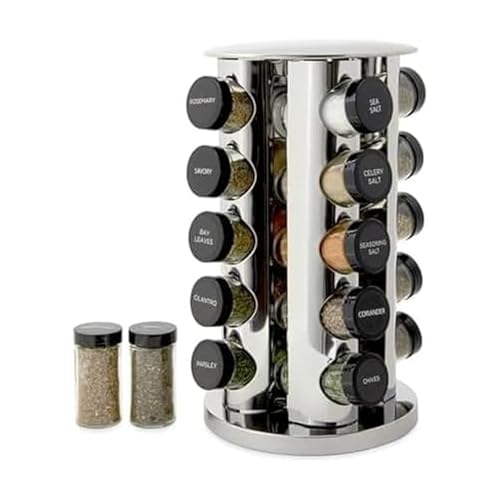
LAMU 2 Tier Lazy Susan Turntable Organizer Spice Rack for Cabinet 9.25''
Included for 'Best Cabinet Organizers for a More Functional Kitchen' as a relevant option in this category; details come from the product listing.
View on Amazon
SONGMICS Cabinet Organizer Shelf, Set of 4 Spice Rack, Kitchen Storage
Included for 'Best Cabinet Organizers for a More Functional Kitchen' because the listing specifies Set of 4 Spice Rack and Kitchen Storage, details this guide uses to compare options.
View on Amazon
Simple Trending Bamboo Cabinet Organizer Shelf, Set of 2 Kitchen Counter Shelves, Stackable Expandable Spice Rack Kitchen Storage, Black and Natural Beige
Included for 'Best Cabinet Organizers for a More Functional Kitchen' because the listing specifies Set of 2 Kitchen Counter Shelves and Stackable Expandable Spice Rack Kitchen Storage, details this guide uses to compare options.
View on Amazon
MUDEELA Expandable Pot Pan Lid Organizers inside Cabinet, 10 Divider-Black
Included for 'Best Cabinet Organizers for a More Functional Kitchen' because the listing specifies 10 Divider-Black, details this guide uses to compare options.
View on AmazonQuick picks by kitchen problem
| Kitchen situation | Best organiser type | Typical useful dimensions | Why it works |
|---|---|---|---|
| Deep base cabinet with items disappearing at the back | Pull-out shelf or drawer | 300–600 mm wide; 450–550 mm deep; 15–30 kg load | Brings heavy cookware and provisions forward without kneeling into the cabinet |
| Short upper cabinet with stacked tins or jars | Two- or three-tier riser | 200–400 mm wide; 200–300 mm deep; 5–10 kg load | Uses vertical space and keeps labels visible |
| Unused space behind a hinged door | Door-mounted rack | 150–300 mm wide; 70–120 mm deep; 5–15 kg load | Creates storage without occupying the main shelf surface |
| Narrow gap beside a cooker or sink unit | Narrow pull-out unit | 100–200 mm wide; 450–550 mm deep; 5–12 kg load | Stores bottles, spices, or boards in otherwise wasted width |
| Rented home or no-drill installation | Freestanding shelf, bin, or tension organiser | 250–450 mm wide; 250–500 mm deep; 3–10 kg load | Easy to remove, though usually less stable and lower capacity |
Pull-out shelves: best for deep base cabinets
Pull-out shelves are usually the strongest choice for pots, pans, small appliances, and food stored in cabinets deeper than about 400 mm. A fixed shelf may offer plenty of capacity, but the rear third becomes difficult to reach. A sliding shelf converts that hidden space into a drawer-like load.
Look for full-extension runners if you need access to the back. Partial-extension runners can cost less, but they leave part of the shelf inside the cabinet. Ball-bearing metal runners are generally preferable for heavier loads; soft-close mechanisms improve noise and movement but add cost and may reduce the stated load capacity.
How to check the fit
- Measure the narrowest internal width, not the cabinet’s outside width.
- Subtract the thickness of any side brackets or runner hardware.
- Measure from the inside of the cabinet front to the back wall, excluding hinges or plumbing.
- Check the shelf’s required installation depth, which can be greater than its usable platform depth.
- Keep at least 5–10 mm of total side-to-side clearance unless the manufacturer specifies a different allowance.
For example, if a cabinet opening is 562 mm wide and the organiser requires 20 mm of combined side clearance, the maximum organiser width is approximately 542 mm. A nominal “550 mm” unit would be too wide even though the cabinet is often described as a 600 mm cabinet.
Risers and shelf inserts: best value for upper cupboards
Risers are the simplest way to make a tall shelf more functional. They suit mugs, spice jars, cans, bowls, and packets that otherwise form an unstable second row. Choose a riser with a platform depth that leaves room for your largest items without pressing against the cabinet door.
Wire risers are light and allow crumbs to fall through, while coated steel or solid plastic shelves are easier to wipe clean. For heavy jars, favour a broad, non-slip platform and a stated load rating of at least 5 kg. Avoid putting a tall riser on a shelf that is already bowed; the concentrated load can worsen the sag.
Measure vertical clearance in two ways: the gap from the cabinet shelf to the underside of the next shelf, and the height of the items you plan to store. A 120 mm riser may fit an empty space but become unusable once a 140 mm bottle is placed below it. Leave approximately 20 mm above the tallest item so it can be removed without scraping the shelf above.
Door-mounted organisers: useful, but clearance-sensitive
A door rack is valuable for spices, wraps, cleaning cloths, pan lids, or small packets. It is also the organiser most likely to cause a fitting problem. The rack occupies space inside the cabinet while the door closes, and its weight places leverage on the hinges.
Before buying, measure the distance between the closed door and the nearest shelf edge, drawer, plumbing pipe, or stored object. Then open the door fully and check whether the rack swings into an adjacent cabinet or wall. A rack that projects 90 mm may need more than 90 mm of clear space because containers and handles can protrude beyond it.
Screw-fixed racks generally hold more weight than adhesive models. Adhesive or over-door designs can be appropriate for light items, but grease, steam, textured cabinet finishes, and overloaded baskets can cause failure. Keep the heaviest items low and avoid storing glass bottles in a rack that is not firmly fixed.
Which organiser should you choose?
| Priority | Recommended choice | Target specification | Trade-off |
|---|---|---|---|
| Lowest cost | Plastic bins or a basic riser | 3–8 kg per unit; washable surface | Less capacity and no smooth access to deep storage |
| Maximum accessibility | Full-extension pull-out shelf | 450–550 mm depth; 15–30 kg capacity | Higher price and more precise installation |
| Small upper cabinet | Narrow riser or two-tier shelf | Less than 250 mm depth; 100–150 mm height | Limited to lighter, smaller items |
| Cleaning supplies | Pull-out bin or door rack with containment | Raised lip; corrosion-resistant metal or thick plastic | Spills need prompt cleaning, especially around hinges |
| Frequent cooking | Pull-out shelf for pans and oils | Full extension; 20 kg or higher capacity | Heavy loads expose weak runners quickly |
Installation details that prevent common failures
- Empty and inspect the cabinet. Look for uneven floors, loose panels, water damage, protruding screws, and pipes. An organiser cannot compensate for a cabinet that is already shifting.
- Mark the centreline. A pull-out mounted off-centre may collide with a face frame or hinge. Use the cabinet opening as the reference, not the surrounding doors.
- Confirm the fixing method. Use the supplied screws or suitable cabinet fixings. Short screws may strip out of thin chipboard, while overly long screws can damage the cabinet exterior or plumbing.
- Test unloaded movement. The shelf should slide without scraping. If it binds when empty, adding weight will make the problem worse.
- Load gradually. Put the heaviest items near the centre or front only if the instructions permit it, then check that the cabinet remains level and the door closes.
For a simple capacity check, add the contents before loading. Four 1.5 kg saucepans, two 1 kg frying pans, and 3 kg of lids equal 11 kg, before the organiser itself is included. If the organiser weighs 6 kg, the runners carry at least 17 kg in total. Choose a rating comfortably above that figure rather than treating the published maximum as a target.
Durability, cleaning, and ownership costs
The first parts to wear are usually runner bearings, soft-close dampers, adhesive pads, and plastic clips—not the shelf surface. Wipe spills promptly, especially salty or acidic liquids that can corrode untreated metal. Remove crumbs from runners with a dry brush or vacuum attachment; forcing a dirty runner can damage its movement.
Do not use abrasive scourers on powder-coated wire or painted steel. Wash removable plastic bins with mild detergent and dry them fully before returning them to the cabinet. Check screws after the first month and then every few months if the organiser carries heavy cookware.
A pull-out shelf costs more initially, but its value can be estimated by use. If a £90 organiser saves five minutes of searching during one cooking session each day, it saves about 30 hours over a year. That does not make every premium model worthwhile, but it explains why smooth, durable hardware can be a better purchase than several low-cost organisers that are awkward to reach or quickly loosen.
Final buying checklist
- Record the narrowest opening width, usable depth, and vertical clearance.
- Measure door swing and the space occupied by hinges, shelves, pipes, and adjacent units.
- Choose capacity based on the organiser plus its contents.
- Prefer full-extension runners for deep cabinets and non-slip surfaces for jars.
- Leave fitting clearance; do not buy solely from the cabinet’s nominal width.
- Match the fixing method to the load: light adhesive storage is not a substitute for a screwed rack.
- Plan how each organiser will be cleaned before installing it.
For most kitchens, start with one full-extension pull-out shelf in the deepest troublesome base cabinet, then add risers to upper cupboards and a door-mounted rack only where the closing clearance is confirmed. That sequence improves access while keeping the best cabinet organisers for kitchen storage matched to the space they can actually fit.




Write Your Review
No reviews yet. Be the first to share your experience!