
Our Top Picks
 Presto 02811 Stainless Steel 12-Cup Electric Coffee Percolator12-Cups13.1 x 9.7 x 6.2 inches2.9 PoundsCheck on Amazon
 BLACK+DECKER 12-Cup Drip Coffee Maker with Vortex Brewing12 Cup8.25 x 12.25 x 11 Inches4.5 PoundsCheck on Amazon
Pros & cons
- Sneak-a-cup lets you pour before brewing finishes
- Water window shows exact fill level for accuracy
- 24-hour programmable brew wakes you to fresh coffee
- Requires standard paper filters, not included reusable one
- Auto shutoff after only 2 hours needs reheating later
 West Bend Electric Percolator Classic Style Coffee Maker12-Cup6.25 x 9.25 x 12.25 inches1 poundsCheck on Amazon
The best electric coffee pot for most households is a 10–12-cup drip machine with a thermal carafe if you drink coffee over several hours, or a glass carafe with a hot plate if you want a lower-cost pot and usually finish it within an hour or two. Choose by the amount you actually brew, how well the machine holds temperature, and whether its footprint and cleanup suit your counter and routine.
Electric coffee pots compared
“Cup” capacity usually means a small coffee-machine serving of about 5 ounces, not a standard 8-ounce mug. A 10-cup pot therefore holds roughly 50 ounces—about six 8-ounce cups. Check the machine’s dimensions, too: capacity alone doesn’t tell you whether it will fit beneath your cabinets.
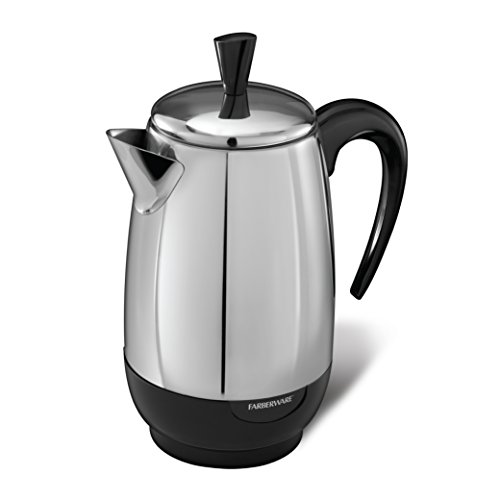
Farberware Electric Coffee Percolator, Stainless Steel Basket, Automatic Keep Warm, No-Drip Spout, 8 Cup
Chosen because it specifies Stainless Steel Basket and Automatic Keep Warm.
Check Price on AmazonPresto 02811 Stainless Steel 12-Cup Electric Coffee Percolator
Picked as a relevant option in this category.
Check Price on AmazonBLACK+DECKER 12-Cup Drip Coffee Maker with Vortex Brewing | 12-cup drip coffee maker with Vortex brewing for rich coffee extraction, programmable timer, Sneak-A-Cup and auto shutoff
Picked as a relevant option in this category.
Check Price on AmazonWest Bend Electric Percolator Classic Style Coffee Maker with Heat Resistant Handle Base and Detachable Cord with Stainless Steel Stem and Basket, 12-Cup, Silver
Chosen because it specifies 12-Cup and Silver.
Check Price on Amazon| Type or example | Advertised capacity | Carafe and warming | Approximate counter footprint | Best suited to |
|---|---|---|---|---|
| Mr. Coffee 5-Cup Mini Brew | 5 machine cups, about 25 oz | Glass carafe; warming plate | About 10 × 7 in | Small kitchens and one or two coffee drinkers |
| BLACK+DECKER 12-Cup Programmable Coffee Maker | 12 machine cups, about 60 oz | Glass carafe; warming plate | About 12 × 9 in | Budget-conscious households that serve a pot soon after brewing |
| Technivorm Moccamaster KBGV Select | 10 machine cups, about 50 oz | Glass carafe; automatic hot plate | About 13 × 7 in | Frequent brewing and buyers who value repairable construction |
| OXO Brew 8-Cup Coffee Maker | 8 machine cups, about 40 oz | Stainless-steel thermal carafe | About 10 × 7 in | Smaller batches without leaving coffee on a hot plate |
| Breville Precision Brewer Thermal | 12 machine cups, about 60 oz | Stainless-steel thermal carafe | About 15 × 9 in | Large batches and adjustable brew settings |
Dimensions are approximate and can vary by model version. Measure the machine’s height with its lid open and leave room to lift out the brew basket. The numbers are more useful as a comparison than as a guarantee of fit: confirm the exact product dimensions before buying.
Choose by your daily routine
- One or two servings, little spare counter space: A compact 4–5-cup machine such as the Mr. Coffee 5-Cup Mini Brew avoids brewing a large pot that goes stale. Confirm that the carafe size matches your mugs.
- Lowest upfront cost and coffee served right away: A basic 10–12-cup glass-carafe machine, such as a BLACK+DECKER model, is usually the practical choice. It is less forgiving if coffee sits on the warming plate for hours.
- Several people drink from the pot over the morning: Prefer a thermal carafe. It retains heat without continued direct heating, which helps avoid the cooked taste that can develop when coffee sits on a hot plate.
- You want to adjust brewing rather than just press a button: The Breville Precision Brewer Thermal offers more control over settings than a basic drip machine, but it takes more counter space and costs more. Buy that flexibility only if you expect to use it.
- You brew frequently and care about long-term serviceability: The Moccamaster KBGV Select is a premium option with a metal housing and a design intended to be repairable. Its glass carafe still needs careful handling, and the machine’s higher price is harder to justify for occasional use.
What matters beyond the cup count
Brew temperature and consistency
Water needs to be hot enough during brewing to extract coffee effectively; many specialty-coffee guidelines put the desirable brewing range around 195–205°F. A machine’s advertised temperature may describe a setting or a point in the water path, not the temperature every part of the grounds experiences. Look for a machine designed to control brew temperature consistently rather than relying on one headline number. If the coffee tastes persistently weak or harsh, grind size, coffee dose, and freshness can matter as much as the machine.
Keep-warm behavior
A glass carafe sits on a powered plate. This can keep a pot available for serving, but continued heating gradually changes the flavor. Some machines switch the plate off automatically after a set period; check that interval if you often forget a pot. A thermal carafe avoids a hot plate, but it works best when preheated with hot water and kept closed between pours. It also will not keep coffee piping hot indefinitely.
Carafe shape and serving
A carafe that pours cleanly and has a lid that opens wide is easier to live with than one that dribbles or traps coffee around its rim. Thermal carafes tend to be heavier and can be harder to inspect while filling; glass models make the remaining amount visible but are breakable. If you pour with one hand or have limited grip strength, check the handle shape and filled weight before choosing.
Cleanup and wear
Most drip machines need a rinse of the brew basket and carafe after each use. Removable baskets are simpler to wash than narrow, fixed parts; check whether the manufacturer permits the carafe or basket to go in a dishwasher. Avoid abrasive cleaners on stainless steel and follow the manual for descaling. In hard-water areas, mineral buildup can slow brewing and affect temperature, so periodic descaling is part of ownership—not a sign that the machine has failed.
Common wear points include glass carafes, carafe lids, seals, and the heating element. A replacement carafe can extend a machine’s life, but availability varies by model. Before buying a premium brewer, check whether replacement parts and service are available in your region. For any machine, use the correct filter size and avoid overfilling the reservoir; a spill inside the housing is harder to clean than the removable parts.
A quick capacity and space check
Suppose your household drinks three standard 8-ounce mugs at breakfast. That is 24 ounces, or just under five 5-ounce machine cups. A 5-cup brewer may be enough, but leaves little room for a refill; an 8-cup model offers a more comfortable margin. If you brew a full 10-cup pot every morning and routinely discard half, a smaller brewer may save counter space and reduce wasted coffee.
Before ordering, measure the available counter width and depth, then measure clearance beneath the cabinet. Include space to pull out the carafe and remove the filter basket. If the brewer must sit under a low cabinet, a machine with a top-opening reservoir or lid may be inconvenient even if its listed height technically fits.
Bottom line
For a small kitchen or modest daily use, choose a compact 4–5-cup brewer. For a budget-friendly full pot that will be served promptly, choose a basic glass-carafe machine. For coffee that needs to stay warm through a longer morning, choose a thermal-carafe model such as the OXO Brew 8-Cup or Breville Precision Brewer Thermal. Prioritize the capacity you will use, a carafe you can comfortably clean and pour, and dimensions that fit your actual counter—not the largest cup count or the longest feature list.
Write Your Review
No reviews yet. Be the first to share your experience!