
Our Top Picks
 Best OverallOXO Good Grips Plastic Utility Cutting Board14.8"L x 10.4"W14.75 x 10.4 x 0.5 inches1.5 PoundsCheck on Amazon
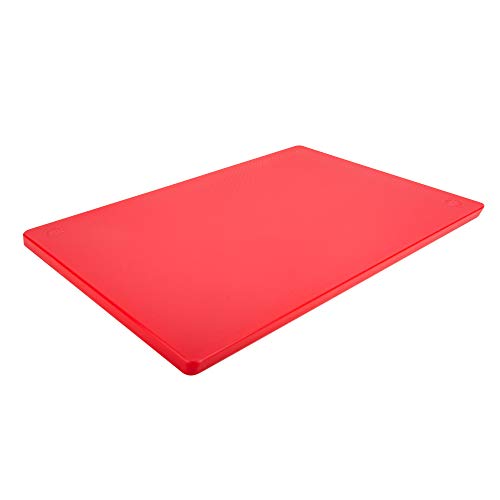 Best for Raw Meat OnlyThirteen Chefs Large Red Cutting Board18"L x 12"W x 0.5"T18 x 0.5 x 12 inches3.4 poundsCheck on Amazon
 Best Bamboo OptionEmpune Extra Large Cutting Board17.6"L x 12"W17.6 x 12 x 0.7 inches1 poundsCheck on Amazon
The best cutting boards for meat are non-porous plastic boards with a deep juice groove for raw chicken and beef, plus one wooden or large carving board for cooked roasts. Start with the OXO Good Grips Carving and Cutting Board if you want one large dishwasher-safe board for everything from trimming to carving, and pick the Thirteen Chefs red HDPE board if you want a commercial-style, color-coded board dedicated to raw meat.
A good board for cutting meat does three jobs: it holds the meat still, catches the juices, and cleans up thoroughly after raw protein. That is why a board for cutting meat usually differs from the pretty acacia board on your counter. This guide covers the best cutting board for meat by material, size and groove design, with real products from plastic, wood and bamboo. We did not personally use these boards; everything below comes from the listings and maker descriptions, and unknown specs are marked not listed.

SNOWCLAD Stainless Steel Cutting Board,Non Toxic chopping for kitchen | Metal Cutting Board,Double Sided Stainless Steel/Wheat straw pp Large mat for meat,Dishwasher Safe [16*11Inch]
Chosen because it specifies Non Toxic chopping for kitchen and Metal Cutting Board.
Check Price on AmazonOXO Good Grips Plastic Utility Cutting Board | Prepare Large Meals, Easy Cleanup, Double-Sided Non-Porous Surface, Resists Odors, Meat, Vegetables, Dishwasher Safe
Chosen because it specifies Prepare Large Meals and Easy Cleanup.
Check Price on AmazonThirteen Chefs Large Red Cutting Board - 18 x 12 Inch for Meat, Professional 1/2" Thick HDPE Plastic for Restaurants, Dishwasher Safe and NSF Stamped
Chosen because it specifies 18 x 12 Inch for Meat and Professional 1/2" Thick HDPE Plastic for Restaurants.
Check Price on AmazonEmpune Extra Large Cutting Board, 17.6" Bamboo Cutting Boards for Kitchen | Heavy Duty Wood Cutting Board with Juice Groove & Handles Kitchen Chopping Board for Meat Cheese board Serving Tray, XL
Chosen because it specifies 17.6" Bamboo Cutting Boards for Kitchen.
Check Price on AmazonSeven main picks plus four extras cover raw-meat prep, large roasts, family kitchens and small counters.
Top Picks at a Glance
- Best Overall: OXO Good Grips Plastic Carving and Cutting Board (14.34 x 21.11 in): large, double-sided, deep juice grooves, dishwasher safe
- Best for Raw Meat Only: Thirteen Chefs Red HDPE Board (18 x 12 x 0.5 in): NSF-stamped, red for raw meat
- Best Large Value: Farberware 15 x 20 in Extra Large Plastic Board: reversible with a deep juice groove
- Best Budget: Gorilla Grip Slip-Resistant Board: non-porous, BPA-free, juice groove border, several sizes
- Best Color-Coded Set: Aichoof 4-Board Set With Holder: separate boards for meat, poultry, fish and produce
- Best Wood Option: John Boos R-Board Maple 18 x 12 x 1.5 in: edge-grain maple for cooked meat and carving
- Best Bamboo Option: Empune Extra Large Bamboo 17.6 in: juice groove and handles for roasts and cooked meat
Comparison Table
| Product | Best for | Key specs | Watch for | Price tier |
|---|---|---|---|---|
| OXO Carving and Cutting Board | All-purpose meat prep and carving | 14.34 x 21.11 in; double-sided; deep juice grooves; non-slip base; dishwasher safe | Big footprint for small sinks | Mid-range |
| Thirteen Chefs Red HDPE | Dedicated raw meat board | 18 x 12 x 0.5 in; HDPE; NSF stamped; dishwasher safe | No juice groove listed; thin | Budget to Mid-range |
| Farberware 15 x 20 Plastic | Big joints and turkeys | 15 x 20 in; reversible; deep juice groove; dishwasher safe | Plastic marks over time | Budget |
| Gorilla Grip Board | Light daily meat prep | Slip-resistant; non-porous; BPA-free; juice groove border; dishwasher safe | Sizes vary by listing; thickness not listed | Budget |
| Aichoof Color-Coded Set of 4 | Cross-contamination control | 4 boards with holder; BPA-free; dishwasher safe | Sizes not listed | Mid-range |
| John Boos R-Board Maple 18 x 12 | Cooked meat, slicing | 18 x 12 x 1.5 in; 10 lb; edge-grain maple; reversible; made in USA | Wood needs hand care, no groove | Premium |
| Empune Bamboo 17.6 in | Cooked roasts and serving | 17.6 in; bamboo; juice groove; handles | Bamboo is hard on knife edges | Budget to Mid-range |
1. OXO Good Grips Plastic Carving and Cutting Board: Best overall for meat
- Size: 14.34 x 21.11 inches
- Material: plastic, double-sided, non-porous surface
- Deep juice grooves
- Non-slip base
- Dishwasher safe
Best for: Households that cut a lot of chicken, steak and roasts and want one board that goes straight into the dishwasher.
Skip if: Your counter is smaller than about 22 inches wide or your dishwasher cannot take a board this size.
The OXO board is a good all-rounder for meat because it is large enough to trim a whole chicken and to carve a roast without juices running onto the counter. The double-sided surface lets you dedicate one face to raw meat and the other to cooked or vegetable prep, though the safer habit is to use a separate board for raw and cooked foods.
Plastic boards are non-porous, meaning they do not soak liquid into the surface the way wood fibers can. That makes cleaning after raw chicken more predictable: a hot, soapy wash or a dishwasher cycle takes care of most of the work. Deep grooves around the edge hold surprisingly large volumes of liquid, which is useful for carving.
The compromise is the footprint. At just over 21 inches it is a big board that needs a decent counter and storage spot. Plastic also shows knife scars over time; once a board is deeply scored and hard to clean, it is time to replace it.
Pros
- Large, versatile size
- Deep grooves
- Dishwasher safe
- Non-slip base
Cons
- Occupies lots of counter
- Plastic scars with use
- Thickness not listed
2. Thirteen Chefs Red HDPE Cutting Board: Best dedicated raw-meat board
- Size: 18 x 12 inches, 1/2 inch thick
- Material: HDPE plastic, red
- NSF stamped
- Dishwasher safe
- Juice groove: not listed
Best for: Cooks who want a restaurant-style color-coded board just for raw meat.
Skip if: You want a juice groove or a very thick board.
In commercial kitchens, red usually signals raw meat. Using the same convention at home is a simple way to avoid mixing up boards. HDPE, short for high-density polyethylene, is the standard commercial cutting board plastic: hard, non-porous and generally dishwasher friendly.
At half an inch thick, the board is flat and easy to store, but it is also lighter and more likely to slide on a smooth counter. Place a damp towel or non-slip mat under it. Without a groove, liquid can run off the edge, so work on a rimmed tray when trimming juicy cuts.
NSF stamping means it meets a recognized sanitation standard for foodservice equipment, which is reassuring but does not replace good habits: wash after each use, replace when deeply scored.
Pros
- Commercial-style HDPE
- Red for easy identification
- Compact and easy to store
- NSF stamped
Cons
- No groove listed
- Slides if not secured
- Thin
3. Farberware 15 x 20 Inch Extra Large Plastic Board: Best large budget board
- Size: 15 x 20 inches
- Material: plastic, white, reversible
- Deep juice groove
- Dishwasher safe
- Thickness: not listed
Best for: People who break down large cuts or whole poultry and want room without paying for wood.
Skip if: You need a board that fits a small sink or tight cupboard.
This Farberware board is the simple, low-cost route to a large raw-meat station. 15 x 20 inches is big enough for a turkey breast, a rack of ribs or a brisket trim. Reversible design doubles its life: one side can take the knife scars of meat prep while the other stays cleaner for vegetables.
The groove is described as deep, so it can hold the juices from carving. Dishwasher-safe construction makes post-meat cleanup less of a chore, although a board this size only fits in some dishwashers. If yours is too small, a long soak in hot, soapy water in a clean tub or a hot wash followed by a rinse and air dry works.
Without a stated thickness, expect a standard thin plastic board. Slip a towel underneath to hold it still while cutting.
Pros
- Big work area
- Groove
- Reversible
- Low cost
Cons
- May not fit dishwasher
- Thickness not listed
- Scars with heavy use
4. Gorilla Grip Slip-Resistant Cutting Board: Best budget board with a juice border
- Material: BPA-free, non-porous plastic
- Slip-resistant surface
- Juice groove border
- Dishwasher safe
- Multi-size listing; exact size varies by option
Best for: Light daily meat prep such as chicken breasts, burger patties or sausages.
Skip if: You want a thick, rigid board or you plan to carve large roasts.
Gorilla Grip is a popular value brand, and this board is basically a flexible, easy-clean surface. The border groove helps contain liquids from raw meat, while the slip-resistant coating keeps the board from skating. Because it is thinner than a rigid HDPE slab, it is easy to rinse and store.
Choose the size to match the job. A medium board is fine for weeknight chicken. A larger one is needed for whole birds or roasts. Check the size option before ordering, because this listing covers several.
This is the sort of board you buy two or three of and replace when it gets deeply scored. Treat it as a consumable and keep a separate board for produce.
Pros
- Inexpensive
- Juice groove border
- Slip resistant
- Dishwasher safe
Cons
- Thin
- Plastic scars
- Size depends on option
5. Aichoof Color-Coded Cutting Board Set With Holder: Best set for separating meat from produce
- 4 color-coded boards with a holder
- BPA-free plastic
- Dishwasher safe
- Designed to reduce cross-contamination
- Board sizes: not listed
Best for: Busy families who prepare meat, fish and vegetables in the same meal.
Skip if: You want a single large carving board.
Color-coding is one of the easiest ways to keep raw meat away from ready-to-eat foods. A typical scheme has red for raw meat, yellow for poultry, blue for fish and green for vegetables. A set of four boards with a holder keeps each one in its place and dries them upright.
The set is more a system than a product: the value lies in always using the red board for raw beef, the yellow for chicken and so on, and washing each after use. Sizes are not listed in the title, so confirm them on the product page. If you often carve large roasts, add a bigger board.
Remember that a color-coded set does not remove the need for careful handwashing and knife washing between tasks.
Pros
- Clear separation of foods
- Holder keeps them organized
- Dishwasher safe
Cons
- Sizes not listed
- Takes cabinet space
- Smaller boards for roasts
6. John Boos R-Board Maple 18 x 12: Best wood board for cooked meat
- Size: 18 x 12 x 1.5 inches
- Wood: maple, edge grain
- Weight: 10 lb
- Reversible with finger grips
- Made in the USA
Best for: Slicing cooked roasts, steaks and charcuterie, and general kitchen prep.
Skip if: You want a no-fuss board for raw chicken.
Wood can be used for meat. A dense hardwood like maple is less porous than many people assume, and food-safety guidance from agencies such as the USDA says wood boards can be used if kept clean. The important phrase is kept clean: wood needs hand washing with hot soapy water, thorough drying and periodic oiling, and it should not be run through a dishwasher.
The Boos board is thick at 1.5 inches and heavy at about 10 pounds, which keeps it steady when you slice a roast. It has no juice groove, so pair it with a tray or use it for rested meat that is less juicy.
If you want one wood board for the dinner table and a plastic board for raw meat, this is the combination professional cooks often choose.
Pros
- Stable
- Gentle on knives
- Reversible
- Long lifespan with care
Cons
- Needs hand care
- No groove
- Heavy
7. Empune Extra Large Bamboo Cutting Board 17.6 Inch: Best bamboo for roasts and serving
- Length: 17.6 inches
- Material: bamboo
- Juice groove and handles
- Heavy-duty construction per listing
- Thickness: not listed
Best for: Carving cooked meat and serving it at the table.
Skip if: You want a board that is kind to fine knife edges, since bamboo is hard.
Bamboo is technically a grass, pressed and glued into boards. It is hard and, in boards like this, includes a juice groove and handles that make it easy to carry to the table. For cooked roasts and sliced steaks, it is attractive and practical.
Bamboo is tough on knife edges and glue seams can open if the board is soaked. Wipe, wash by hand and dry promptly. Reserve it for cooked meat and use plastic for raw protein if you can.
The listing gives few details about thickness or weight, so check them before ordering.
Pros
- Juice groove
- Handles
- Attractive for serving
Cons
- Hard on knives
- Hand wash only
- Thickness not listed
Also Consider
Belwares 18 Inch Plastic Cutting Board
A reversible, BPA-free plastic board with a juice groove and a thick profile per the listing; a good mid-size step up from thin mats.
KitchenAid Classic Cutting Board 11 x 14
A smaller dishwasher-safe board with a perimeter trench, suited to chicken breasts and chops.
SWSKR Stainless Steel Cutting Board 15.8 x 11.8
A 304 stainless board with a lip and juice groove; easy to sanitize but dulls knife edges, so use for pastry or non-cutting tasks.
Winco 15 x 20 Inch Plastic Board
A half-inch thick, restaurant-style board that is dishwasher safe and stain resistant per the listing.
How We Chose
This guide is research-based. We compared the product listings, manufacturer descriptions and public food-safety guidance from sources such as the USDA Food Safety and Inspection Service and NSF. We did not personally use these products, and we do not quote ratings, review counts or prices.
We favored boards that are non-porous or easy to sanitize for raw meat, then added wood and bamboo for cooked meat. We weighed size, groove depth, cleaning method and thickness, and labeled unstated specs as not listed.
Buying Guide
Material: plastic, wood, bamboo or steel
Plastic (HDPE or polypropylene) is the standard for raw meat. It does not absorb much liquid and is usually dishwasher safe. Wood is acceptable if you wash it by hand, dry it fully and keep it oiled, but it demands more care. Bamboo is hard and glued, so it is better for cooked foods. Stainless steel and titanium boards are easy to wipe but can dull knives.
Size: bigger than you think
Raw meat prep is messy, so choose at least 15 x 11 inches. For whole chickens, roasts and ribs, 15 x 20 inches is more comfortable. If you are cutting only chicken breasts or burgers, an 11 x 14 inch board is enough. Always leave an inch or two around the meat so it does not touch the counter.
Juice grooves and rims
A groove should be deep enough to hold juice from carving, ideally at least a quarter inch, and should sit slightly inside the board edge. Shallow grooves overflow quickly. If a board has no groove, work over a rimmed baking sheet when trimming juicy cuts.
Thickness and stability
Thin boards are easy to wash but slide. Look for non-slip feet or a rubberized edge, or add a damp towel. Rigid boards of at least half an inch resist warping in the dishwasher; thin flexible mats do not.
Cleaning and replacement
After raw meat, wash the board with hot soapy water right away, then rinse and let it air dry. Plastic boards can go in the dishwasher. Sanitizing with a diluted bleach solution is recommended by some food-safety agencies for deep grooves; follow the guidance on your local agency’s website. Replace plastic boards when grooves become deep and hard to clean.
Do not rinse raw meat in the sink before cutting; the USDA advises against washing raw poultry because it can spread bacteria. Cook meat to the safe internal temperatures recommended by food-safety authorities.
Raw-meat workflow for a small kitchen
If you only have room for one or two boards, set up a simple routine. Use the plastic board for raw meat first, move the trimmed meat to a plate or pan, wash the board and knife, then switch to the second board for vegetables or bread. Washing between tasks is the part that matters. Keep a dedicated kitchen towel or paper towels for the board area and do not reuse the same cloth on other counters.
A bench scraper helps you move scraps from the board without touching them. A rimmed baking sheet under the board catches juices that overflow the groove, and it can double as the staging tray for trimmed meat. For frozen meat, thaw in the refrigerator on a tray, since boards left at room temperature with defrosting meat invite spills and bacterial growth.
Cost over time
Plastic boards are cheap to buy but are consumables. A board that costs a modest amount and lasts two to three years of heavy use costs only a few cents per week. A premium wood board costs more up front but can last decades with care. If you cook meat several times a week, budget for one or two plastic boards and one wood board and rotate them.
Choosing by cut and cooking method
For poultry, pick a board with the deepest groove you can find, because chicken juices are thin and spread quickly. For steaks and chops, a smaller board in the 11 x 14 inch range is easier to wash and stores flat. For brisket, pork shoulder and prime rib, choose the largest board you own and plan to carve over a rimmed tray. For ground meat patties, a flexible mat or a thin plastic board is plenty because there is no hard cutting involved. For jerky, deli meats and charcuterie, a wood or bamboo board is a nicer surface because you are slicing cooked or cured foods rather than raw ones.
Common Mistakes to Avoid
- Using the same board for raw chicken and salad without washing between.
- Buying a thin mat for carving a roast and having juice run off.
- Putting a wood or bamboo board in the dishwasher.
- Keeping a deeply scored plastic board too long.
- Ignoring slip risk when cutting with a sharp knife.
Frequently Asked Questions
What is the best cutting board for meat?
A large non-porous plastic board with a deep juice groove is the best choice for raw meat. A thick maple board works well for cooked meat if you hand wash it.
Can I use a wood cutting board for raw meat?
Yes, if you wash it promptly with hot soapy water, dry it well and keep it in good condition. Use a separate plastic board if you cannot do that.
Should I use a separate board for meat?
Yes. Food-safety agencies recommend separate boards for raw meat and ready-to-eat foods to reduce cross-contamination.
Is plastic or wood better for cutting meat?
Plastic is easier to sanitize and can go in the dishwasher. Wood is gentler on knives and attractive, but needs hand care.
What size board do I need for cutting meat?
At least 15 x 11 inches for most jobs, and about 15 x 20 inches for whole birds or large roasts.
Do I need a juice groove?
It is very helpful for carving and for raw poultry. Without one, use a tray under the board.
How often should I replace a plastic cutting board?
Replace it when knife scars become deep and hard to clean, or when it warps and no longer sits flat.
Which One Should You Buy?
For most households, buy the OXO Good Grips board for general meat prep and add a color-coded raw meat board. If you carve a lot of large roasts, the Farberware 15 x 20 inch board gives a big work surface at a modest tier.
If you love wood, add the John Boos R-Board for cooked meat and keep a plastic board for anything raw.
If you only want to spend once, a large plastic board with deep grooves is the most useful single purchase, because it handles raw poultry, trimming and carving without special care. Add a smaller color-coded board for produce, and a wood board only if you enjoy the look and the upkeep.
Sources
- USDA Food Safety and Inspection Service guidance on cutting boards and cross-contamination
- NSF International standards for food equipment
- Manufacturer product pages and listing details for OXO, Thirteen Chefs, Farberware, Gorilla Grip, Aichoof, John Boos and Empune
- University extension food-safety resources
Last updated: October 2026



Write Your Review
No reviews yet. Be the first to share your experience!