
Key takeaways
- One pan for frequent weeknight cooking: Choose the 3.5-quart sauté pan if you make meals with vegetables, sauces, or several ingredients. Its covered capacity is more useful than a skillet’s for simmering, while its wide base still allows browning.
- You mainly sear or sauté: The 10.5-inch skillet is the more manageable everyday pick. It has enough area for a couple of portions without the bulk of a deep pan. Go larger if you regularly cook for three or more and have a burner that heats the base evenly.
- You cook for one or have limited storage: The 8.5-inch skillet is compact, but it is a specialist rather than a do-everything pan. It can be crowded quickly, so avoid choosing it as your only frying pan.
- You make soups, pasta, or stock: An 8-quart stockpot makes sense for batch cooking. For small portions and sauces, a 3-quart saucepan is easier to lift and store.
- You are new to stainless steel: Start with one skillet or sauté pan, not a full set. Stainless requires appropriate preheating and enough cooking fat for many foods. A set is better value only when you will use most of its pieces.
Best Hestan NanoBond Cookware: Which Pieces Are Worth Buying?
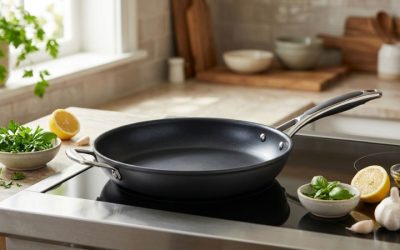
The best Hestan NanoBond molecular titanium cookware for most kitchens is a 3.5-quart sauté pan for everyday versatility, paired with a 10.5-inch skillet if you often sear or cook eggs. NanoBond is premium, uncoated stainless steel: it offers a durable cooking surface and induction compatibility, but it is heavier and usually costs more than conventional stainless. Choose pieces by capacity and how you cook, not by the technology name alone.
How the useful pieces compare
The figures below are for commonly offered Hestan NanoBond sizes; weights and capacities can vary slightly by production version. Check the current product specification before ordering, especially if weight or cabinet fit matters.

Hestan NanoBond 8.5-Inch Stainless Steel Frying Pan, Titanium Bonded
Included for 'Best Hestan NanoBond Cookware' because the listing specifies Titanium Bonded, details this guide uses to compare options.
View on Amazon
Hestan NanoBond Molecular Titanium 5-Piece Cookware Set and 8.5-Inch Skillet - Toxin & Chemical Free
Included for 'Best Hestan NanoBond Cookware' because the listing specifies Toxin & Chemical Free, details this guide uses to compare options.
View on Amazon| Piece | Approx. size and capacity | Approx. weight | Cooking surface and best use | Induction |
|---|---|---|---|---|
| 8.5-inch skillet | 8.5 in; no practical volume rating | About 2.2 lb | Compact flat cooking area; one or two eggs, a small portion, or toasting nuts | Yes |
| 10.5-inch skillet | 10.5 in; no practical volume rating | About 3.2 lb | Room for several eggs, fish fillets, or a couple of servings of sautéed food | Yes |
| 3.5-quart sauté pan | 3.5 qt; roughly 11 in | About 5.5 lb | Broad cooking area and taller sides; vegetables, chicken pieces, pan sauces, and shallow braises | Yes |
| 8-quart stockpot | 8 qt; roughly 8 in wide | About 5 lb without contents | Deep, narrow cooking surface; pasta, soup, stock, and larger batches | Yes |
| 3-quart saucepan | 3 qt; roughly 8 in | About 3.5 lb | Smaller base and high sides; grains, sauces, and reheating | Yes |
Approximate weights are useful for comparing handling, not a guarantee for every model year. A lid adds weight, and the sauté pan becomes substantially heavier once filled. NanoBond uses a stainless cooking surface with a titanium-based bonded finish; it is not a nonstick coating. Its stainless construction and magnetic exterior make it suitable for induction, as well as gas and electric cooktops.
Choose by cooking situation
- One pan for frequent weeknight cooking: Choose the 3.5-quart sauté pan if you make meals with vegetables, sauces, or several ingredients. Its covered capacity is more useful than a skillet’s for simmering, while its wide base still allows browning.
- You mainly sear or sauté: The 10.5-inch skillet is the more manageable everyday pick. It has enough area for a couple of portions without the bulk of a deep pan. Go larger if you regularly cook for three or more and have a burner that heats the base evenly.
- You cook for one or have limited storage: The 8.5-inch skillet is compact, but it is a specialist rather than a do-everything pan. It can be crowded quickly, so avoid choosing it as your only frying pan.
- You make soups, pasta, or stock: An 8-quart stockpot makes sense for batch cooking. For small portions and sauces, a 3-quart saucepan is easier to lift and store.
- You are new to stainless steel: Start with one skillet or sauté pan, not a full set. Stainless requires appropriate preheating and enough cooking fat for many foods. A set is better value only when you will use most of its pieces.
What NanoBond changes—and what it does not
NanoBond’s bonded surface is designed to resist staining and scratching better than ordinary stainless steel. That can be useful for frequent cooking and regular cleaning, but it does not make the pan nonstick or immune to damage. Eggs, delicate fish, and starchy foods can still stick if the pan is too cool, too hot, or used without adequate fat.
Heat distribution depends on more than the surface treatment. The pan’s multi-layer construction spreads heat across the base, but burner size and control still matter. On induction, match the cooking zone to the pan’s base where possible; a much smaller zone can leave the edges cooler. On gas, keep flames beneath the base rather than climbing the sides. For delicate sauces, reduce the heat once the pan is hot instead of relying on a high setting.
Handles are stainless steel and designed to stay cooler than the body during ordinary stovetop cooking, but they can become hot, particularly during long cooking or in an oven. Use a dry mitt when needed. The sauté pan’s weight and long handle offer leverage for moving food, but lifting it full with one hand may be awkward. If grip strength or wrist comfort is a concern, prioritize a smaller skillet or saucepan and consider how you will transfer a full pan.
Long-term care: keeping the surface in good shape
- Preheat gradually. Use low to medium heat for most tasks, then add oil or butter when the pan is warm. Extreme heat can discolor stainless and makes food more likely to scorch.
- Let food release. Protein often sticks at first and loosens as browning develops. Give it time before trying to turn it; forcing it can tear the food and leave more residue.
- Cool before washing. Avoid plunging a very hot pan into cold water, which can stress or warp cookware. Wash with warm water and dish soap using a nonabrasive sponge.
- Handle discoloration sensibly. Heat tint and mineral spots are cosmetic, not proof that the pan has failed. A stainless-steel cleaner can help with persistent marks; follow the cookware manufacturer’s care instructions and avoid harsh scouring tools.
- Store to prevent dents and scratches. Nest pans carefully, using a protective separator if stacking. The durable surface is not a reason to bang cookware together or cut food in the pan.
The parts most likely to show wear are typically the exterior, handles, and lids—not a nonstick layer, since NanoBond is not a coated nonstick pan. Ordinary discoloration may accumulate with use, while warping is more likely after severe temperature changes or prolonged excessive heat. Good habits reduce those risks but cannot guarantee cookware will remain cosmetically pristine.
Is the premium worth it?
NanoBond sits in the high-priced end of stainless cookware, with individual pieces generally costing several hundred dollars depending on size and current retail pricing; sets can cost considerably more. A simple ownership calculation can clarify the trade-off: if a $400 pan is used four times a week for ten years, that is about 2,080 uses, or roughly 19 cents per use before considering care or replacement. At once a week for the same period, it is about 77 cents per use. These are illustrative calculations, not a promise of lifespan.
That value is easiest to justify if you cook often, want induction-ready stainless, and prefer a robust pan over replacing coated cookware. If you want effortless release for low-fat eggs, lighter handling, or a lower upfront cost, a conventional stainless skillet or a separate nonstick pan may suit you better. For most buyers interested in NanoBond, buying one frequently used piece first is the safest way to see whether its weight, handling, and stainless-steel cooking style fit the kitchen.



Write Your Review
No reviews yet. Be the first to share your experience!