
Key takeaways
- Pros: Twelve usable presets, durable stainless steel inner pot
- Con: Interface learning curve higher than premium brands
What's inside
A pressure cooker oven promises to turn a four-hour braise into a forty-minute dinner, but the market in 2026 is crowded with models that vary wildly in capacity, material, and safety engineering. The real problem a buyer faces is not whether to get one, but which one matches their kitchen reality. A college student cooking rice for one has zero use for a seven-quart stovetop beast, while a family of five needs more than a three-quart electric unit can deliver in a single batch.
What separates a worthwhile pressure cooker oven from a shelf ornament comes down to four things: capacity that actually fits your cooking rhythm, material quality that resists warping or chemical leaching over years of use, a preset system that maps to meals you genuinely make, and safety features robust enough that a stuck lid or a failed seal never becomes a hazard. Owner feedback across these eight models reveals that price alone is a poor proxy for satisfaction—some of the cheapest entries outperform mid-tier units in daily use, while a few premium options disappoint on specifics that matter most to the people using them.
As an Amazon Associate we earn from qualifying purchases at no extra cost to you. Product prices and availability are accurate as of the date shown and are subject to change.



Quick Picks
| Product | Best For | Price |
|---|---|---|
| Midea 12-in-1 6Qt | Most functions per dollar | $76.73 |
| Pigeon 3.2Qt Super Cooker | Small kitchens and stovetop versatility | $70.00 |
| Cosori 6QT 9-in-1 | Safety-minded buyers who prefer ceramic | $80.99 |
| OLIXIS 10-in-1 3Qt | Single-person and two-person households | $39.93 |
| Instant Pot Duo 6Qt | Recipe ecosystem and proven reliability | $107.30 |
| Midea 10-in-1 6Qt | Stainless steel durability at mid-tier | $118.99 |
| 7″ Steamer Rack | Upgrading an existing pressure cooker oven | $6.50 |
| IMUSA 7Qt Aluminum | Traditional stovetop pressure cooking | $47.99 |
How We Picked
We narrowed this list by weighing four criteria that owner reviews consistently flag as deal-breakers or deal-makers. First, capacity-to-household fit: a model that is too small forces batch cooking, while one that is too large wastes energy and counter space. Second, material integrity, specifically whether stainless steel, hard anodized, or ceramic coatings hold up after repeated pressure cycles without degrading. Third, the real-world usefulness of presets—does the unit do more than heat water, or do its functions genuinely replace separate appliances? Fourth, safety architecture, including the number and type of pressure-release mechanisms, lid-lock systems, and whether owners report any concerning incidents over extended use.
The 8 Best Pressure Cooker Ovens in 2026
Midea 12-in-1 6Qt Stainless Steel
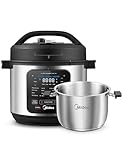
This is the most function-dense electric pressure cooker oven available under eighty dollars. With twelve presets spanning slow cooking, steaming, sautéing, and yogurt-making, it replaces several single-purpose appliances without demanding a fortune. Owners praise the stainless steel inner pot for withstanding acidic broths and long simmering without pitting. The six-quart capacity handles meals for four to six comfortably. The downside is that Midea’s interface, while functional, lacks the intuitive clarity of pricier competitors; some owners report needing to consult the manual more than once during the first week.
- Pros: Twelve usable presets, durable stainless steel inner pot
- Con: Interface learning curve higher than premium brands
Skip this if you want a set-and-forget experience without reading a manual.
Pigeon 3.2Qt All-In-One Super Cooker
The Pigeon works on every cooktop type and serves as a steamer, Dutch oven, and pressure cooker in one hard-anodized shell. At 3.2 quarts, it suits one or two people preparing dal, idli, or a quick soup. The hard anodized construction resists scratching and corrosion better than bare aluminum alternatives. Owners who cook Indian staples frequently note that the lid seal holds pressure well even after months of daily use. The main limitation is capacity—this is not a family-sized pressure cooker oven, and attempting to double a recipe results in undercooked or unevenly pressurized food.
- Pros: Works on all cooktops, hard anodized durability
- Con: Too small for households of three or more
Skip this if you regularly cook for more than two people.
Cosori 6QT 9-in-1 Ceramic Coating
Cosori’s pitch is safety first, with twelve engineered safeguards that cover over-pressure, over-temperature, and lid-lock failures. The ceramic-coated inner pot appeals to buyers who distrust non-stick chemicals and want an easier cleanup than bare stainless offers. Nine functions cover the most common electric pressure cooker oven tasks without overwhelming. Owner feedback highlights the ceramic surface as genuinely non-stick for eggs and rice, though some long-term users note the coating shows wear near the rim after heavy year-round use. At just over eighty dollars, it sits in a competitive middle tier.
- Pros: Twelve safety features, ceramic pot for easy release
- Con: Ceramic coating durability concerns with prolonged use
Skip this if you want maximum capacity for batch cooking for large groups.
OLIXIS 10-in-1 3Qt Stainless Steel
At under forty dollars, the OLIXIS is the cheapest way to enter electric pressure cooking. Three quarts is genuinely enough for a single person or a couple who cook fresh meals rather than batch-prep for the week. It includes a ceramic inner pot alongside the stainless steel one, which is unusual at this price point and gives owners two surface options. Ten presets sound impressive, but the small capacity limits how many of them will see regular use. The build quality is adequate, not exceptional—owners note the exterior scratches more easily than premium units.
- Pros: Lowest price, includes both ceramic and stainless pots
- Con: Build quality and finish trail more expensive models
Skip this if you need more than two servings per cycle.
Instant Pot Duo 6Qt Stainless Steel
The Instant Pot Duo remains the reference point for electric pressure cooker ovens because of its unmatched recipe ecosystem. Millions of user-generated recipes, video tutorials, and accessory options exist specifically for this platform, which matters enormously if you are learning to cook with pressure. Seven functions cover the essentials. The stainless steel pot is proven and easy to replace. The con is pricing—owners frequently question why the Duo costs significantly more than Midea’s twelve-preset alternative when functionally it does less. It sells on brand trust and community support rather than spec-sheet value.
- Pros: Unmatched recipe ecosystem and accessory availability
- Con: Higher price for fewer presets than competitors
Skip this if you want maximum presets per dollar and already have cooking confidence.
Midea 10-in-1 6Qt Stainless Steel
This model occupies an awkward position in the lineup. It offers ten presets and a six-quart stainless steel pot, matching the Midea 12-in-1 on capacity and material while charging nearly forty-three dollars more. Owner feedback suggests the build and interface are very similar to the cheaper sibling, making the premium hard to justify. That said, some buyers prefer the slightly different control layout on this unit, and if you find it on sale closer to the 12-in-1’s price, it is a solid machine. The stainless steel pot handles browning and deglazing without coating concerns.
- Pros: Stainless steel pot, solid preset range
- Con: Significantly pricier than Midea 12-in-1 with marginal differences
Skip this if the 12-in-1 is available at its current price—better value.
7-Inch Stainless Steel Steamer Rack
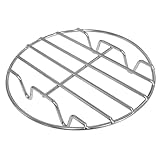
This is not a pressure cooker oven, but it is arguably the most useful accessory for anyone who owns one. The rack fits Instant Pot 3, 6, and 8-quart models and lifts food above the liquid line so you can steam vegetables, eggs, or dumplings while simultaneously cooking a base dish below. Owners report it doubles usable capacity in a single cycle, which transforms a six-quart unit into a true two-dish cooker. At six dollars and fifty cents, it is the highest-return accessory purchase in this entire roundup.
- Pros: Doubles usable capacity, fits multiple brands, affordable
- Con: Not a standalone product—requires a compatible cooker
Skip this only if your pressure cooker oven already includes a suitable rack.
IMUSA 7Qt Aluminum Pressure Cooker
For cooks who distrust electric units or simply prefer the tactile control of stovetop pressure cooking, the IMUSA delivers seven quarts of aluminum with safety valves designed to prevent forced-opening accidents. It handles beans, tough meat cuts, and stocks with the raw power of direct flame and high PSI. Owners appreciate the capacity and the straightforward operation—no digital presets to learn. The trade-off is material: aluminum reacts with acidic foods over time, and the finish is less durable than stainless steel or hard anodized alternatives found in the Pigeon model above.
- Pros: Large capacity, safety valves, simple operation
- Con: Aluminum construction not ideal for acidic cooking
Skip this if you regularly cook tomato-based or citrus-heavy dishes.
Buying Guide
Matching Capacity to Your Household
Pressure cooker ovens cannot be overfilled beyond the two-thirds mark, so a six-quart unit yields roughly four quarts of usable cooking volume. For one or two people, three to four quarts is honest capacity; for families of four to six, six quarts is the realistic floor; for batch cooking or seven or more eaters, seven or more quarts is necessary. Buying too large wastes energy heating unused vapor space, while buying too small forces multiple cycles that erase the time savings pressure cooking is supposed to provide.
Material Matters More Than Brand
Stainless steel pots resist corrosion and tolerate acidic ingredients without concern, making them the safest default. Ceramic coatings offer easier food release but raise durability questions over years of thermal cycling. Hard anodized aluminum sits between these extremes—corrosion-resistant like anodized surfaces but lighter than steel. Bare aluminum, found in traditional stovetop units like the IMUSA, is the most reactive option and should be avoided for long-simmered tomato, wine, or citrus dishes.
Preset Count vs. Preset Quality
A twelve-preset unit is not inherently better than a seven-preset one. What matters is whether the presets match meals you actually cook. Yogurt, rice, and slow-cook functions see frequent use; sauté and sear modes save a separate pan. Some owners report that only four or five of their presets ever leave the unit. A shorter list of well-tuned programs with clear labeling beats a long list of ambiguous or redundant modes.
Our Verdict
The best overall pressure cooker oven in this group is the Midea 12-in-1 at $76.73—it delivers the widest range of genuinely useful functions at the most competitive price for a household of four to six. The budget pick is the OLIXIS 10-in-1 at $39.93, the entry point for singles and couples who want electric convenience without spending over forty dollars. However, if you are learning pressure cooking for the first time and want a recipe library that guides you through every dish, the Instant Pot Duo at $107.30 wins on ecosystem alone, regardless of its spec-sheet disadvantages.
FAQ
Is a stainless steel pot better than ceramic?
Stainless steel is more durable and safer for acidic cooking, but ceramic offers easier food release and simpler cleanup. For long-term ownership, stainless steel is the lower-risk choice; ceramic coatings can degrade at the rim after repeated thermal cycling.
Can a stovetop pressure cooker replace an electric one?
Functionally yes, with similar cooking results, but electric units offer set-and-forget automation and built-in safety cutoffs that stovetop models lack. Stovetop units require more attention and are not compatible with unattended cooking.
How many presets do I actually need?
Most owners use three to five functions regularly. Prioritize rice, slow cook, and steaming presets if you cook staple meals; add yogurt or sauté only if you genuinely make those preparations weekly.
Is the steamer rack worth buying separately?
At $6.50, it is the most cost-effective upgrade available for any compatible electric pressure cooker oven. It lets you steam and boil simultaneously, effectively doubling output per cycle without any energy penalty.




Write Your Review
No reviews yet. Be the first to share your experience!