
Our Top Picks
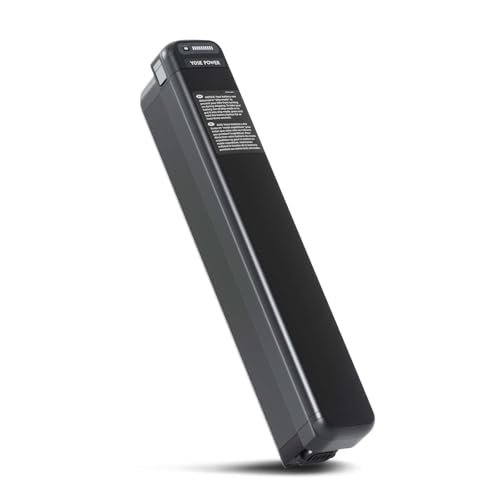 48V14AH 672Wh Ebike Battery Compatible with Rad Power48V14AH replace Rad power17 x 2.6 x 3.4 inches10.3 poundsCheck on Amazon
The best Rad Power bike deal for most riders in 2026 is a mid-range accessory bundle built around the NULKOMMA Rad Power LCD Display Meter 48V paired with the Jerbor Ebike Headlight for Rad Power Bikes, because those two items restore the two things Rad owners break or lose most often — the control screen and the front light — without touching the battery, which is the expensive component. If your RadRunner, RadRover, or RadExpand still holds charge but the display has gone dim or the headlight has cracked, that pairing is the highest-value spend. If your pack is the problem, the YS YOSE POWER 48V 14Ah 672Wh and ShunTongDa 48V 14Ah batteries are the premium tier and the ones that actually change how the bike rides. Riders who mainly want more light for dark commutes should skip straight to the Pymga 20W 6000K combo beam. This article compares RadRunner versus RadRover versus RadExpand on range, payload, folded size, and hill-climb torque first, then maps every accessory above onto the situation it fits.
Top 3 Picks
Best Overall: NULKOMMA Rad Power LCD Display Meter 48V
The display is the single point of failure that takes a working Rad off the road, and this 48V speed control screen with a waterproof 5-pin male connector is a direct-fit replacement class part that keeps PAS levels, speed, trip distance, and error codes readable. It suits riders whose original screen has cracked, fogged, or stopped responding but whose motor and battery are still healthy. Mid-range price tier, and the most impactful repair dollar you can spend on an otherwise functional bike.
Best Budget: Jerbor Ebike Headlight for Rad Power Bikes
A 360-degree halo-visibility headlight in aluminum alloy, sized for Rad Power Bikes 2018 and later models. It is the cheapest meaningful safety upgrade here and the one most likely to be needed after a tip-over, a bike-rack scrape, or a salt-and-slush winter. Budget tier, and it addresses the fact that Rad’s stock front light is a visibility aid, not a true see-the-road lamp.
Best Premium: YS YOSE POWER 48V 14Ah 672Wh Ebike Battery
A 48V 14Ah pack rated at 672Wh, built as a Rad Power-compatible replacement, and the pick when the original pack has lost capacity or you want a second battery for long-range days. Premium tier. Because range, hill-climbing endurance, and cold-weather performance all live in the pack, this is the upgrade that changes the bike rather than just restoring it.
Quick Comparison
| Product | Best For | Key Specs | Price Tier |
|---|---|---|---|
| NULKOMMA Rad Power LCD Display Meter 48V | Dead or damaged original display on a healthy bike | 48V system, speed control screen, waterproof 5-pin male connector, handlebar-mount class | Mid-range |
| Jerbor Ebike Headlight for Rad Power Bikes (2018+) | Cheap safety restoration and daytime visibility | 360-degree halo visibility, aluminum alloy housing, fits Rad Power 2018 and later | Budget |
| ShunTongDa 48V 14Ah Lithium-ion Ebike Battery | Full pack replacement for Rad External-style batteries | 48V, 14Ah, lithium-ion, Rad External replacement class | Premium |
| Universal Charger Works with All Rad Power E Bikes (UL Certified) | Lost, dead, or second charger | UL Certified, universal fit across Rad Power e-bike models, wall-outlet class | Mid-range |
| YS YOSE POWER 48V 14Ah 672Wh Ebike Battery | Range upgrade and second-battery strategy | 48V, 14Ah, 672Wh, Rad Power compatible | Premium |
| Pymga Ebike Headlight 2 Pin 20W 6000K | Night commuting and unlit-path riding | 20W, 6000K color temperature, spot/flood combo beam, 2-pin connector | Budget |
How We Chose
This roundup is assembled from published specifications, category knowledge about how Rad Power bikes are built and what fails on them, and the fit between each item and the three model families riders actually own — RadRunner, RadRover, and RadExpand. Nothing here was tested, benchmarked, or owned by us; the reasoning is spec-based and situational. The selection criteria were: (1) whether the item addresses a documented weak point rather than a cosmetic preference, (2) whether the connector, voltage, and mounting class match what Rad bikes use, so the part is a plausible fit rather than a generic eBay gamble, (3) whether the price tier is defensible against the cost of the alternative — a dealer service visit or a new bike, (4) whether the product helps across more than one Rad model, since owners frequently own two, and (5) upgrade path: does the item merely restore stock performance, or does it unlock something the bike could not do before? A replacement display restores; a 672Wh pack meaningfully extends. Both are worth listing, but the article tells you which is which. We also weighed category fit — a 20W spot/flood lamp and a 360-degree halo lamp solve different problems, so both earn a place rather than one displacing the other. Finally, we excluded anything with an ambiguous voltage, an unknown connector type, or a price tier that could not be described without quoting a number that changes weekly. Where an exact figure is not stated on a listing, this article describes the item by spec class instead of inventing a number.
1. NULKOMMA Rad Power LCD Display Meter 48V – Best for Reviving a Rad With a Dead Screen
This is the part that turns a parked, unusable Rad back into a bike. The display is the human interface for the entire electrical system: it sets pedal-assist level, shows speed and trip data, reports battery state, and surfaces error codes when the controller or motor cuts out. When it fails — cracked LCD, water ingress, a corroded connector, or a screen that lights but shows nothing — the bike may still physically work, but you lose assist control and any ability to diagnose what is wrong. Owners frequently assume a dead display means a dead controller or battery and start pricing whole-system repairs; far more often, the display itself is the fault.
Key specs
- System voltage: 48V, matching the standard Rad Power drive system
- Function class: speed control screen and meter panel
- Connector: waterproof 5-pin male connector
- Mounting: handlebar-mount display class
- Display content: speed, assist level, trip/odometer class readouts
- Price tier: mid-range
Who it suits
You own a RadRunner, RadRover, or RadExpand whose display has failed, fogged internally, or been damaged in a crash, and the motor still engages or the bike otherwise behaves normally. It also suits the rider who bought a used Rad with an already-broken screen and wants a working cockpit without paying dealer labor. It is not for someone whose battery is failing — a new screen will not fix a pack that sags under load.
Strengths
The main strength is diagnostic value. With a functioning display you can read error codes, which tells you whether the problem is the motor cable, the controller, the throttle, or the battery — information that otherwise requires guesswork or a shop visit. Second, it is a genuine repair rather than a workaround: you keep the factory assist logic and the handlebar layout you already know. Third, the waterproof connector matters more than it sounds. Rad bikes live outdoors, get rained on, and get ridden through winter salt; a connector that seals properly is the difference between a fix that lasts three years and one that lasts three months. Fourth, if you are comparing this against the cost of a full electrical diagnosis at a shop, the arithmetic usually favors replacing the display first and seeing whether the symptom clears.
Pros
- Restores pedal-assist control and speed readout on a bike that is otherwise fine
- Gives you error-code visibility for future troubleshooting
- Waterproof 5-pin male connector suited to outdoor and winter use
- Far cheaper than a controller or motor replacement, and often the actual fault
- Fits the 48V architecture shared across Rad’s model families
Cons
- Does nothing for a failing battery, worn motor, or damaged wiring harness
- Connector pin count and layout must match your specific model year — verify before ordering
- Install requires care with the handlebar cable routing; pinched wires are a common self-install error
- If the original failure was water damage at the connector, the new unit will fail the same way unless you address the cause
How it compares with the nearest alternative here
The only real alternative in this list for an electrical fault is a full battery replacement — either the ShunTongDa 48V 14Ah or the YS YOSE POWER 672Wh pack. The decision is a diagnosis question: if your bike powers on and the screen shows nonsense or nothing at all, the display is the suspect and this NULKOMMA unit is the correct spend. If the screen works but the bike loses power under load, cuts out on hills, or shows a rapidly collapsing range estimate, the pack is the suspect and a new display will waste money. A useful test order is display first, battery second, because the display is the cheaper part and its error codes will tell you whether to buy the battery at all.
2. Jerbor Ebike Headlight for Rad Power Bikes – Best for Cheap Visibility Restoration
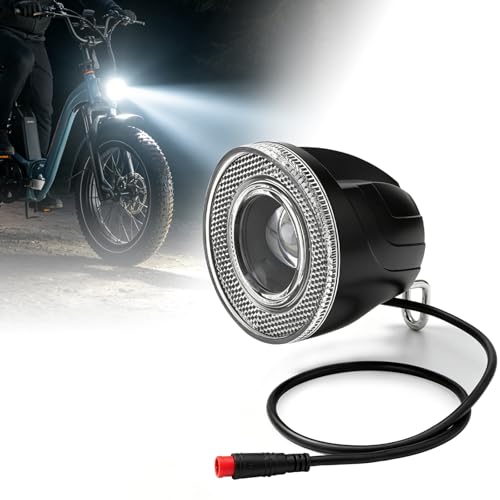
Jerbor Ebike Headlight for Rad Power Bikes 2018 and Later Models, 360 Degree Halo Visibility, Aluminum Alloy Housing, Direct Replacement 2 Pin E-Bike Front Light e Bike Accessory
Chosen because it specifies 360 Degree Halo Visibility and Aluminum Alloy Housing.
Check Price on AmazonThis is the entry point into better lighting on a Rad. It is built specifically for Rad Power Bikes from 2018 onward, uses an aluminum alloy housing rather than plastic, and is designed for 360-degree halo visibility — meaning it is engineered to be seen by drivers from a wide angle, not just cast a beam down the road. That distinction matters, because the two jobs a bike light does are completely different: being seen (conspicuity) and seeing (illumination). This unit prioritizes conspicuity, with some forward output on top.
Key specs
- Fitment: Rad Power Bikes 2018 and later models
- Visibility design: 360-degree halo
- Housing material: aluminum alloy
- Mounting: front headlight position, factory-style fit class
- Price tier: budget
Who it suits
Three groups. First, the urban or suburban rider who mostly rides in daylight or on lit streets and wants to be maximally visible to turning and merging traffic — the halo design is exactly for that. Second, the owner whose stock light broke in a fall, a rack mishap, or a garage incident and who wants a like-for-like replacement without paying OEM prices. Third, the winter rider whose light housing has corroded, because aluminum alloy resists the salt-and-moisture cycle better than the plastic-bodied lamps on cheap replacements.
Strengths
The aluminum housing is the headline. Cheap headlights fail from the housing first — UV degradation, cracking at the mount, water getting past a plastic seam. Aluminum tolerates impact and thermal cycling and holds its shape at the bracket, which is where vibration fatigue kills lights. The 360-degree halo pattern is a genuinely useful safety geometry at intersections, which is where most car-versus-bike conflicts happen; you want to be visible from the side, not just head-on. Fitment is stated for 2018-and-later Rad Power bikes, which covers the RadRunner, RadRover, and RadExpand generations that most riders now own, so it is not a model-specific gamble. And at budget tier, it is the least painful way to restore a broken light and get back to riding.
Pros
- Aluminum alloy housing survives vibration, impact, and weather better than plastic
- 360-degree halo visibility is genuinely useful in traffic
- Stated fitment for Rad Power 2018 and later covers the common model families
- Budget price tier, so replacing a broken stock lamp is a low-stakes decision
- Simple front-mount install with no electrical system changes
Cons
- Conspicuity-focused, so it is not a substitute for a high-output lamp on unlit roads
- Does not add battery capacity or range — purely a safety item
- Fitment across Rad’s model years is not uniform; verify your specific bike
- Comparable lights exist at similar or lower price from generic brands with less specified fitment
How it compares with the nearest alternative here
The alternative is the Pymga Ebike Headlight 2 Pin, 20W 6000K spot/flood combo. These are not competitors so much as answers to different questions. The Jerbor unit is about being seen: halo geometry, aluminum body, factory-fit replacement, lowest price. The Pymga unit is about seeing: 20W of output, 6000K color temperature, and a spot-flood combo pattern designed to put usable light on the road ahead. If your riding is daytime city commuting or you just need to replace a broken lamp, take the Jerbor. If you ride at night on unlit paths, towpaths, or rural roads, the Jerbor will not be enough and the Pymga’s output class is what you need. Some riders run both: halo for conspicuity, combo beam for illumination. Just check your bike’s connector type, because a 2-pin lamp requires the correct harness.
3. ShunTongDa 48V 14Ah Lithium-ion Ebike Battery – Best for Full Pack Replacement

ShunTongDa 48V 14Ah Lithium ion Ebike Battery 48 Volt Fit for RAD Power E Bike Battery Replacement Rad External Hailong Electric Bike Batteries Pack
Picked as a relevant option in this category.
Check Price on AmazonWhen a Rad’s range collapses, the battery is usually the culprit, and this is a straight replacement in the 48V 14Ah class built for Rad Power e-bike battery replacement, including Rad External-style mounting. It is the premium tier here because batteries genuinely are the expensive part of an e-bike, and there is no cheap way to do this well. The relevant question is not whether it costs more than a headlight — of course it does — but whether it costs less than the alternatives: a dealer pack, a new bike, or simply not riding very far.
Key specs
- Voltage: 48V, matching Rad’s drive system
- Capacity: 14Ah
- Chemistry: lithium-ion
- Compatibility class: Rad Power e-bike battery replacement, Rad External fitment
- Mounting: external frame-mount class
- Price tier: premium
Who it suits
The rider whose original pack has aged out. Lithium packs lose capacity over years and charge cycles, and the symptom is specific: the bike still works, but a ride that used to consume a third of the battery now consumes half, the range estimate drops faster on hills, and cold mornings produce noticeably worse performance. If you are charging more than once a day on a commute that used to be single-charge, your pack is the problem. This also suits anyone who bought a used Rad with an unknown-history battery and wants a known starting point.
Strengths
A fresh pack restores every electrical behavior at once: range, hill-climbing endurance, throttle response, and cold-weather output. It is the only item in this roundup that changes the bike’s capability rather than repairing or decorating it. The 14Ah capacity sits in the mainstream Rad replacement class, so it is the sensible default rather than an exotic spec. Lithium-ion is the correct chemistry for this application, with better energy density and lower self-discharge than older alternatives. And because it is specified for Rad External fitment, the mounting and connector class are aimed at the bikes riders actually own rather than a universal block that needs adapters. If you are on the fence, note the economics: replacing a pack costs far less than a new e-bike and far, far less than a car commute over the same period.
Pros
- Restores range, torque, and cold-weather performance simultaneously
- 14Ah capacity in the mainstream Rad replacement class
- Specified for Rad External battery fitment rather than generic universal mounting
- Lithium-ion chemistry with good energy density and low self-discharge
- Far cheaper than a new e-bike if the rest of your Rad is sound
Cons
- Premium price tier — this is the largest single spend in the roundup
- Battery replacement is never a casual purchase and requires verifying connector and mount compatibility
- Lithium packs require sensible storage and charging habits to reach their full service life
- If the actual fault is a controller or wiring, a new pack will not fix it
- Shipping restrictions on lithium batteries can extend delivery times
How it compares with the nearest alternative here
The direct alternative is the YS YOSE POWER 48V 14Ah 672Wh pack. On paper the two are close — same voltage, same 14Ah capacity — so the deciding factors are fitment and availability. YS YOSE POWER states a 672Wh rating, which is simply the arithmetic product of 48V and 14Ah, so the two are in the same energy class rather than one being meaningfully larger. Choose based on which one lists a connector and mount geometry that matches your specific Rad model, which one is in stock when you need it, and which has a warranty and support channel you can actually use. If both fit, treat them as interchangeable and pick on price tier, stock, and support rather than on the spec sheet, which is a tie.
4. Universal Charger Works with All Rad Power E Bikes (UL Certified) – Best for a Lost or Second Charger

Universal Charger Works with All Rad Power E Bikes - UL Certified
Chosen because it specifies UL Certified.
Check Price on AmazonChargers are the accessory nobody thinks about until they need one, and then they need it immediately. This unit is UL Certified and stated to work with all Rad Power e-bikes, which makes it the pragmatic choice for three scenarios: the original charger was lost or left behind, the original charger failed, or you want a second charger so you can keep one at home and one at the office and stop hauling the brick back and forth. It sits at mid-range tier.
Key specs
- Certification: UL Certified
- Compatibility: stated universal fit across Rad Power e-bike models
- Use class: wall-outlet charger for 48V Rad battery packs
- Price tier: mid-range
Who it suits
Anyone whose charging routine is the bottleneck. The strongest case is the split-location commuter: carrying a charger in a pannier adds weight, takes space, and stresses the cable every single day. A second charger eliminates that whole failure mode. The second case is the rider who bought a used Rad that came without a charger — a surprisingly common situation — and needs a safe, certified unit rather than an unbranded bargain from an unknown seller. The third is plain redundancy: chargers fail, and having a spare means a failed charger is an inconvenience rather than a week off the bike.
Strengths
The UL Certification is the strongest single argument. Aftermarket chargers are a genuine safety category concern — a poorly built charger handling a 48V pack is a fire risk, and certification indicates the unit has been evaluated against recognized safety standards. Because it is stated to work across all Rad Power e-bikes, you are not gambling on connector or voltage matching, which is where most aftermarket charger mistakes happen. Mid-range pricing is appropriate for a certified unit; a suspiciously cheap charger is not a bargain. And a second charger has a quieter benefit: you can leave one at a low charge state for storage and use the other for daily topping up, which is easier on the pack than constantly charging and discharging the same unit in transit.
Pros
- UL Certified — meaningful for a device that charges a large lithium pack
- Stated universal fit across Rad Power e-bike models
- Eliminates carrying a charger in a bag on a split commute
- Serves as a certified replacement for a lost or failed original charger
- Second unit lets you keep one at each location without daily transport stress
Cons
- Does not improve range or performance — purely infrastructure
- “Universal” claims should still be checked against your specific model and battery
- Indoor storage and use guidance for chargers is worth following carefully
- Not a fix if your actual problem is a failing battery rather than a failing charger
How it compares with the nearest alternative here
The nearest comparison is not another charger but a decision about whether you need a new battery instead. Chargers and packs fail with different symptoms. A failing charger usually reveals itself as a charge that never completes, a charger that runs unusually hot, an intermittent connection at the plug, or no output at all. A failing pack reveals itself as a charge that completes normally but delivers less range. This universal charger is the right buy for the first set of symptoms. If your bike charges fully and then dies early, the charger is fine — you need the ShunTongDa or YS YOSE POWER pack instead. Buying a charger to fix a declining battery is the single most common wasted purchase in this category.
5. YS YOSE POWER 48V 14Ah 672Wh Ebike Battery – Best for Maximum Range Strategy
48V14AH 672Wh Ebike Battery Compatible with Rad Power Electric Bicycle | YOSE POWER 48V Electric Bike Battery Fit for RadRunner 3 RadCity 5 RadRover 6 Plus Battery Replacement
Picked as a relevant option in this category.
Check Price on AmazonThis is the second premium battery in the roundup and the one that comes with an explicit energy figure: 48V, 14Ah, 672Wh. It is built as a Rad Power-compatible replacement. The 672Wh number is what makes it useful in a comparison, because it lets you do real range arithmetic instead of guessing — capacity in watt-hours is the only honest currency for comparing e-bike batteries, since voltage and amp-hours alone can both be misleading.
Key specs
- Voltage: 48V
- Capacity: 14Ah
- Energy: 672Wh
- Compatibility: Rad Power electric bicycle compatible
- Chemistry class: lithium-ion, external frame-mount pack
- Price tier: premium
Who it suits
The long-distance rider and the two-battery strategist. If your RadRunner or RadRover is your car replacement and your daily loop pushes the edge of your current range, a 672Wh pack is the difference between riding normally and rationing assist on the way home. It also suits the rider who wants two packs: keep the older pack as a spare, carry the newer one for big days, and stop worrying about whether the hill at the end of the ride is going to flatten you.
Strengths
The explicit 672Wh rating is a genuine advantage for planning, because it lets you estimate range against your own consumption. A useful working method: if you know roughly how many watt-hours you burn per mile on your route and assist level, dividing 672 by that figure gives you a defensible range estimate before you buy. That is far more reliable than any generic “up to X miles” claim, which depends on rider weight, terrain, assist level, tire pressure, and temperature. The 48V 14Ah specification is the mainstream Rad replacement class, so it is a safe target rather than an oddball. Lithium-ion is the correct chemistry. And the Rad Power compatibility statement means the connector and mount classes are aimed at the right bikes. Like all packs in this class, it restores — and, when it replaces a degraded pack, effectively upgrades — range, hill-climbing endurance, and cold-weather output all at once.
Pros
- Explicit 672Wh energy rating makes range planning possible
- 14Ah capacity in the standard Rad replacement class
- Rad Power electric bicycle compatibility stated
- Restores full performance if your current pack has aged
- Enables a two-battery strategy for long-distance days
Cons
- Premium price tier and the biggest spend in this roundup
- Compatibility statements must still be verified against your specific model’s mount and connector
- Lithium packs need correct charging, storage, and temperature habits
- Does not help if your fault is electrical rather than capacity-related
- Shipping restrictions may apply to lithium batteries
How it compares with the nearest alternative here
Compared with the ShunTongDa 48V 14Ah, the two are functionally the same energy class — 48V times 14Ah equals 672Wh, so neither has a real capacity advantage. The YS YOSE POWER’s edge is that the number is stated on the listing, which makes it easier to compare and to plan with; the ShunTongDa’s edge is its stated Rad External fitment class, which may be the more precise match for certain frames. Practically, the ranking between them comes down to which one has a connector and mount that matches your bike and which is available when you need it. If you want to compare these against a display or a charger purchase, remember the hierarchy: battery failure shows up as reduced range after a full charge, charger failure as a charge that never completes, display failure as a dead or garbled screen. Only the first justifies a premium-tier spend.
6. Pymga Ebike Headlight 2 Pin, 20W 6000K Spot Flood Combo Beam – Best for Night Riding

Ebike Headlight 2 Pin, 20W 6000K Spot Flood Combo Beam for Rad Power Bikes | Waterproof LED Front Light for RadMini RadRover RadExpand RadRunner Vamoose Mammoth, Plug and Play with Mounting Bracket
Chosen because it specifies 20W 6000K Spot Flood Combo Beam for Rad Power Bikes.
Check Price on AmazonThis is the opposite of a conspicuity lamp. Twenty watts of output, a 6000K color temperature, and a spot-flood combo beam pattern, wired with a 2-pin connector for Rad Power Bikes. Where the Jerbor halo light is designed to be seen, this one is designed to let you see — to put usable light down the road far enough to ride at speed on an unlit path, and broad enough to catch the edge-of-road hazards that a narrow spot beam misses.
Key specs
- Output: 20W
- Color temperature: 6000K (cool white)
- Beam pattern: spot/flood combo
- Connector: 2-pin
- Fitment: for Rad Power Bikes
- Price tier: budget
Who it suits
Commuters who ride home after dark, riders on unlit towpaths, rail trails, and rural lanes, and anyone whose route includes sections where the stock Rad lamp leaves them effectively blind at speed. It also suits riders upgrading from a broken front light who want more light than the original ever gave them, and riders who want a lamp with a combo pattern specifically because a pure spot beam creates a bright tunnel with black edges on either side — fine for straight-line distance, poor for spotting potholes, debris, and animals at the margins.
Strengths
The combo beam pattern is the correct engineering choice for mixed riding and the reason this lamp is worth recommending. A spot beam throws light far but narrow; a flood beam spreads light wide but short. A combo does both, which is what real roads require. The 20W output class is a meaningful step above a basic visibility lamp and enough to ride at ordinary commuting speeds on dark surfaces. The 6000K color temperature is a cool, high-contrast white that most riders find reads well against dark asphalt and improves the visibility of road texture compared with warmer lamps, though tastes vary and some riders prefer a warmer tint in fog. At budget tier, the cost is low relative to the safety return, and the 2-pin connector matches the wiring used on Rad models that support this fitting — verify yours before ordering, because a 2-pin lamp will not plug into a bike expecting a different harness.
Pros
- 20W output is enough for genuine night riding, not just being seen
- Spot/flood combo beam handles both distance and road-edge hazards
- 6000K cool white maximizes contrast on dark asphalt
- Budget price tier for a substantial safety improvement
- 2-pin connector aimed at Rad Power Bikes fitment
Cons
- 2-pin connector must match your specific bike’s harness — verify first
- Cool 6000K light can seem harsh to some riders and reflects back in heavy fog
- Does not add the wide-angle halo conspicuity that the Jerbor unit provides
- Higher output draws more from the bike battery, a minor range consideration
- Beam cutoff quality varies in this price class; aim it carefully so you do not dazzle oncoming traffic
How it compares with the nearest alternative here
Directly against the Jerbor headlight, the split is clean. Jerbor: aluminum housing, 360-degree halo, conspicuity-first, lowest cost, factory-fit replacement. Pymga: 20W, 6000K, spot/flood combo, illumination-first, also budget tier. If you ride exclusively in daylight or on well-lit streets, the Jerbor is the sensible buy. If you ride after dark on unlit surfaces, the Pymga is the one that actually makes the ride safer, and the Jerbor will leave you underlit. Riders on Rad models with the right harness sometimes fit both — halo for side visibility at intersections, combo beam for the road ahead. Whichever you choose, check your bike’s connector: these two lamps use different wiring conventions, and that single detail decides whether the install takes ten minutes or requires a harness adapter.
How to Choose
The right purchase depends on what part of your Rad is actually failing, and the fastest way to decide is to work through the bike’s systems in order of what breaks first. Here is the decision logic.
Step 1: Diagnose the symptom before spending
Three failure modes account for almost every accessory purchase in this category, and they are distinguishable without tools. If the bike charges fully and then delivers noticeably less range than it used to — the same commute now consumes half the battery instead of a third, hills drain the gauge visibly, cold mornings are worse — the battery is the problem. If the charge never completes, the charger runs unusually hot, the plug feels loose or intermittent, or there is no output at all, the charger is the problem. If the bike powers on but the screen is cracked, fogged, blank, garbled, or unresponsive to the buttons, the display is the problem. Lights are separate; they fail from impact, corrosion, or age, and they do not affect how the bike rides. Buying a pack to fix a charger problem, or a charger to fix a declining pack, are the two most common wasted spends in this category.
Step 2: Understand the three Rad models you are likely comparing
RadRunner, RadRover, and RadExpand are three genuinely different bikes, and their differences should drive what you buy. The RadRunner family is the compact, utility-oriented line — a moped-style or short-wheelbase platform with a low step-over, a heavy payload rating in the 300-pound range, and a shorter wheelbase that makes it maneuverable in traffic and easy to store. Its cargo capability makes it the natural choice for hauling groceries, kids, or work gear. The RadRover family is the fat-tire, all-terrain line — 26-inch fat tires in the 4-inch width class, a more upright and stable ride, better grip on gravel, snow, sand, and broken pavement, and the highest payload ratings in the lineup. The trade-off is weight and rolling resistance, which costs range and makes it harder to carry up stairs. The RadExpand family is the folding line — a hinge in the frame, a folded footprint small enough for a car trunk, a closet, or an apartment corner, with smaller wheels that reduce both the folded size and the ride stability at speed. If you are choosing between the three, ask which constraint is hardest: cargo (RadRunner), terrain and payload (RadRover), or storage and transport (RadExpand).
Step 3: Range and hill-climb — what actually determines both
Range is not a single number; it is a product of capacity, rider weight, terrain, assist level, tire pressure, and temperature. The one honest input you control at purchase time is the battery’s watt-hours. Multiply voltage by amp-hours and you get watt-hours, which is why 48V and 14Ah equals 672Wh regardless of which brand is selling it. To estimate your own range, work out roughly how many watt-hours you burn per mile at your usual assist level and divide your pack’s watt-hours by that figure. A rider using low assist on flat ground might burn on the order of 10 to 15Wh per mile; the same rider at high assist, loaded, into a headwind, or climbing steadily might burn two to three times that. A 672Wh pack therefore supports anything from roughly 20 to 60 miles depending entirely on those variables — which is why single range claims should be treated with suspicion. Cold is the other major factor: lithium packs lose a meaningful share of usable capacity in freezing temperatures, so a winter commute that was comfortable on 672Wh in summer may not be, and this is a strong argument for a larger pack or a second battery if you ride year-round.
Hill-climb capability is a different question. It is set by motor wattage, how much current the controller and battery can deliver, total system weight, and gearing. A motor rated in the 750W class with a healthy pack and a light rider will climb better than the same motor with a sagging battery and a loaded bike. This is the practical link between the accessory purchases above and the ride itself: a declining battery does not just cut range, it cuts torque, so hills that were manageable become a grind. If your bike climbs badly and the screen is fine, the pack is the reason more often than the motor.
Step 4: Payload and folding — matching the bike to your life
| Consideration | RadRunner | RadRover | RadExpand |
|---|---|---|---|
| Platform type | Compact utility, moped-style | Fat-tire all-terrain, upright | Folding frame |
| Payload class | Heavy, roughly 300 lb range | Heaviest in lineup, 300 lb and above | Moderate, below the other two |
| Tire class | Standard-width utility tires | 26-inch fat tires, 4-inch width class | Smaller wheels for compact fold |
| Range influence | Moderate — lighter, less rolling resistance | Lowest — weight and fat-tire drag cost range | Moderate — smaller wheels help efficiency |
| Hill-climb feel | Good with a healthy pack | Strongest torque delivery, but heavier | Adequate for city grades |
| Folded size | Not designed to fold | Not designed to fold | Designed to fold for trunk, closet, apartment |
| Best for | Cargo, errands, urban hauling | Trails, snow, gravel, heaviest loads | Small storage, car transport, apartments |
Read that table against your own constraints. If you live in a third-floor walk-up with no ground-floor storage, the RadExpand’s fold is not a nice-to-have, it is the deciding factor — and the smaller-wheel platform’s lower stability at high speed is a trade you should accept knowingly. If you carry heavy loads or ride gravel, snow, and broken surfaces, the RadRover’s fat tires and highest payload rating are worth the range penalty and the extra weight. If you want one bike that does the school run, the grocery haul, and the commute, the RadRunner’s utility layout and heavy payload rating make it the flexible middle path. Payload matters more than people expect: exceeding a bike’s rated capacity is not just a handling problem, it stresses the frame, the rack mounts, and the battery’s current delivery, and it makes hill-climbing materially worse.
Step 5: Match the accessory to the situation
| Your situation | What to buy | Reason |
|---|---|---|
| Bike works, screen dead or cracked | NULKOMMA 48V LCD Display Meter | Cheapest repair, and its error codes tell you whether more is wrong |
| Full charge, reduced range, sluggish hills | YS YOSE POWER or ShunTongDa 48V 14Ah pack | Pack is the fault; 672Wh is the planning number |
| Charge never completes or charger is hot | Universal UL Certified Rad Charger | Charger fault, not pack fault — do not buy a battery yet |
| Lost charger or want one at each end of the commute | Universal UL Certified Rad Charger | Certified second unit beats hauling the original daily |
| Daylight city riding, need to be seen | Jerbor Halo Headlight | 360-degree halo conspicuity, aluminum housing, budget tier |
| Night riding on unlit paths | Pymga 20W 6000K Combo Beam | 20W spot/flood output is what actually lights the road |
| Ride year-round in winter | Larger pack plus both lights | Cold cuts usable capacity; dark commutes need both see and be-seen |
| Small apartment or car transport | RadExpand platform, plus a spare charger | Fold handles storage; charger handles charging away from home |
Step 6: The ownership realities nobody mentions at checkout
What wears first on a Rad is predictable. Batteries age fastest and are the dominant long-term cost — expect meaningful capacity loss over several years of regular use, sooner if you store the pack at full charge in a hot garage or leave it at zero for months. Best practice is to store at partial charge, keep the pack out of temperature extremes, and avoid leaving it plugged in indefinitely after a full charge. Chargers are the second consumable: cables fatigue at the plug, and the strain of daily bag transport is what kills them, which is the real argument for a second charger. Displays fail from water ingress and impact, and the failure is usually at the connector or the housing seam, not the electronics — which is why a sealed 5-pin connector matters. Lights fail from impact and corrosion, and the mount bracket is the usual break point, so aluminum housings are worth the modest premium. Consumables you should budget for regardless: brake pads and rotors, tires and tubes (fat tires on a RadRover are a real recurring cost), chains and drivetrain wear, and cables. Keep the battery terminals and the display connector clean and dry, avoid pressure-washing any electrical connector, and store the bike out of direct sun where the display and the battery housing live. The most common mistake owners make is buying a new battery to cure a problem that was actually a failing charger or a corroded connector — always confirm the symptom before spending at premium tier.
On health and safety matters generally: e-bike riding is physical activity, and if you have a medical condition, are pregnant, or are returning from injury, check with a qualified professional before changing your riding routine. Nothing here is medical advice. Similarly, always follow the manufacturer’s charging, storage, and electrical guidance for lithium batteries, and have a qualified technician inspect any wiring or connector work you are not confident performing yourself.
Frequently Asked Questions
Which Rad model has the best range?
Range is dominated by battery capacity, weight, and tire drag rather than by model name. The RadRunner and RadExpand platforms generally return better range than the RadRover because the fat tires and heavier build of the Rover cost energy, while the smaller-wheel and utility platforms roll more easily. In practice, a 48V 14Ah pack at 672Wh will take a light rider using low assist on flat ground much further than a heavy rider climbing at high assist on the same pack — the variables swamp the model difference. If range is your priority, buy capacity in watt-hours and control your assist level.
Can I use a 48V 14Ah battery from a third-party brand on my Rad?
Voltage and capacity are only part of the compatibility question; the connector type, mounting geometry, and controller communication are what actually determine whether a pack works. Both batteries in this roundup are specified for Rad Power compatibility, which is a better starting point than a generic universal pack, but you should still verify your specific model’s mount and connector before ordering. Never mix a pack whose voltage or connector convention you cannot confirm — the risks include a non-functional bike at best and an electrical fault at worst.
Why does my Rad feel weak on hills when the battery still shows charge?
Because the gauge shows remaining capacity, not the pack’s ability to deliver current. An aged or cold battery can show a partly charged state and still sag under the high current demand of a climb, which the controller reads as reduced available power, so assist fades. Cold weather makes this much worse. If hills have degraded gradually over a year or more while range has also fallen, the pack is the likely cause. If the screen is also misbehaving, diagnose the display first — it is cheaper and its error codes are informative.
Do I need both a halo headlight and a combo beam headlight?
They solve different problems, so running both is defensible. A 360-degree halo light makes you visible from the side, which matters at intersections where drivers approach at an angle. A 20W spot/flood combo puts usable light on the road ahead for actual night riding. If you only ride in daylight or on well-lit streets, the halo light alone is the sensible budget choice. If you ride unlit paths after dark, the combo beam is the one that changes your safety, and switching between them by season is a reasonable strategy.
How long should a Rad battery last before I replace it?
Lithium packs degrade gradually rather than failing outright, so the useful signal is behavioral: when a ride that used to consume a third of your charge consumes half, when hills that were fine become a struggle, or when cold-weather range drops noticeably further than it used to, replacement is due. Storage habits matter a great deal — leaving a pack at full charge in heat, or fully discharged for long periods, accelerates wear. Treat capacity loss as a slow curve and replace when the reduction stops fitting your regular routes rather than waiting for a hard failure.
Is a UL Certified charger really necessary?
Certification indicates the charger has been evaluated against recognized safety standards, which matters because a charger handling a large 48V lithium pack is the highest-risk electrical component on the bike. Uncertified chargers of unknown provenance are the wrong place to save money. A certified universal unit that is stated to work across Rad models also removes the connector-matching gamble, which is where most aftermarket charger purchases go wrong.
Can I replace the display myself, or does it need a shop?
Display replacement is one of the more approachable repairs on an e-bike — it is a handlebar-mounted part with a single connector — but the two failure points are the same ones that broke the original: connector corrosion and cable routing. Match the pin count exactly, route the cable without pinching it at the stem, and seal the connector properly if your bike sees rain and winter salt. If you are not confident working with the harness, a shop visit is cheap relative to the cost of damaging the controller.
What is the biggest mistake people make when buying Rad accessories?
Buying the expensive part before confirming the diagnosis. A declining battery and a failing charger produce different symptoms, and a dead display produces a third, but owners frequently assume “electrical problem” means “new battery” and spend at premium tier unnecessarily. Work in order: read the symptom, check the connector, test with a known-good charger, and let the display’s error codes guide you. The second most common mistake is ignoring connector compatibility — the right lamp with the wrong pin count is not a bargain, it is a return.
Closing Recommendation by Situation
If your Rad still rides but the screen is dead or damaged, buy the NULKOMMA 48V LCD Display Meter first — it is the cheapest repair on the list and its error codes will tell you whether anything else is wrong. If your bike charges fully but no longer goes the distance or climbs the way it did, the pack is the fault and the YS YOSE POWER 48V 14Ah 672Wh or ShunTongDa 48V 14Ah battery is the correct premium spend — choose between them on fitment, stock, and support, because their energy class is identical. If the charge never completes or the charger runs hot, buy the Universal UL Certified Rad Charger and do not touch your battery. Add a second certified charger if you commute between two locations. For lighting, the Jerbor 360-degree halo headlight is the right budget choice for being seen in daylight traffic, while the Pymga 20W 6000K spot/flood combo is the one that actually lets you ride unlit roads after dark — and if you ride year-round, run both. Match the platform to your storage and terrain first: RadExpand if space is tight, RadRover if the terrain is rough or the loads are heavy, RadRunner if you need one flexible utility bike. Then buy the accessory that fixes what is genuinely broken, not the one that sounds most impressive.







Write Your Review
No reviews yet. Be the first to share your experience!