
Key takeaways
- Filters and bags are recurring costs. Check that replacements are easy to find and that the machine accepts a dust bag or separator if you expect frequent fine-dust cleanup.
- Filters and hoses take the most routine attention. Fine dust clogs filters; sharp debris, tight bends, and dragging the hose over rough edges can shorten hose life.
- Empty the tank before it becomes difficult to move. A full container strains casters and makes dumping awkward. Use the drain for liquid when provided.
- Do not judge performance by peak horsepower alone. Hose diameter, filter condition, seals, nozzle design, and airflow under load all affect pickup.
- Store accessories with the unit. A hose that reaches but has no suitable floor nozzle or tool adapter may be less useful than a shorter, better-equipped setup.
The best shop vacuums and blowers depend on what you clean: choose a compact 5–6-gallon wet/dry vac for occasional garage jobs, a 12–16-gallon model for frequent heavy cleanup, or a vac with a detachable blower when clearing leaves and sawdust matters as much as suction.
For most workshops, the deciding factors are tank size, airflow, filter compatibility, hose reach, and whether the blower is useful enough to justify a larger or more specialized machine. This guide compares common shop-vac configurations rather than ranking models by advertised peak horsepower, which is not a reliable measure of real-world pickup.
Quick comparison by workshop situation
| Type | Typical capacity | Typical airflow | Hose and reach | Best for | Main trade-off |
|---|---|---|---|---|---|
| Compact corded wet/dry vac | 5–6 gal (19–23 L) | About 80–110 CFM | 1¼–1⅞ in. hose; roughly 6–10 ft hose | Car interiors, small spills, benches, occasional DIY | Needs emptying more often; small hoses clog more readily |
| Mid-size wet/dry vac | 9–12 gal (34–45 L) | About 100–130 CFM | 1⅞ in. hose; roughly 7–12 ft hose | Regular garage cleanup, tools, renovation debris | Bulkier to store and maneuver than a compact unit |
| Large workshop wet/dry vac | 14–16 gal (53–61 L) | About 120–150 CFM | 2½ in. hose; roughly 7–12 ft hose | Frequent heavy debris, larger wet pickups, shop floors | Heavy when full; large debris may still need hand removal |
| Portable battery wet/dry vac | 2–6 gal (8–23 L) | Often about 30–80 CFM | Usually narrower hose; reach depends on kit | Quick, cord-free cleanup and remote work areas | Shorter runtime and lower capacity than corded units |
| Vac with detachable blower | Commonly 9–16 gal (34–61 L) | Varies widely; compare blower rating separately | Hose often connects to blower outlet | Moving dry leaves, clearing a driveway, blowing sawdust from open areas | Blowing can scatter dust; not a substitute for dust extraction |
These are useful comparison ranges, not guaranteed specifications for every model. Check the exact product manual: hose length, included nozzles, filters, and blower configuration vary. Airflow figures also depend on measurement method and whether a filter or accessory is attached.

Shop-Vac 3 Gallon 4.0 Peak HP Wet/Dry Vacuum with Blower Function
Included for 'Best Shop Vacuums and Blowers for Workshop Cleanup' as a relevant option in this category; details come from the product listing.
View on Amazon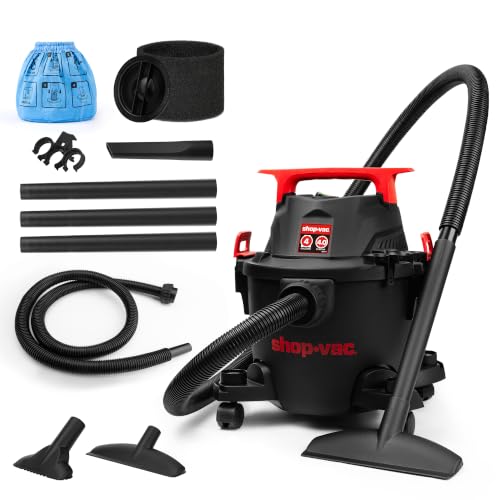
Shop-Vac 5430112 4 Gallon 4 Peak HP Wet/Dry Vacuum with Blower Function
Included for 'Best Shop Vacuums and Blowers for Workshop Cleanup' as a relevant option in this category; details come from the product listing.
View on Amazon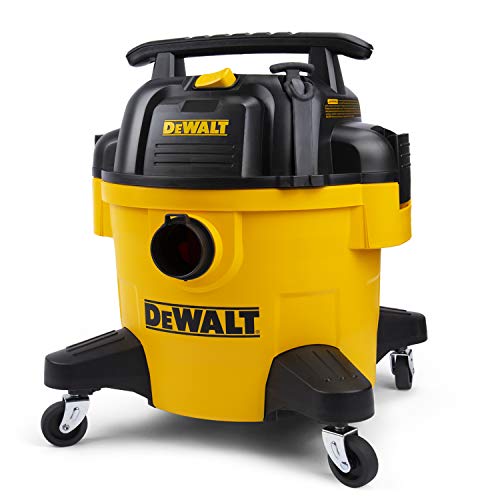
DEWALT Shop Vacuum 6 Gal 4 HP Poly Wet/Dry Vacuum with Blower DXV06P
Included for 'Best Shop Vacuums and Blowers for Workshop Cleanup' as a relevant option in this category; details come from the product listing.
View on AmazonChoose by the job, not by tank size alone
For a small garage or occasional DIY
A 5–6-gallon vac is usually easier to carry, store, and tuck beside a workbench. It can handle a car’s floor mats, scattered screws and wood chips, and small liquid spills when configured for wet pickup. Look for a built-in accessory holder, a drain plug if you expect to collect liquid, and a hose long enough to reach around a vehicle without repeatedly moving the tank.
For frequent cleanup, a very small tank can become a nuisance. A narrow hose also picks up fine sawdust less readily when connected to a tool with a larger dust port. If your main task is sanding or routing, prioritize a tool-compatible dust-extraction setup over a compact tank.
For a regular woodworking or repair shop
A 9–12-gallon unit is a practical middle ground. It holds more debris before emptying but is still manageable to roll around a garage. A 1⅞-inch hose works for general floor and bench cleanup; a 2½-inch hose is better for bulky chips and larger debris, though it may not connect directly to smaller power-tool ports.
When connecting a vacuum to a sander, saw, or router, check the tool port diameter and whether an adapter is available. Airflow at the tool can be reduced by a long, narrow, kinked hose or a loaded filter. A larger tank does not fix poor tool-port fit.
For heavy debris, wet pickup, or a larger shop
A 14–16-gallon vac reduces interruptions when collecting coarse debris or liquid, and a wide hose is less likely to clog on larger chips. The downside is weight: a full tank of water weighs about 8.3 pounds per gallon, before adding the machine itself. A 16-gallon tank filled close to capacity could therefore contain roughly 133 pounds of water. In practice, use the fill limit in the manual and empty in manageable amounts.
Wet-dry capability, blower use, and filters
Most shop vacuums that advertise wet/dry pickup require the user to change the filter configuration between dry dust and liquid. A standard cartridge filter is for dry pickup; some models use a foam sleeve for wet pickup. Follow the manual rather than assuming the same filter is suitable for both. Remove or replace a dry filter as instructed before collecting liquid, and never vacuum flammable liquids, hot ash, or hazardous dust unless the equipment is specifically rated for that use.
For fine workshop dust, filter type matters more than a vague “high-efficiency” label. A HEPA filter can help capture very fine particles when the complete vacuum system is designed and sealed for that purpose; a HEPA replacement filter alone does not make an ordinary shop vac a certified HEPA machine. Fine dust can also load filters quickly, reducing suction. Use a dust bag or pre-separator where compatible, and clean or replace filters according to the manufacturer’s instructions.
A detachable blower is useful for pushing dry leaves out of a garage, clearing an open driveway, or moving chips away from a work area. It is less suitable for cleaning fine dust: blowing tends to suspend particles and spread them into other parts of the shop. For indoor cleanup, vacuuming with suitable filtration is usually the better choice. Wear eye and hearing protection when blowing, and keep airflow away from people, pets, and neighboring properties.
How much hose reach do you need?
Measure the distance from the vacuum’s planned parking spot to the farthest point you need to clean. Add a little slack for corners and movement. For example, if the farthest work area is 8 feet away, a 7-foot hose will likely require repositioning; a 10-foot hose may reach more comfortably. But longer hoses can reduce effective suction, especially when they are narrow or used with tight bends. A practical setup is often a moderate-length hose plus extension wands, rather than the longest hose available.
Buying checklist by budget and use
| Your situation | Good starting choice | Prioritize | Consider skipping |
|---|---|---|---|
| Limited storage; cleanup a few times a month | 5–6 gal corded wet/dry vac | Compact footprint, easy carry, included crevice tool | Large tank and bulky hose |
| Weekly garage or workshop use | 9–12 gal corded wet/dry vac | Tool adapters, replacement filters, stable casters | Blower function if you rarely clear outdoor debris |
| Frequent coarse debris or liquid cleanup | 14–16 gal wet/dry vac | Drain, wide hose, robust wheels, filter availability | Extra-large capacity if you cannot easily move a full tank |
| Quick cleanup in areas without an outlet | Battery-powered portable vac | Battery compatibility, runtime, included battery and charger | Assuming it can replace a corded unit for long jobs |
| Garage and outdoor leaf cleanup | Wet/dry vac with blower outlet or detachable blower | Blower rating, nozzle control, safe dust handling | Using airflow to disperse fine indoor dust |
Prices vary with capacity, motor design, included accessories, and whether a battery and charger are bundled. As a broad market guide, basic compact corded units often fall around $40–$100; mid-size models around $80–$200; and larger or more feature-rich units around $150–$350 or more. Cordless kits can cost more once a compatible battery and charger are included.
Ownership details that affect long-term value
- Filters and bags are recurring costs. Check that replacements are easy to find and that the machine accepts a dust bag or separator if you expect frequent fine-dust cleanup.
- Filters and hoses take the most routine attention. Fine dust clogs filters; sharp debris, tight bends, and dragging the hose over rough edges can shorten hose life.
- Empty the tank before it becomes difficult to move. A full container strains casters and makes dumping awkward. Use the drain for liquid when provided.
- Do not judge performance by peak horsepower alone. Hose diameter, filter condition, seals, nozzle design, and airflow under load all affect pickup.
- Store accessories with the unit. A hose that reaches but has no suitable floor nozzle or tool adapter may be less useful than a shorter, better-equipped setup.
For most people, the best all-around shop vacuum is a 9–12-gallon wet/dry model with readily available filters, a practical hose length, and adapters that fit the tools they actually own. Choose a smaller unit when storage and portability matter most, or a larger one when frequent heavy cleanup justifies the weight. Add blower capability only if you have regular outdoor clearing jobs; for fine indoor dust, filtration and a well-fitted vacuum connection matter more.


Write Your Review
No reviews yet. Be the first to share your experience!