
Key takeaways
- 3-5 Quarts: Ideal for 1-2 people, side dishes, or smaller bakes.
- 5.5-6 Quarts: The most versatile size for families of 3-5, capable of most main dishes and bread baking.
- 7+ Quarts: Best for large families, frequent entertaining, or making very large batches.
What's inside
The Dutch oven is a true kitchen workhorse, a versatile pot capable of everything from slow-cooked stews and tender braises to perfectly crusty sourdough bread. Its heavy, thick walls distribute heat evenly, making it ideal for both stovetop and oven use. In 2026, the market is flooded with options, making it challenging to choose the right one for your needs. This guide will help you navigate the world of Dutch ovens, ensuring you invest in a piece of cookware that will serve you for years to come.
Whether you’re a seasoned chef or just starting your culinary journey, understanding the key features and benefits of a Dutch oven is crucial. We’ll break down what to look for, from material and size to specific functionalities, so you can make an informed decision. Get ready to elevate your cooking with this essential piece of kitchen equipment.
As an Amazon Associate we earn from qualifying purchases at no extra cost to you. Product prices and availability are accurate as of the date shown and are subject to change.




⚡ Save on Your Next PC — Amazon Prime
Prime members get fast free shipping on the systems above, plus early access to Prime Day & Black Friday PC deals. New members get a 30-day free trial.
Watch: Buying Guide: The Ultimate Dutch Oven for Beginners — Video Review
Choosing the Right Size
The size of your Dutch oven will depend on your household size and typical cooking needs. For couples or individuals, a 3-quart to 5-quart model is often sufficient. These are perfect for making smaller batches of chili, sauces, or a loaf of bread. For families of 3-5, a 5.5-quart or 6-quart Dutch oven is a popular choice, offering enough space for most family meals. If you frequently entertain or have a larger family, consider a 7-quart or larger.
- 3-5 Quarts: Ideal for 1-2 people, side dishes, or smaller bakes.
- 5.5-6 Quarts: The most versatile size for families of 3-5, capable of most main dishes and bread baking.
- 7+ Quarts: Best for large families, frequent entertaining, or making very large batches.
Material Matters: Enameled Cast Iron vs. Bare Cast Iron
The vast majority of modern Dutch ovens are made from enameled cast iron. This material offers several advantages:
- Even Heat Distribution: Cast iron’s inherent properties ensure consistent heating, preventing hot spots and allowing for uniform cooking.
- Heat Retention: Once heated, cast iron retains heat exceptionally well, which is crucial for simmering and braising.
- Non-Reactive Enamel Coating: The enamel coating makes the pot non-reactive to acidic foods like tomatoes, preventing metallic flavors from leaching into your dishes. It also makes cleanup significantly easier compared to bare cast iron, as it doesn’t require seasoning.
- Durability: Enameled cast iron is incredibly durable and resistant to rust and chipping when cared for properly.
While bare cast iron is also excellent for heat retention and distribution, it requires regular seasoning to prevent rust and can react with acidic foods. For most home cooks, the convenience and versatility of enameled cast iron make it the preferred choice. Models like the Umite Chef 5QT Enameled Cast Iron Dutch Oven and the Overmont Enameled Cast Iron Dutch Oven 5.5QT showcase this popular material.
Key Features to Consider
Beyond material and size, several features can enhance your Dutch oven experience:
- Handles: Look for wide, comfortable handles that provide a secure grip, especially when moving a heavy, hot pot. This is a feature highlighted in the Overmont Enameled Cast Iron Dutch Oven with its wide handles.
- Lid: A tight-fitting lid is essential for trapping moisture and heat, crucial for braising and stewing. Some lids feature self-basting condensation ridges on the underside, which help to keep food moist.
- Oven Safety: Ensure your Dutch oven is oven-safe to the temperatures you typically cook at. Most enameled cast iron Dutch ovens are safe up to 500°F (260°C), as indicated for the Overmont Enameled Cast Iron Dutch Oven.
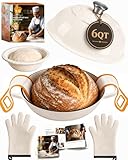
- Included Accessories: Some Dutch ovens come with helpful extras like cotton potholders (seen with Umite Chef 5QT and Overmont) or even cookbooks like the Scout’s Dutch Oven Cookbook. The AHJ 6QT Dutch Oven even includes a proofing basket and silicone sling for bread baking.
- Color and Aesthetics: While not impacting performance, the color can be a personal preference. Popular choices range from classic cream white (Umite Chef 5QT) to vibrant pink (Umite Chef 5QT) and bold red (Umite Chef 5QT).
Understanding Specific Uses
While a Dutch oven is a multi-purpose tool, some models are better suited for specific tasks:
- Bread Baking: The enclosed environment of a Dutch oven creates steam, which is vital for achieving a crispy crust and airy interior on sourdough and other artisan breads. The AHJ 6QT Dutch Oven is specifically marketed for bread baking, even featuring a “bread pan” design.
- Braising and Stewing: The excellent heat retention and distribution make Dutch ovens perfect for low and slow cooking, transforming tough cuts of meat into tender, flavorful dishes.
- Roasting: You can roast meats and vegetables in a Dutch oven, achieving excellent results due to the even heat.
Tips for Dutch Oven Care
- Always allow your Dutch oven to cool before washing.
- Wash with warm, soapy water and a non-abrasive sponge. Avoid harsh detergents or steel wool, which can damage the enamel.
- For stubborn food residue, soak the pot in warm water for a few hours before cleaning.
- Dry thoroughly immediately after washing to prevent rust.
- Avoid using metal utensils that can scratch the enamel surface. Wooden or silicone utensils are recommended.
Frequently Asked Questions
What is the best size Dutch oven for a beginner?
For most beginners, a 5.5-quart or 6-quart enameled cast iron Dutch oven is the most versatile and recommended size. It’s large enough for family meals and bread baking but not so large that it becomes unwieldy for smaller tasks.
Can I use metal utensils in an enameled cast iron Dutch oven?
While enameled cast iron is durable, it’s best to avoid metal utensils that can scratch or chip the enamel. Wooden, silicone, or plastic utensils are safer alternatives.
How do I clean burnt-on food from my Dutch oven?
For burnt-on food, fill the Dutch oven with warm water and a bit of dish soap, then let it soak for several hours or overnight. You can then gently scrub with a non-abrasive sponge. For very stubborn spots, a paste of baking soda and water can be effective.
Are Dutch ovens worth the investment?
Absolutely. A high-quality Dutch oven is an investment that can last a lifetime with proper care. Its versatility, durability, and superior cooking performance make it an indispensable tool in any kitchen.
Conclusion
Investing in a Dutch oven is one of the best decisions you can make for your kitchen. Whether you’re drawn to the rustic charm of slow-cooked stews, the satisfying crackle of a homemade bread crust, or the sheer convenience of a one-pot meal, a Dutch oven delivers. By considering size, material, and key features, you can confidently select a Dutch oven that will become a beloved and frequently used centerpiece of your culinary adventures for years to come.



Write Your Review
No reviews yet. Be the first to share your experience!