
Key takeaways
- Soft, tender herbs (treat like flowers): Cilantro, parsley, dill, mint, and tarragon. These have delicate stems and high water content. They store best upright in a small amount of water in the refrigerator.
- Hardy, woody herbs (treat like greens): Rosemary, thyme, oregano, and sage. These have low moisture and woody stems. They do best wrapped loosely and kept dry, with just enough humidity to prevent wilting.
- Exception – Basil: Basil is cold-sensitive and turns black below 40°F (4°C). Keep basil at room temperature in a small jar of water on the counter, loosely covered with a thin plastic bag, and use within 5 to 7 days.
What's inside
- Watch: How to Store Fresh Herbs to Keep Them Vibrant Longer — Video Review
- 1. Sort Herbs Into Two Groups: Soft vs. Hardy
- 2. Prep Herbs Correctly Before You Store Them
- 3. Refrigerator Methods That Keep Herbs Vibrant Longer
- 4. What to Look for in a Dedicated Herb Keeper
- Tips
- Frequently Asked Questions
- Conclusion
- Related Articles
Fresh herbs can turn limp, blackened, or slimy in just 2 to 3 days when tossed loosely into the crisper drawer. With the right storage method, tender herbs like cilantro, parsley, and dill will stay vibrant for 10 to 14 days, and hardy herbs like rosemary and thyme can last up to 3 weeks.
- Watch: How to Store Fresh Herbs to Keep Them Vibrant Longer — Video Review
- 1. Sort Herbs Into Two Groups: Soft vs. Hardy
- 2. Prep Herbs Correctly Before You Store Them
- 3. Refrigerator Methods That Keep Herbs Vibrant Longer
- 4. What to Look for in a Dedicated Herb Keeper
- Tips
- Frequently Asked Questions
- Conclusion
- Related Articles
In 2026, the most reliable approach combines a little prep work with the right container. This guide explains exactly how to sort, wash, and store your herbs so you waste less, cook more, and keep that just-picked flavor.
As an Amazon Associate we earn from qualifying purchases at no extra cost to you. Product prices and availability are accurate as of the date shown and are subject to change.




⚡ Save on Your Next PC — Amazon Prime
Prime members get fast free shipping on the systems above, plus early access to Prime Day & Black Friday PC deals. New members get a 30-day free trial.
Watch: How to Store Fresh Herbs to Keep Them Vibrant Longer — Video Review
1. Sort Herbs Into Two Groups: Soft vs. Hardy
Not all herbs want the same treatment. Storing them the wrong way is the fastest way to lose flavor and texture.
- Soft, tender herbs (treat like flowers): Cilantro, parsley, dill, mint, and tarragon. These have delicate stems and high water content. They store best upright in a small amount of water in the refrigerator.
- Hardy, woody herbs (treat like greens): Rosemary, thyme, oregano, and sage. These have low moisture and woody stems. They do best wrapped loosely and kept dry, with just enough humidity to prevent wilting.
- Exception – Basil: Basil is cold-sensitive and turns black below 40°F (4°C). Keep basil at room temperature in a small jar of water on the counter, loosely covered with a thin plastic bag, and use within 5 to 7 days.
2. Prep Herbs Correctly Before You Store Them
A quick, gentle prep extends life by days. Do this as soon as you get home from the store or garden.
- Do not unnecessarily rinse until you prep: If herbs are visibly clean and dry, wait to wash until just before use. If they are gritty or sandy (common with cilantro and parsley), rinse thoroughly.
- Wash gently and dry completely: Swish in a large bowl of cold water, lift out, and repeat if needed. Spin in a salad spinner, then pat completely dry with clean kitchen towels or paper towels. Surface moisture is the main cause of rot for hardy herbs.
- Trim the stems: Snip 1/4 to 1/2 inch off the bottom of the stems, just like flowers. This reopens the stem for water uptake and keeps soft herbs hydrated longer.
- Remove damaged leaves: Pick off any yellowed, bruised, or slimy leaves. One decaying leaf can spoil the whole bunch in 24 to 48 hours.
3. Refrigerator Methods That Keep Herbs Vibrant Longer
Use the method that matches your herb type. All methods assume a standard refrigerator temperature of 37°F to 40°F (3°C to 4°C).
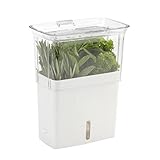
- For soft herbs – The water-glass method: Place trimmed stems upright in a jar with 1 to 1.5 inches of fresh, cold water. Cover loosely with a bag or the jar lid left ajar to retain humidity but allow airflow. Change water every 2 to 3 days. Lasts 12 to 21 days for cilantro and parsley. This is the core principle behind dedicated water-based keepers like the Cole & Mason Fresh Herb Keeper and the Herb Saver Pod 3Pack, which simply make the jar method more stable and fridge-friendly.
- For hardy herbs – The damp-towel wrap: Lay herbs on a slightly damp (not wet) paper towel or clean tea towel, roll loosely like a burrito, and place inside a zip-top bag or airtight container. Leave the bag slightly open or vented. Check every 3 to 4 days and replace the towel if damp. Lasts 14 to 21 days.
- For any herb – The airtight container method: Line a hard-sided container with a dry paper towel, lay a single layer of fully dry herbs on top, add another towel, and seal. This protects leaves from crushing and controls humidity, ideal if your crisper drawer runs too wet or too dry.
4. What to Look for in a Dedicated Herb Keeper
You can use a mason jar and a plastic bag, but a purpose-built keeper solves the three problems that shorten herb life: standing water goes stagnant, leaves get crushed, and humidity is hard to control. Here is what matters when choosing one.
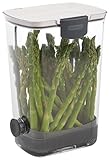
- Stable water reservoir with separation: A good keeper holds stems in water while keeping leaves elevated and dry. Models like the OXO Good Grips GreenSaver Herb Keeper 1.8 QT and the OXO Good Grips Produce Saver use a basket or insert to lift herbs above the water line, while the ProKeeper Herb Keeper adds a removable silicone drain plug to change water without removing herbs.
- Proper height and lid design: Look for at least 6.5 to 8 inches of internal height so parsley and cilantro don’t bend at the top. A vented or hinged lid, like on the LAWNFUL 2 Pack Fresh Herb Keeper, lets you control airflow and prevents condensation from dripping back onto leaves.
- Clear, BPA-free construction: Acrylic or clear BPA-free plastic lets you see water level and herb condition without opening. The Cole & Mason Fresh Herb Keeper is a good example of a clear acrylic design that fits in most refrigerator doors.
- Capacity for how you cook: If you buy one bunch at a time, a single-unit keeper is fine. If you regularly store cilantro, parsley, and mint at once, a set like the Herb Saver Pod 3Pack or the LAWNFUL 2 Pack keeps flavors separate and prevents cross-wilting. Mint, in particular, should always be stored alone.
Tips
- Change reservoir water every 2 to 3 days and rinse the container weekly. Stagnant water breeds bacteria and creates a sour smell in 4 to 5 days.
- Keep herbs away from ethylene-producing fruit like apples, avocados, and bananas. Ethylene accelerates yellowing, especially for parsley and cilantro.
- If herbs have wilted but are not slimy, revive them with a 10 to 15 minute ice water bath, then dry thoroughly and return to storage. This works well for parsley, cilantro, and mint.
- Freeze what you cannot use within 10 days. Chop hardy herbs and freeze in olive oil in an ice cube tray, or freeze soft herbs dry in a sealed bag. Frozen herbs retain flavor for 6 months and are perfect for cooked dishes.
Frequently Asked Questions
How long do fresh herbs actually last in the refrigerator?
With proper storage, soft herbs like cilantro and parsley last 14 to 21 days in water in the fridge, mint lasts 10 to 14 days, and hardy herbs like rosemary and thyme last 14 to 21 days in a damp-towel wrap or vented keeper. Without proper storage, most bunches fade in 3 to 5 days.
Should I wash herbs before storing?
Only if they are dirty or gritty. If you do wash, drying is critical. For hardy herbs, any residual water on the leaves will cause black spots and rot within days. For soft herbs stored in water, leaves should still be patted dry even though stems are submerged.
Why does my cilantro turn slimy or black?
Three common causes: too much surface moisture on the leaves, water that hasn’t been changed, and leaves sitting in water. Keep leaves above the water line, change water every 2 to 3 days, and ensure the container has airflow. Removing the rubber band or twist tie also prevents bruising at the stems.
Can I store different herbs together in one keeper?
It is not recommended for long-term storage. Mint and dill release more moisture and aroma and can taint other herbs. Cilantro and parsley can share a keeper for 3 to 4 days if space is tight, but for best results, give each herb its own water or compartment. A multi-pack provides that separation without taking up extra shelf space.
Conclusion
The best herb storage is simple: sort soft from hardy, trim and dry well, give soft herbs fresh water and hardy herbs a breathable, dry environment, and keep everything cold and protected from crushing. A dedicated keeper like the OXO Good Grips GreenSaver, ProKeeper Herb Keeper, or Cole & Mason Fresh Herb Keeper just makes that system easier to maintain. With these habits, a single bunch will stay vibrant long enough for multiple meals, saving you money and trips to the store.



Write Your Review
No reviews yet. Be the first to share your experience!