
Key takeaways
- Buying by the advertised maximum. Rated capacity is not the same as practical blending capacity. Leave roughly 15% to 25% of the cup empty.
- Ignoring ingredient volume. A scoop of powder may occupy little space, while a banana, ice, oats, and yogurt can quickly fill a 15-ounce cup.
- Choosing a large cup for a small recipe. Very low fill levels may not reach the blades effectively, leading to extra shaking, stirring, or stopping.
- Forgetting total blender height. Compare the assembled height, not only the cup height, especially under upper cabinets.
- Assuming every cup fits every base. Replacement cups and lids are often model-specific. A 22-ounce cup may not fit a 15-ounce motor base.
- Using wattage as the only performance measure. Blade design, ingredient order, liquid level, and frozen-food limits also affect blending.
- Overlooking portability. A wide insulated cup may hold more but fail to fit a backpack pocket, car holder, or office refrigerator shelf.
What's inside
The Short Answer
For most protein shakes, the best personal blender cup size is 16 to 20 ounces. That range leaves enough room for protein powder, milk or water, ice, fruit, and blending movement without making the cup unnecessarily bulky.
A 12- to 15-ounce cup works for a compact, single-scoop shake made with liquid and powder. Choose an 18- to 22-ounce cup if you add a banana, frozen berries, oats, yogurt, or a generous amount of ice. Cups larger than 24 ounces are useful for meal-replacement shakes or double servings, but they may require a more powerful motor and take up more storage space.
As an Amazon Associate we earn from qualifying purchases at no extra cost to you. Product prices and availability are accurate as of the date shown and are subject to change.

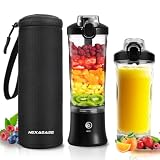

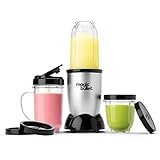
If you are searching for the right how many ounces personal blender cup size for protein shakes, start with your usual recipe rather than the advertised maximum capacity. A cup labeled 18 ounces may only blend comfortably with 14 to 16 ounces of ingredients once you allow room for expansion and circulation.
Standard Sizes
Personal blender cups are commonly sold in capacities from 12 to 24 ounces. The measurements below are practical size ranges for the cup itself, not universal specifications. Threaded bases, drinking lids, handles, insulation, and blade attachments can increase the overall footprint. One fluid ounce equals approximately 29.6 milliliters.
| Rated cup size | Best usable fill | Typical cup dimensions | Metric dimensions | Best for |
|---|---|---|---|---|
| 12 oz | 9–10 oz | About 3.0 in diameter × 5.5 in high | 7.6 cm diameter × 14.0 cm high | Small shakes and limited storage |
| 15 oz | 12–13 oz | About 3.25 in diameter × 6.0 in high | 8.3 cm diameter × 15.2 cm high | One scoop of powder with milk or water |
| 18 oz | 14–16 oz | About 3.25 in diameter × 6.5 in high | 8.3 cm diameter × 16.5 cm high | Everyday shakes with fruit or ice |
| 22 oz | 17–19 oz | About 3.5 in diameter × 7.0 in high | 8.9 cm diameter × 17.8 cm high | Thick shakes and larger servings |
| 24–28 oz | 19–24 oz | About 3.75 in diameter × 7.5–8.0 in high | 9.5 cm diameter × 19.1–20.3 cm high | Meal replacements or double portions |
For comparison, compact models in the 15- to 18-ounce category are often approximately 8 to 12 inches tall when the cup, blade assembly, and motor base are combined. A 22-ounce personal blender may be closer to 12 to 15 inches tall, depending on whether the cup locks into the base from above or below. Check the assembled height before buying if the blender will sit beneath a cabinet.
Motor power also matters. Small portable blenders may use roughly 150 to 250 watts, while corded personal blenders commonly range from about 200 to 600 watts. Wattage does not guarantee smooth results, but larger cups filled with frozen fruit, ice, or nut butter generally benefit from a stronger motor. A 15-ounce model with a 250-watt motor may be practical for powder and soft fruit, while a larger frozen shake may need more frequent pauses or added liquid.
How to Measure Your Space
- Measure the storage area’s width. Use a tape measure to check the narrowest point inside a cabinet, pantry shelf, or drawer. Allow at least 0.5 inch, or 1.3 cm, of side clearance so the cup or base does not scrape when removed.
- Measure the available height. Check from the counter to the underside of the cabinet. Measure with the blender assembled if you plan to blend in place. A cup that fits by itself may be too tall once attached to the motor base.
- Measure the depth. Include the plug, cord bend, controls, and any rear ventilation area. Plan on approximately 12 to 16 inches of counter depth for many corded personal blenders, though compact rechargeable models can use less.
- Check the drinking-lid clearance. Some cups have a flip-top lid or wide carry loop. Leave additional room above the cup if the lid must open beneath a shelf.
- Measure your car cup holder. Many vehicle cup holders are about 2.5 to 3.0 inches in diameter. A double-wall insulated sleeve or wide 22-ounce cup may not fit, even if the bare blending cup does.
- Account for accessories. Extra cups, blade caps, charging cords, and cleaning brushes need a separate storage location. A blender with a single 18-ounce cup may occupy less cabinet space than a 15-ounce kit with several attachments.
By Room or Use Case
Small kitchen counter
Choose a 15- to 18-ounce blender cup for a small apartment kitchen, dorm room, or crowded counter. These sizes are tall but narrow and usually handle a single protein shake without dominating the workspace. A model with a removable travel lid is especially useful when you blend and drink from the same container.
Allow space around the motor base for ventilation, and avoid pushing it directly against a wall while operating. If the blender must slide into a cabinet after every use, prioritize a short base and a cup that stores separately.
Office or work bag
An 12- to 15-ounce cup is easier to carry, but it provides less room for ice and bulky ingredients. It is best for protein powder mixed with water, milk, or a ready-to-drink beverage. For commuting, look for a leak-resistant lid and a cup that weighs approximately 1 to 2 pounds when empty, depending on its insulation and battery.
Portable rechargeable blenders can be convenient, but confirm that the cup is large enough for your recipe and that the lid seals independently from the blade base. Never carry a cup with the blade assembly attached unless the manufacturer specifically designs it for transport.
Gym and post-workout shakes
An 18-ounce cup is a strong all-purpose choice for the gym. It typically accommodates one scoop of protein powder, 10 to 12 ounces of liquid, and a small handful of fruit or ice. If you use a shaker bottle after blending, a 15-ounce blender cup may be sufficient; if you drink directly from the blending cup, 18 to 22 ounces offers more flexibility.
Thick shakes and meal replacements
Use a 22- to 28-ounce cup for Greek yogurt, oats, nut butter, frozen fruit, or a second scoop of protein. These ingredients reduce free space quickly, so a larger cup helps prevent overflow. Look for a motor rated around 300 watts or more for frequent thick blends, and add liquid gradually rather than packing the cup tightly.
Family or batch preparation
A personal blender is designed for one serving, not a large family batch. If you regularly make two shakes at once, a 24- to 28-ounce cup can work for two modest servings, but check the manufacturer’s maximum fill line. A full cup of frozen ingredients may blend unevenly, and repeated batches can be easier with a full-size countertop blender.
Common Sizing Mistakes
- Buying by the advertised maximum. Rated capacity is not the same as practical blending capacity. Leave roughly 15% to 25% of the cup empty.
- Ignoring ingredient volume. A scoop of powder may occupy little space, while a banana, ice, oats, and yogurt can quickly fill a 15-ounce cup.
- Choosing a large cup for a small recipe. Very low fill levels may not reach the blades effectively, leading to extra shaking, stirring, or stopping.
- Forgetting total blender height. Compare the assembled height, not only the cup height, especially under upper cabinets.
- Assuming every cup fits every base. Replacement cups and lids are often model-specific. A 22-ounce cup may not fit a 15-ounce motor base.
- Using wattage as the only performance measure. Blade design, ingredient order, liquid level, and frozen-food limits also affect blending.
- Overlooking portability. A wide insulated cup may hold more but fail to fit a backpack pocket, car holder, or office refrigerator shelf.
FAQ
Is a 15-ounce blender cup big enough for a protein shake?
Yes, a 15-ounce cup is adequate for one scoop of protein powder, approximately 10 to 12 ounces of liquid, and a small amount of soft fruit. It may be too small for ice, oats, yogurt, and a banana together. Keep the usable fill near 12 or 13 ounces rather than filling it to the rim.
Is an 18-ounce personal blender cup better than a 22-ounce cup?
An 18-ounce cup is usually better for everyday single servings because it is easier to store and carry. A 22-ounce cup is better when you add frozen fruit, substantial ice, or meal-replacement ingredients. Choose based on your recipe and available storage, not simply the larger number.
How much liquid should I put in a personal blender for protein powder?
Many shakes start with 8 to 12 ounces of milk or water per scoop of protein powder. Add more liquid for oats, frozen fruit, or nut butter. Keep the total mixture below the maximum fill line and leave room for the blades to circulate the ingredients.
What cup size is best for a protein shake with fruit and ice?
An 18- to 22-ounce cup is the most versatile range. Use 18 ounces for a modest handful of fruit and a few ice cubes; choose 22 ounces for a banana, frozen berries, yogurt, or a thicker meal-replacement recipe. In either case, follow the blender’s instructions for ice and frozen ingredients.


Write Your Review
No reviews yet. Be the first to share your experience!