
Key takeaways
- Using total bowl capacity as usable dough capacity. A 5-quart bowl is not meant to be filled to the rim. Dough needs room to gather around the hook and expand.
- Choosing by flour volume alone. One cup of bread flour weighs about 4.25 ounces (120 grams), but whole-wheat flour, hydration, add-ins, and kneading time change the load on the mixer.
- Assuming a larger bowl is always better. Very small dough batches may not contact the hook properly in a large bowl, producing uneven mixing.
- Ignoring bowl shape. A tall, narrow bowl can provide better dough-hook contact than a wide, shallow bowl of similar capacity.
- Forgetting raised-head clearance. Measure the mixer in its operating position, not only when it is tucked under the cabinet.
- Comparing wattage without reading capacity limits. Follow the maker’s instructions for maximum flour weight and kneading duration rather than relying on wattage alone.
- Buying an incompatible replacement bowl. Bowl diameter, locking tabs, handle position, and tilt-head or bowl-lift design must all match the mixer.
What's inside
The Short Answer
For most home bread baking, a 5-quart stand mixer bowl is the best all-around choice. It gives you enough room for one standard loaf made with approximately 3 to 4 cups of flour, while leaving space for the dough to knead without climbing over the dough hook. A 4-quart bowl can handle smaller batches, but it may feel cramped with high-hydration dough or recipes using 5 cups of flour or more.
If you regularly make two loaves at once, pizza dough for a family, or enriched dough such as brioche, choose a 6- to 7-quart bowl. For occasional small loaves, dinner rolls, or a compact kitchen, a 4- to 5-quart mixer is usually sufficient.
As an Amazon Associate we earn from qualifying purchases at no extra cost to you. Product prices and availability are accurate as of the date shown and are subject to change.


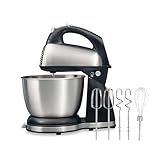
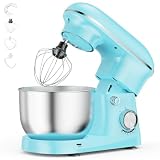
Capacity is not the only measurement that matters. Bowl shape, mixer power, dough-hook clearance, and the manufacturer’s maximum flour recommendation all affect performance. A larger bowl does not automatically mean a mixer can safely knead a larger amount of stiff dough.
Standard Sizes
Stand mixer bowls are generally described by liquid capacity, but bread recipes are better judged by flour weight. The figures below are practical planning ranges rather than universal limits. Always check the manual for the specific mixer, especially for whole-wheat, rye, bagel, and other dense doughs.
| Bowl size | Approximate bowl dimensions | Approximate capacity | Typical bread batch | Best for |
|---|---|---|---|---|
| 4 quarts | About 9.5 in wide x 6.5 in high (24.1 x 16.5 cm) |
3.8 L | 2-3 cups flour; 1 small loaf | Compact kitchens and occasional baking |
| 4.5 quarts | About 9.5 in wide x 7 in high (24.1 x 17.8 cm) |
4.3 L | 3-4 cups flour; 1 standard loaf | Small families and general baking |
| 5 quarts | About 9.5 in wide x 7.5 in high (24.1 x 19.1 cm) |
4.7 L | 3-5 cups flour; 1 large loaf or 2 small loaves | Most home bread recipes |
| 6 quarts | About 11 in wide x 8.5 in high (27.9 x 21.6 cm) |
5.7 L | 4-7 cups flour; 2 loaves | Frequent bread baking and larger families |
| 7 quarts | About 11 in wide x 9 in high (27.9 x 22.9 cm) |
6.6 L | 5-8 cups flour; 2 large loaves | Large batches and dense doughs |
These dimensions describe typical bowl size, not the complete mixer. The appliance may be several inches wider, deeper, and taller once the motor housing and head are included. A 5-quart bowl, for example, commonly pairs with a mixer measuring roughly 8.5 to 9 inches wide, 13 to 15 inches deep, and 13 to 17 inches high with the head lowered. Tilt-head models need additional vertical clearance when the head is raised.
For a standard white or sandwich loaf, a 4.5- or 5-quart mixer is the practical sweet spot. A 5-quart bowl is also a useful size if you want to make cake batter, whipped cream, cookie dough, and bread with one appliance. The KitchenAid 5Q Ceramic Bread Bowl with Lid is an example of a 5-quart bread-focused bowl designed for compatible tilt-head mixers. It is intended to support mixing and proofing in the same vessel, but compatibility and maximum dough capacity should be confirmed before purchase.
Budget mixers such as a 4.2-quart OLIXIS stand mixer or a 4-quart Hamilton Beach stand-and-hand mixer can suit small bread recipes. Their listed prices are commonly in the approximately $45 to $100 range, depending on the model and retailer. Price is not a reliable substitute for capacity: check the manual’s flour and dough limits, plus the motor’s wattage. Entry-level models may list roughly 250 to 400 watts, while heavier-duty mixers often list 500 to 1,000 watts or more. Wattage alone does not predict kneading quality, but dense dough places more strain on a lightweight machine.
How to Measure Your Space
- Measure the counter width. Allow at least 2 inches (5 cm) of clearance on each side of the mixer so you can grip the bowl, attach the dough hook, and wipe around the appliance. A 9-inch-wide mixer therefore needs about 13 inches of usable counter width.
- Measure front-to-back depth. Many mixers occupy 13 to 18 inches (33 to 45.7 cm) from the front of the bowl to the rear motor housing. Include the space needed to remove the bowl or tilt the head.
- Measure height with the head lowered. Record the distance from the counter to the highest point of the mixer. This matters if the appliance will sit beneath cabinets.
- Measure height with the head raised. Tilt-head models can need 17 to 20 inches (43.2 to 50.8 cm) of vertical clearance. Bowl-lift models may need even more room to remove the bowl and hook.
- Check cabinet depth and door swing. A mixer that fits under a cabinet may still be difficult to use if the cabinet door blocks the raised head or bowl handle.
- Plan for storage weight. A compact mixer may weigh 10 to 15 pounds (4.5 to 6.8 kg), while a larger metal-bodied model can weigh 20 to 30 pounds (9.1 to 13.6 kg). Choose a shelf that can support the mixer, bowl, and attachments together.
- Look for ventilation space. Leave several inches around the motor housing, especially during long kneading cycles. Do not push the rear vents directly against a wall.
By Room or Use Case
Small apartment kitchen
Choose a 4- or 4.5-quart mixer if counter space is limited. It should fit a one-loaf recipe without taking over the work area. A mixer approximately 9 inches wide by 13 inches deep (22.9 by 33 cm) is easier to store than a 6- or 7-quart model. Confirm that the bowl can be removed without moving the appliance.
Everyday family baking
A 5-quart bowl is the most versatile choice. It accommodates most sandwich bread, pizza dough, cookies, cakes, and whipped mixtures. Look for a model with a sturdy dough hook and a published capacity of at least 3 to 4 cups of flour. If you often bake two small loaves, check that the manual specifically permits that quantity.
Large household or batch baking
Select a 6- or 7-quart mixer when you routinely double recipes. These bowls provide more room for dough expansion and reduce the chance of flour or dough contacting the motor head. They are also better suited to several pizza bases or two full-size loaves, but they require more counter depth and may weigh 20 pounds or more.
Dense and enriched dough
For bagels, whole-grain loaves, pasta dough, or stiff brioche, prioritize a solid bowl-lift mixer and a dough capacity approved by the manufacturer. A 5-quart bowl can be adequate for a small batch, but a 6- or 7-quart model may knead more comfortably. Make smaller batches if the mixer rocks, the motor strains, or the dough repeatedly climbs the hook.
Proofing and storage
A bread bowl with a lid can be useful if you want to mix and proof without transferring dough. Check its exterior diameter and height against your refrigerator shelf or proofing location. Ceramic bowls may be heavier than stainless steel bowls, so verify that the mixer head and bowl-locking mechanism are designed for that accessory.
Common Sizing Mistakes
- Using total bowl capacity as usable dough capacity. A 5-quart bowl is not meant to be filled to the rim. Dough needs room to gather around the hook and expand.
- Choosing by flour volume alone. One cup of bread flour weighs about 4.25 ounces (120 grams), but whole-wheat flour, hydration, add-ins, and kneading time change the load on the mixer.
- Assuming a larger bowl is always better. Very small dough batches may not contact the hook properly in a large bowl, producing uneven mixing.
- Ignoring bowl shape. A tall, narrow bowl can provide better dough-hook contact than a wide, shallow bowl of similar capacity.
- Forgetting raised-head clearance. Measure the mixer in its operating position, not only when it is tucked under the cabinet.
- Comparing wattage without reading capacity limits. Follow the maker’s instructions for maximum flour weight and kneading duration rather than relying on wattage alone.
- Buying an incompatible replacement bowl. Bowl diameter, locking tabs, handle position, and tilt-head or bowl-lift design must all match the mixer.
FAQ
Is a 4-quart stand mixer big enough for bread?
Yes, for one small or standard loaf at a time. Keep the recipe near 2 to 3 cups of flour unless the manufacturer lists a higher limit. A 4-quart bowl is less comfortable for dense dough, doubled recipes, or doughs that rise substantially during mixing.
Is a 5-quart mixer enough for two loaves?
Sometimes. Two small loaves may fit, but two full-size loaves can exceed the recommended dough weight. Check the manual rather than judging by bowl volume. If you regularly double bread recipes, a 6-quart mixer offers a safer margin and more working room.
How much flour can a 5-quart mixer handle?
Many 5-quart mixers are designed for approximately 3 to 5 cups of flour, but the approved amount varies by model and by flour type. Dense whole-wheat or bagel dough may require a smaller batch than soft white dough. The manufacturer’s maximum flour weight is the controlling figure.
Do I need a special bread bowl?
No. A standard stainless steel bowl works for mixing and kneading. A dedicated bread bowl can add a lid, proofing convenience, or a shape designed for dough handling, but it must be compatible with the mixer. For most buyers in 2026, choosing the correct mixer size and following its dough capacity matters more than buying a specialty bowl.



Write Your Review
No reviews yet. Be the first to share your experience!