
Key takeaways
- Fuel: propane gas (portable tank)
- Cooking surface: 15-inch pizza stone
- Body material: stainless steel
- Form factor: portable, stainless pizza maker for outdoor use
- Heat source control: gas burner with knob regulation
Best Pizza Ovens for Outdoor Cooking: The Direct Answer
The best pizza oven for most outdoor cooks is the Ooni Karu 2 Multi-Fuel Outdoor Pizza Oven, because it runs on wood or gas, keeps the integrated thermometer and stone you actually use every bake, and gives you a fast 60-second cook without committing you to a single fuel. If your budget is the deciding factor, the BIG HORN 12″ Outdoor Pizza Oven covers wood pellet, gas and electric at the lowest entry point on this list. If you want a built-in patio look and mid-range spend, the EDOSTORY Outdoor Wood-Fired Pizza Oven or the BIG HORN OUTDOORS 16″ Multi-Fuel Oven will be the better fit. The rest of this guide compares fuel types, stone sizes, heat-up windows, exterior footprints, weather protection and the patio clearance each oven demands — because the differences that decide your purchase are usually about space and fuel logistics, not the oven’s marketing claims.
Top 3 Picks
Best Overall: Ooni Karu 2 Multi-Fuel Outdoor Pizza Oven
Multi-fuel flexibility in one body: wood or gas, an integrated thermometer, and a ceramic stone sized for 12-inch pizzas in roughly a minute. It suits cooks who want a portable oven that can move between the backyard, a tailgate and a campsite without buying two appliances. The Karu 2’s real advantage is the upgrade path — you start on wood and add a gas burner later rather than replacing the whole oven.
Best Budget: BIG HORN 12″ Outdoor Pizza Oven
Reaching a claimed 1110°F with wood pellet, gas and electric options, this is the cheapest way onto the list without dropping to a toy-grade unit. It suits first-time outdoor bakers, renters and anyone who wants to test whether they’ll actually bake weekly before spending premium money. The 12-inch stone keeps fuel consumption low and recovery fast.
Best Premium: BIG HORN Gas Pizza Oven, Portable Propane with 15-Inch Stone
A stainless propane unit with a 15-inch stone — the largest stone in this roundup’s portable class — plus the convenience of turn-a-knob gas control. It suits households feeding four to six people who want repeatable bakes without tending a fire. The larger stone means fewer, bigger pies instead of a relay of 12-inchers.
Quick Comparison
| Product | Best For | Key Specs | Price Tier |
|---|---|---|---|
| BIG HORN Gas Pizza Oven (Portable Propane, 15″ Stone) | Largest-batch portable gas baking | Propane; 15″ pizza stone; stainless steel body | Premium |
| BIG HORN 12″ Outdoor Pizza Oven | Cheapest multi-fuel entry | Wood pellet, gas & electric; 12″ class; up to 1110°F claimed | Budget |
| BIG HORN OUTDOORS Grill Cart | Stable stand for oven or grill | Stainless steel; outdoor grill table; pizza oven stand compatible | Mid-range |
| Pizzello Outdoor Pizza Oven Wood Fired 2-Layer | Budget wood-fired starter kit | Wood fired; 2-layer body; includes stone, peel and cover | Budget |
| PIZZELLO 16″ Outdoor Pizza Oven, Wood Fired 2-Layer | Big wood-fired pies on a budget | Wood fired; 16″ class opening; 2-layer insulated body | Mid-range |
| EDOSTORY Outdoor Wood-Fired Pizza Oven | Fixed patio centrepiece | Wood fired; backyard/patio design; freestanding footprint | Mid-range |
| Old Potters Kiln Dried Pizza Oven Cooking Logs | Reliable fuel for wood ovens | 6″ mini logs; oak; kiln dried | Budget |
| BIG HORN OUTDOORS 16″ Multi-Fuel Oven | Multi-fuel with a bigger deck | 16″ class; wood-fired & gas compatible; burners sold separately | Mid-range |
| VEVOR Dual Fuel Pizza Oven Outdoor | Budget dual-fuel flexibility | 12″ class; wood fire & propane gas; pellet & propane capable | Budget |
| Ooni Karu 12 Multi-fuel | Portable wood/gas classic | Up to 950°F; 12″ pizzas in ~60 seconds; multi-fuel | Premium |
| Ooni Karu 2 Multi-Fuel | Best all-round multi-fuel oven | Wood & gas; ceramic pizza stone; integrated thermometer | Premium |
| Masterbuilt Gravity Series Pizza Oven Insert | Existing grill owners | Ceramic pizza stone insert; porcelain-coated exterior; fits Gravity Series grills | Mid-range |
How We Chose
This list was built from category research rather than any physical use of the products: manufacturer-published specifications, the established engineering of outdoor pizza ovens, and the practical realities of patio cooking. Four criteria did the sorting.
Specification completeness. An oven earns a place here when its stone size, fuel type, claimed top temperature and body material are stated clearly enough for a buyer to compare. Vague listings were judged on spec class instead — for example, “12-inch class” rather than an invented number.
Category fit. Every entry has to solve outdoor pizza specifically. Accessories like the Old Potters logs and the BIG HORN grill cart are included because they’re integral to running a wood-fired or standalone oven well, not as padding.
Use case spread. The list deliberately spans the situations buyers actually face: renters with no permanent build, families feeding six, campers who need portability, and grill owners who’d rather add an insert than another appliance. Situations that overlap heavily were collapsed into a single best-fit pick.
Upgrade path and ownership cost. Ovens are judged on what happens after purchase: whether you can switch fuel, whether consumables are cheap and locally available, whether the stone is replaceable, and whether the stand or cart is sold separately. A cheaper oven with an expensive sealed-in stone is not actually cheaper over five years.
1. BIG HORN Gas Pizza Oven, Portable Propane with 15-Inch Stone – Best for Large-Batch Portable Gas Baking
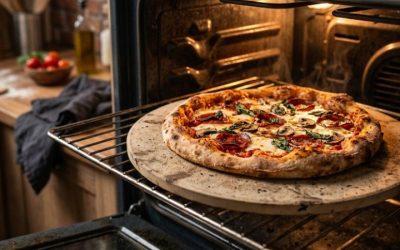
This is the biggest portable deck on the list. Where most 12-inch-class ovens force you to bake in a relay — one pie in, one pie resting, one pie being topped — a 15-inch stone lets you serve two or three people per bake and cut the queue down to two rounds for a family of six. It’s a propane oven, so there’s no fire to feed, no ash to empty mid-session, and no chimney to warm up. Turn the knob, wait for the stone to come to temperature, and bake.
Key specs
- Fuel: propane gas (portable tank)
- Cooking surface: 15-inch pizza stone
- Body material: stainless steel
- Form factor: portable, stainless pizza maker for outdoor use
- Heat source control: gas burner with knob regulation
Who it suits. Households that bake for four to six people and want the evening to be about eating rather than fire management. It’s also the friendliest option for anyone who has never run a wood oven: gas is predictable, and the failure mode of a gas oven is an underheated stone rather than a scorched base. If your patio has a gas line or you already own a propane tank for a grill, the fuel logistics cost you nothing extra.
Strengths. The 15-inch stone is the standout. Surface area scales with the square of diameter, so a 15-inch stone offers roughly 56% more cooking area than a 12-inch stone — the difference between baking one large pie and baking two small ones simultaneously. Stainless steel construction also handles weather better than painted steel; it won’t rust through the way a chipped powder coat will, and it wipes down rather than needing repainting. Gas control gives you the ability to hold a lower flame after the stone is saturated, which is how you avoid burning the base of a heavily topped pizza before the cheese sets.
Pros
- Largest portable stone in this roundup at 15 inches
- No fuel prep — no splitting, no pellets, no ash
- Stainless body resists weather and cleans easily
- Knob-controlled heat is easy to learn and repeat
- Suits batch baking for medium-to-large households
Cons
- Premium tier — the most expensive way onto this list
- No wood-fired flavour, which some cooks consider the point
- Requires a propane supply; adds a consumable cost per session
- Heavier and bulkier than 12-inch portables, so less suited to packing in a car
How it compares. Against the Ooni Karu 2, this oven trades fuel flexibility for deck size. The Karu 2 can burn wood or gas and is the better travel companion; the BIG HORN 15-inch can’t switch fuel, but it bakes a materially bigger pizza in one pass and behaves more like an outdoor appliance than a camping gadget. Against the BIG HORN 16″ Multi-Fuel Oven, the choice comes down to whether you want wood flavour: the 16-inch multi-fuel gives you a comparable deck plus a wood option, but its burners are sold separately, so the total cost climbs once you add them. If you know you’ll cook on gas 90% of the time, this propane-only model is the simpler purchase.
2. BIG HORN 12″ Outdoor Pizza Oven – Best for First-Time Buyers on a Tight Budget
This is the cheapest legitimate route into outdoor pizza. It’s a 12-inch-class oven claiming top temperatures around 1110°F across wood pellet, gas and electric operation — three fuel paths in one budget body. For a buyer who isn’t sure whether they’ll bake twice a week or twice a season, that optionality is the whole value: you can start on pellets for flavour, switch to gas when you want speed, and use electric if you’re somewhere that bans open flame.
Key specs
- Fuel: wood pellet, gas and electric
- Claimed top temperature: up to 1110°F
- Cooking surface: 12-inch class stone
- Form factor: portable outdoor pizza oven
- Fuel flexibility: three modes in one unit
Who it suits. Renters, apartment-dwellers with a balcony, campers, and anyone testing the hobby. The 12-inch stone is the sweet spot for one or two people; a couple can eat comfortably from two bakes, and a single baker gets a personal-size pie in the time it takes to prep the next. It’s also the sensible choice if you’re not certain about your patio’s rules on open flame — the electric mode sidesteps that entirely.
Strengths. The claimed 1110°F ceiling is high enough to bake a thin-crust pizza in the 60–90 second range, which is the performance band that actually produces leopard-spotted crusts rather than an oven-baked imitation. Three fuel modes mean the oven never becomes useless: if you move somewhere with no gas hookup, or a park that forbids solid fuel, you still have a working appliance. The 12-inch stone also keeps fuel burn low — a smaller chamber reaches temperature faster and uses less pellet or gas per session, which matters more than sticker price if you bake often.
Pros
- Lowest entry cost in this roundup
- Three fuel modes — pellet, gas, electric — in one unit
- High claimed temperature ceiling for rapid bakes
- 12-inch stone heats quickly and sips fuel
- Genuinely portable for balconies and car camping
Cons
- Budget build quality; expect thinner panels than premium units
- 12-inch stone limits you to one or two servings per bake
- Fuel-mode switching adds handling steps versus a single-fuel oven
- Consumables (pellets, gas cartridges) become an ongoing line item
How it compares. Against the VEVOR Dual Fuel 12″, both are budget 12-inch-class ovens with wood-and-gas capability, so the decision is about which fuel combination matches your situation — this BIG HORN adds an electric path, while the VEVOR focuses on wood fire plus propane and pellets. If you might ever bake where open flame is banned, the BIG HORN’s electric mode makes it the safer pick. Against the Pizzello Outdoor Wood Fired 2-Layer, this oven wins on fuel flexibility but loses on out-of-the-box completeness: the Pizzello bundles a stone, peel and cover, while you’ll likely need to buy accessories separately here. Budget for the extras before deciding which is really cheaper.
3. BIG HORN OUTDOORS Grill Cart – Best for Raising Your Oven to Working Height
The least glamorous product here, and for many buyers the one that determines whether the oven actually gets used. A stainless steel outdoor grill table designed to host infrared grills and compatible with pizza oven stands, it solves the height problem that plagues portable ovens: on the ground or on a low patio table, you’re bending to load and rotate pizzas in a 900°F chamber, which is awkward and mildly dangerous. At cart height, the same motion is a normal kitchen action.
Key specs
- Material: stainless steel
- Type: outdoor grill table / cart
- Compatibility: infrared grills and pizza oven stands
- Use: raises oven to standing working height
- Environment: outdoor patio use
Who it suits. Anyone running a portable oven rather than a built-in unit. It’s especially relevant for the BIG HORN 12-inch, the VEVOR 12-inch, the Pizzello models and both Ooni Karu ovens — all of which are designed to sit on a surface, not on the ground. If your patio is short on table space, a cart also consolidates the oven, the peel, the flour tin and the topping trays into one footprint instead of spreading them across whatever furniture exists.
Strengths. Stainless steel is the right material for a permanent outdoor fixture: it doesn’t need repainting, won’t rot like wood, and wipes clean of flour, oil and ash splatter. A dedicated cart also protects your oven from the two things that shorten its life — ground moisture wicking into the base, and wind blowing ash and grit into the mouth of the oven between sessions. From an ergonomics standpoint, working at counter height reduces the reach into a hot chamber, which lowers the chance of a forearm contact burn.
Pros
- Brings portable ovens to a safe, comfortable working height
- Stainless construction suits year-round outdoor exposure
- Consolidates oven and tools into one footprint
- Compatible with infrared grills as well as pizza oven stands
- Keeps the oven off damp ground between bakes
Cons
- Mid-range spend on an item that doesn’t cook anything
- Adds a permanent object to the patio, which matters in small yards
- Not needed if you already own a built-in outdoor kitchen or workbench
- Check the oven’s footprint against the cart’s top before buying
How it compares. This isn’t competing with the ovens — it’s competing with the folding table you were going to use instead. Against that alternative, the cart wins on stability (a lightweight table shifts when you slide a peel under a pizza) and on weather resistance. Against the built-in flexibility of the EDOSTORY Outdoor Wood-Fired Oven, which stands on its own, the cart is unnecessary — if you’re buying a freestanding wood-fired oven, skip this and put the money into fuel and a cover.
4. Pizzello Outdoor Pizza Oven Wood Fired 2-Layer – Best for a Complete Budget Wood-Fired Starter Kit
The pitch here is completeness. This wood-fired 2-layer oven ships as a package with a stone, a pizza peel and a cover, which means the only thing you add is fuel. For a first-time wood-fired buyer, that removes the annoying discovery phase where you learn the oven needs a stone you don’t have, a peel long enough to reach the back, and something to keep rain out of the mouth.
Key specs
- Fuel: wood fired
- Body: 2-layer construction
- Included: pizza stone, pizza peel, cover
- Form factor: outdoor wood-fired pizza maker
- Best paired with: kiln-dried mini logs
Who it suits. Buyers who want the wood-fired experience — live flame, smoky edge, the ritual of feeding the fire — without assembling a kit piece by piece. It’s the right oven for a household that entertains occasionally on a patio and wants a self-contained setup that can be covered and left outside. It also suits anyone buying a gift for a pizza-obsessed friend, since everything needed is in the box.
Strengths. The 2-layer body is the meaningful spec. A double-wall oven holds heat in the chamber rather than radiating it straight through a single steel skin, which means the stone recovers faster between bakes and you burn less wood per session — the practical benefit is being able to bake three pizzas in a row without a long reheat pause. The included cover is not a trivial accessory either: it’s the single cheapest way to extend the life of a wood-fired oven, because it keeps rain out of the chamber and off the stone, and a stone that’s repeatedly soaked and dried will eventually crack.
Pros
- Stone, peel and cover included — no hidden accessory cost
- 2-layer body retains heat for faster recovery between pies
- Budget tier at a genuinely useful level of capability
- Real wood-fired flavour, which gas can’t replicate
- Cover included makes outdoor storage viable
Cons
- Wood-only — no gas or electric fallback
- Requires fire management skill; there’s a learning curve
- Smaller cooking class than 16-inch wood-fired alternatives
- Needs dry, appropriately sized fuel to perform consistently
How it compares. Against the PIZZELLO 16″ Wood Fired 2-Layer, this is the same design philosophy in a smaller format — the 16-inch version gives you more deck for larger pies at mid-range money, and is the better buy if you regularly cook for four or more. Against the BIG HORN 12″ three-fuel oven, this is the more focused product: wood only, but with better insulation and a complete accessory set. If you want wood flavour and don’t care about switching fuel, the Pizzello kit is the more coherent purchase; if you want options, the BIG HORN’s multi-fuel design wins.
5. PIZZELLO 16″ Outdoor Pizza Oven, Wood Fired 2-Layer – Best for Large Wood-Fired Pies on a Mid-Range Budget
Same 2-layer wood-fired architecture as the smaller Pizzello, scaled to a 16-inch class opening. That’s a significant jump in usable deck: a 16-inch stone has roughly 78% more surface area than a 12-inch one, which is the difference between baking personal pies and baking a genuine family-size pizza. It stays in the mid-range tier, which makes it one of the better value propositions on this list for households that cook for five or six.
Key specs
- Fuel: wood fired
- Cooking surface: 16-inch class
- Body: 2-layer insulated construction
- Form factor: freestanding outdoor pizza oven
- Best paired with: 6-inch kiln-dried logs
Who it suits. Families and frequent entertainers who’ve decided that wood-fired is the point and want the biggest practical deck without moving to premium pricing. A 16-inch oven also suits anyone who likes Neapolitan-style larges or who wants to bake a single big pizza rather than three small ones — fewer bakes, less fire-tending, more time at the table. It’s a reasonable step up for someone who already owns a 12-inch oven and has hit its limits.
Strengths. Deck size is the headline, but insulation is what makes the size usable — a larger chamber takes longer to saturate with heat, so the 2-layer construction matters more here than on a 12-inch oven. In practice that means a longer initial warm-up but steadier temperature across a session, which suits the pattern of baking several large pizzas back to back for a group. The mid-range positioning also means you’re not paying premium money for what is fundamentally a wood-only oven, which is the honest trade-off: the money goes into size and insulation rather than fuel flexibility or brand premium.
Pros
- 16-inch class deck handles family-size pizzas
- 2-layer heat retention suits multi-bake sessions
- Mid-range pricing for a large wood-fired oven
- Fewer bakes needed to feed a group
- Natural upgrade target for 12-inch oven owners
Cons
- Wood-only fuel limits where and when you can use it
- Larger chamber means a longer warm-up before the first bake
- Heavier and bulkier to move or store than 12-inch units
- Burns more fuel per session than a smaller oven
How it compares. Against the BIG HORN OUTDOORS 16″ Multi-Fuel Oven, this is the simpler purchase and the more complex one depending on your priorities: the BIG HORN gives you the same size class with wood-fired and gas compatibility, but its burners are sold separately, so the true cost depends on whether you add them. If you’re committed to wood and want a lower all-in price, the Pizzello is the cleaner answer. If you want the option to switch to gas on a weeknight, the BIG HORN 16-inch justifies its extra complexity. Against the EDOSTORY, the Pizzello is the more portable of the two — the EDOSTORY reads as a fixed patio installation, while this can be repositioned seasonally.
6. EDOSTORY Outdoor Wood-Fired Pizza Oven – Best for a Fixed Patio Centrepiece
This is the oven you place once and leave. A freestanding wood-fired design intended for backyard and patio use, it occupies a footprint the way a barbecue or a fire pit does — it becomes part of the garden rather than a gadget you get out and put away. If your goal is a permanent outdoor cooking station with a wood-fired centre, this is the shape of product that delivers it without a masonry build.
Key specs
- Fuel: wood fired
- Installation: freestanding, patio/backyard placement
- Form factor: outdoor pizza maker for permanent outdoor use
- Body: insulated outdoor oven construction
- Best paired with: kiln-dried hardwood logs
Who it suits. Homeowners with a stable patio and enough room for a fixed appliance, who want the visual and practical presence of a real outdoor oven. It suits cooks who’ve moved past the portable stage — they know they bake regularly, they’re not moving house soon, and they’d rather have something substantial than something packable. Also a good fit for anyone who entertains outdoors often and wants the oven to be part of the setting rather than an object wheeled out of the shed.
Strengths. A fixed, freestanding oven is generally built with more thermal mass than a portable one, and thermal mass is what makes a wood-fired oven pleasant rather than frantic. A heavier oven holds its heat, so you’re not chasing the fire between every pizza; the stone stays in the baking band while you load, rotate and unload. It also removes the setup and teardown cost that quietly kills portable oven use — an oven that lives on the patio gets used on a Tuesday, whereas one that needs unpacking gets used on special occasions. Weather protection is largely built into the design intent: these ovens are meant to sit outdoors, though a cover is still worth having for the mouth and stone.
Pros
- Substantial fixed presence — no setup or teardown
- Thermal mass supports steady heat across a long session
- Designed to live outdoors permanently
- Suits regular entertaining rather than occasional use
- Removes the portability compromises of folding-leg ovens
Cons
- Not portable — you commit a permanent footprint
- Wood-only fuel
- Requires a level, heat-safe patio surface and clearance from structures
- Longer warm-up than small portable ovens
- Mid-range price before you’ve added fuel, tools and a cover
How it compares. Against the PIZZELLO 16″ Wood Fired 2-Layer, the difference is philosophy rather than spec: the Pizzello can be moved, covered and stored, while the EDOSTORY is a fixture. If you rent, or your patio doubles as a dining area, the Pizzello is the more flexible choice. If you own and have the space, the EDOSTORY’s permanence is a feature. Against the BIG HORN OUTDOORS 16″ Multi-Fuel Oven, you’re choosing between a fixed wood-burner and a portable multi-fuel unit — pick the EDOSTORY if ambience and stability matter, the BIG HORN if you want fuel flexibility or need to move the oven.
7. Old Potters Kiln Dried Pizza Oven Cooking Logs – Best Fuel for Consistent Wood-Fired Baking
Fuel is the most underrated variable in wood-fired pizza. Anyone who has fought a fire built from damp, oversized logs knows that the oven isn’t the problem — the wood is. These are 6-inch kiln-dried mini logs in oak, sized for small pizza oven fireboxes where a full-size log won’t fit and won’t catch quickly.
Key specs
- Type: kiln dried cooking logs
- Size: 6-inch mini logs
- Species: oak
- Intended use: pizza oven firing
- Price tier: budget
Who it suits. Every wood-fired oven owner on this list — the Pizzello pair, the EDOSTORY, the BIG HORN multi-fuel on wood mode, and both Ooni Karu ovens. It’s particularly relevant for small-chamber ovens, where a 6-inch log is the correct size rather than a compromise. It’s also the right purchase for anyone who has been burning whatever was in the woodpile and wondering why their stone never gets hot enough.
Strengths. Kiln drying is the key spec. Seasoned air-dried wood can still carry meaningful moisture, and moisture is what turns a fire into a smoke generator: the water in the wood absorbs heat as it boils off, so the chamber never reaches the temperature you need for a fast bake. Kiln-dried logs are consistently lower in moisture, which means faster ignition, a hotter flame and less creosote — the sticky, flammable residue that builds up in chimneys and oven mouths when you burn wet wood. Oak is a dense hardwood, so it burns longer per log than softwoods and produces a steadier coal bed, which is what keeps the stone hot between bakes. The 6-inch length also matters practically: it fits small fireboxes without needing to be split, and split wood ignites faster but burns faster too.
Pros
- Kiln dried for reliable ignition and higher flame temperature
- 6-inch size fits small pizza oven fireboxes directly
- Oak is dense and produces a long-lasting coal bed
- Less creosote buildup than burning damp wood
- Budget consumable with a real effect on bake quality
Cons
- Ongoing consumable cost — the oven is the cheap part over time
- Only useful if you own a wood-burning oven
- Mini logs burn through quickly in a large firebox
- Requires dry storage between sessions
How it compares. The alternative is locally sourced firewood, which is cheaper per cubic metre but variable in moisture and size. If you have a reliable supplier of genuinely seasoned hardwood and a saw to cut it to length, you can beat these on cost. If you want repeatable results without a moisture meter, kiln-dried mini logs remove the guesswork. For owners of the VEVOR Dual Fuel or BIG HORN 12″, which can also run on pellets or propane, these logs are the wood-mode option rather than a necessity.
8. BIG HORN OUTDOORS 16″ Multi-Fuel Outdoor Pizza Oven – Best for One Oven That Does Wood and Gas
A 16-inch class oven that runs wood-fired or gas-compatible, with burners sold separately. That last clause is the important one: this is a modular product, and understanding the module structure tells you whether it’s good value for you. Buy it as a wood oven and it competes directly with the Pizzello 16-inch. Add the gas burner and it becomes a weeknight convenience machine as well as a weekend wood-fire oven.
Key specs
- Cooking surface: 16-inch class
- Fuel: wood-fired and gas compatible
- Burners: sold separately
- Form factor: 2-in-1 outdoor pizza oven
- Price tier: mid-range (before optional burner)
Who it suits. Cooks who genuinely want both modes and are willing to pay for them in stages. It’s the strongest fit for a household that bakes on gas two or three nights a week and does a proper wood-fired session at weekends — the same oven serves both without the storage problem of two appliances. It also suits buyers who want a large deck and are willing to start with wood and add gas later, spreading the cost.
Strengths. The 2-in-1 design is the value proposition, and it’s a genuinely useful one because the two fuel modes solve different problems. Gas gives you speed and repeatability on a weeknight when nobody wants to build a fire. Wood gives you the higher-temperature, faster-bake, smoky-edge result that people buy pizza ovens for in the first place. A 16-inch class deck means either mode bakes a family-size pizza, and the modular structure means the oven can grow with your cooking rather than being replaced. The mid-range price is competitive with single-fuel 16-inch wood ovens, which means you’re not paying a large premium for the option.
Pros
- 16-inch class deck for family-size bakes
- Wood and gas modes in one body
- Modular purchase — add the gas burner when you’re ready
- Mid-range pricing before options
- One appliance instead of two
Cons
- Burners sold separately — true cost is higher than the headline
- Larger footprint and weight than 12-inch portables
- Two fuel systems to maintain and clean
- Wood mode still requires fire-lighting skill and dry fuel
How it compares. Against the Ooni Karu 2, this is the budget-conscious multi-fuel alternative: the Karu 2 is the more refined, more portable product with an integrated thermometer, while this BIG HORN gives you a larger deck for less money but with a modular, less travel-focused design. If you need to carry the oven to a park or campsite, the Karu 2 wins outright. If it lives on a patio and you want the biggest multi-fuel deck at mid-range money, this is the better fit. Against the Pizzello 16″, you’re paying a modest premium for the gas option — a premium that pays for itself the first time you bake on a weeknight without wanting to light a fire.
9. VEVOR Dual Fuel Pizza Oven Outdoor, 12 Inch – Best Budget Dual-Fuel Flexibility
A 12-inch class oven that runs wood fire or propane gas, and is described as capable of both pellet and propane operation. It’s the budget answer to the multi-fuel question: two fuel paths, small format, low entry price. For buyers who want the option of a quick gas bake and a proper wood-fired session without paying premium money, this sits in a useful niche.
Key specs
- Fuel: wood fire and propane gas; pellet and propane capable
- Cooking surface: 12-inch class
- Form factor: portable outdoor pizza oven
- Price tier: budget
- Best for: small households and dual-mode cooking on a budget
Who it suits. Couples and small families who want to try both fuel modes without committing premium money to either. It’s a good fit for a first outdoor oven where the buyer is unsure whether they’ll prefer the convenience of gas or the flavour of wood — the oven lets you find out empirically. Also suits anyone with limited storage who wants one appliance covering two cooking styles.
Strengths. The dual-fuel capability at budget pricing is the whole point, and it has real practical value: a gas mode means you can bake when you’re short on time or short on dry wood, and a wood or pellet mode means you get the high-heat bake that produces proper pizza crust rather than a bread-like base. A 12-inch class oven also heats quickly and uses little fuel, so the running cost per bake stays low — which matters more than purchase price if you bake often. The compact size makes it easy to store under cover between sessions, which is the simplest way to extend an oven’s life.
Pros
- Budget price with genuine dual-fuel capability
- 12-inch class heats fast and uses minimal fuel
- Compact and easy to store under cover
- Suits couples and small households
- Lets you test wood versus gas before committing
Cons
- 12-inch deck limits batch size for larger groups
- Budget construction and fittings
- Two fuel systems means more parts to clean and store
- Gas mode requires a propane supply and adds consumable cost
How it compares. Against the BIG HORN 12″, the two are close competitors at the same size class and similar price positioning. The BIG HORN adds an electric mode, which is the deciding factor if you might bake somewhere that restricts open flame; the VEVOR focuses on wood and propane, which is the more traditional outdoor setup. Against the Ooni Karu 12, the VEVOR is the budget option — the Karu 12 is a premium portable with a claimed 950°F ceiling and a roughly 60-second bake, and its build quality and portability are in a different class. If you’re buying for occasional use, the VEVOR is the sensible spend; if you’ll bake weekly and travel with the oven, the Karu 12 justifies the premium.
10. Ooni Karu 12 Multi-fuel – Best Portable Oven for Travel and Fast Bakes
The oven that made portable multi-fuel baking mainstream. The Karu 12 reaches a claimed 950°F and cooks 12-inch pizzas in around 60 seconds, running on multiple fuels. It’s a premium product, and what you’re paying for is portability without performance compromise: it fits in a car boot, sets up in minutes, and bakes at temperatures that produce genuine Neapolitan-style results.
Key specs
- Claimed top temperature: up to 950°F
- Bake time: approximately 60 seconds for a 12-inch pizza
- Fuel: multi-fuel
- Cooking surface: 12-inch class
- Form factor: portable outdoor pizza oven
Who it suits. Cooks who take their oven places — camping, tailgating, a friend’s garden, a holiday rental. It also suits anyone in a small home with limited patio space, because the Karu 12 can be used on a stable outdoor table and stored indoors without dominating a shed. If you bake frequently and want the fastest possible turnaround from lighting to eating, the 950°F ceiling and 60-second bake make it one of the quickest routes from cold oven to finished pizza on this list.
Strengths. The claimed 950°F figure is the spec that matters, because it’s the threshold at which a thin-crust pizza bakes in about a minute without drying out. That speed is not just a convenience: it’s what produces the texture people associate with proper pizza — a blistered, slightly charred rim and a base that’s crisp rather than leathery. Portability is the other strength. A 12-inch oven that can be carried, set on a table and packed away removes the friction that stops people baking midweek, and the multi-fuel design means you’re not locked into sourcing one type of fuel wherever you happen to be.
Pros
- Claimed 950°F ceiling supports roughly 60-second bakes
- Genuinely portable — suits travel and small patios
- Multi-fuel flexibility for different locations
- 12-inch format heats quickly
- Established design with well-known behaviour and support
Cons
- Premium price for a 12-inch deck
- Smaller batch size than 16-inch ovens
- Portable design means less thermal mass than a fixed oven
- Requires a stable, heat-safe surface at working height
How it compares. Against the Ooni Karu 2, this is the earlier-generation choice — the Karu 2 adds an integrated thermometer and its own refinements, and if both are available at similar pricing, the Karu 2 is the more current purchase. If you find the Karu 12 at a meaningful discount, it remains an excellent oven and the 950°F / 60-second specification is unchanged by the newer model. Against the VEVOR Dual Fuel 12″, the Karu 12 is more expensive but materially better built and more portable — the honest comparison is occasional-use budget versus frequent-use premium, and the deciding question is how many times a year you’ll actually light it.
11. Ooni Karu 2 Multi-Fuel – Best Overall for Most Outdoor Cooks
The current version of the Karu formula: wood and gas in one oven, a ceramic pizza stone, and an integrated thermometer so you can see the chamber temperature instead of guessing at it. It’s a premium product, and it earns the top position on this list because it solves the two problems that make outdoor pizza ovens frustrating — fuel inflexibility and temperature blindness.
Key specs
- Fuel: wood and gas
- Cooking surface: ceramic pizza stone
- Temperature monitoring: integrated thermometer
- Form factor: portable multi-fuel outdoor pizza oven
- Price tier: premium
Who it suits. Almost anyone who is serious about outdoor pizza. It suits the cook who wants wood-fired flavour at weekends and gas convenience on weeknights; the traveller who wants one oven for home and away; and the buyer who’d rather spend once on a product with a clear upgrade path than replace a cheap oven in two years. It’s the best answer for the largest number of situations, which is exactly what “best overall” should mean.
Strengths. The integrated thermometer is the most practically valuable feature. Baking at pizza temperatures is a game of timing, and without a chamber reading you’re working blind — you can’t tell whether the stone is saturated or merely warm, and you end up either launching onto a cold stone or incinerating the base. A built-in thermometer turns that into a decision instead of a guess. Multi-fuel capability covers the second problem: wood for flavour and higher heat, gas for speed and predictability, with neither mode requiring a different oven. The ceramic stone is the right material for the job — ceramic holds and transfers heat well, and it’s replaceable if it cracks, which is the failure mode you should plan for on any oven in this category.
Pros
- Wood and gas in one portable oven
- Integrated thermometer removes guesswork
- Ceramic stone for reliable heat transfer
- Clear upgrade path — start on wood, add gas
- Portable enough for home, garden and travel
Cons
- Premium price tier
- 12-inch class deck limits batch size
- Two fuel systems to maintain
- Gas mode requires a burner and a propane supply
How it compares. Against the Ooni Karu 12, the Karu 2 is the better buy at comparable pricing because of the integrated thermometer and current-generation refinements — the thermometer alone changes the baking experience more than any other single feature. Against the BIG HORN OUTDOORS 16″ Multi-Fuel, the trade is size versus refinement: the BIG HORN gives you a larger deck at mid-range money, while the Karu 2 gives you a better-built, more portable, more instrumented oven. If you regularly feed six people, the 16-inch deck is worth considering; if you cook for two to four and want the better product, the Karu 2 is the pick. Against the BIG HORN Gas 15-Inch, the Karu 2 wins on fuel flexibility and loses on deck size — a straight trade between versatility and capacity.
12. Masterbuilt Gravity Series Pizza Oven Insert – Best for Existing Grill Owners
An accessory rather than an oven: a ceramic pizza stone insert with a porcelain-coated exterior, designed to fit Gravity Series grills. If you already own one of those grills, this converts it into a pizza oven for a fraction of the cost of a standalone unit — no second appliance, no second fuel supply, no extra footprint on the patio.
Key specs
- Type: pizza oven accessory insert
- Cooking surface: ceramic pizza stone
- Exterior: porcelain-coated
- Compatibility: Gravity Series grills
- Price tier: mid-range
Who it suits. Gravity Series owners, exclusively — this product has no value to anyone else. For that audience it’s the most space-efficient and cost-efficient route to outdoor pizza. It suits grill owners who already cook outdoors regularly and want to add pizza without adding a fourth appliance to a crowded patio, and who are comfortable that their existing grill’s heat management is the limiting factor.
Strengths. The ceramic stone is the right cooking surface and the porcelain-coated exterior is easy to clean and resists the grease and carbon that accumulate in a grill environment. The real advantage is integration: because it works with a grill you already own, you skip the fuel logistics of a dedicated oven entirely — the grill’s existing fuel system does the work. That also means no additional patio clearance requirement beyond what your grill already occupies, which is a genuine constraint in small yards. Thermal mass from the grill body behind the insert can help hold heat around the stone, depending on how you run the grill.
Pros
- Converts an existing grill — no second appliance
- Ceramic stone with porcelain-coated exterior
- No additional fuel supply or storage needed
- No extra patio footprint
- Mid-range price versus a standalone oven
Cons
- Only useful if you own a compatible Gravity Series grill
- Performance depends on the host grill’s heat ceiling
- Less portable than a standalone oven
- Insert and stone need cleaning after greasy cooks
How it compares. Against the BIG HORN Grill Cart, both are “support” purchases rather than ovens — the cart raises a portable oven, while the insert uses a grill you own. Which is right depends entirely on what’s already on your patio. Against a standalone budget oven like the BIG HORN 12″, the insert is cheaper and more space-efficient but less capable: a dedicated oven is designed for pizza temperatures from the ground up, while an insert inherits the host appliance’s limits. If your grill already reaches high heat, the insert may be all the pizza capability you need.
How to Choose
Six variables decide which outdoor pizza oven is right for you. Work through them in order — fuel and space eliminate most of the list before you ever compare brands.
1. Fuel type: the decision that eliminates the most options
Wood-fired ovens produce the highest flavour ceiling and the most atmospheric cooking, but they demand dry fuel, fire-lighting skill and a place where smoke and embers are acceptable. Gas ovens start instantly, hold temperature predictably and need no fire management, at the cost of flavour and an ongoing propane expense. Pellet ovens sit between the two — closer to wood in character, easier to feed, but sensitive to pellet quality. Multi-fuel ovens let you switch, which is why they occupy the top of most buying lists, but they also carry two systems to maintain.
Be honest about frequency. If you’ll bake fewer than a dozen times a year, gas or a multi-fuel oven with a gas option is the pragmatic choice, because fire-lighting friction is the single biggest reason wood ovens go unused. If you bake weekly and enjoy the process, wood is worth the effort.
2. Cooking surface: how deck size maps to batch size
Stone diameter is the most consequential number in this category, and it scales faster than people expect. Cooking area grows with the square of diameter:
| Stone diameter | Approx. usable area (relative) | Realistic batch per bake | Typical fuel use per session |
|---|---|---|---|
| 12 inch | 1.0× (baseline) | 1 personal pizza, or 2 small | Lowest |
| 14 inch | ~1.36× | 1 large or 2 small | Low |
| 15 inch | ~1.56× | 1 large plus 1 small | Moderate |
| 16 inch | ~1.78× | 1 family-size, or 2 medium | Moderate to high |
A 16-inch stone offers roughly 78% more surface than a 12-inch, which is the difference between baking for two and baking for five in the same number of rounds. But bigger decks take longer to heat and burn more fuel per session. If you cook for one or two, a 12-inch class oven is more efficient in every sense — faster to temperature, cheaper to run, easier to store. Only go large if you regularly feed a group.
3. Heat-up time: the spec most listings underplay
Claimed top temperatures tell you the ceiling, not the wait. What you actually experience is time-to-temperature: how long from lighting until the stone is hot enough to launch a pizza without the base sticking and tearing. Smaller ovens with less thermal mass reach that point faster; larger, better-insulated ovens take longer to saturate but hold heat more steadily across a session.
The practical consequence: for weeknight baking, a 12-inch oven that’s ready in a short window beats a 16-inch oven that demands a longer lead time. For weekend entertaining, the larger oven’s stability is worth the wait. Ask yourself which pattern describes your cooking before choosing size.
4. Exterior dimensions and patio clearance
The oven’s footprint is not the space it needs. Outdoor ovens generate high radiant heat and, in wood-fired models, live embers and smoke. Plan for these clearances as a starting framework:
- Rear and sides: keep a generous margin from walls, fencing, railings and anything combustible. Radiant heat can mark or damage surfaces even without contact.
- Above: never position under a roof overhang, awning, pergola canopy or low tree branches. Wood-fired ovens emit sparks and sustained smoke.
- Front: leave working room for a peel — a 12-inch pizza needs a peel noticeably longer than the oven, plus elbow room behind it.
- Ground: set the oven on a level, non-combustible surface. Wooden decking, dry grass and mulch are poor choices beneath a wood-fired oven.
- Access: allow room to reach the fuel door or gas valve without leaning over the hot chamber.
Also measure the storage path, not just the cooking spot. A portable oven that has to be carried through a narrow side gate tends to stay in the shed.
5. Weather protection and ownership realities
Outdoor ovens live in the worst environment a cooking appliance can face: rain, frost, humidity, UV and temperature cycling. Here’s what actually wears first, and what it costs to own:
- The pizza stone. Stones absorb moisture and crack under rapid temperature change. Never put a cold, damp stone into a hot oven. Replaceable on most models — budget for a replacement every few years if the oven lives outside.
- The shell and fixings. Stainless steel resists rust but still stains; painted or powder-coated steel chips, and chips become rust. Screws, hinges and vents corrode first on budget units. Porcelain-coated surfaces clean more easily than bare or painted steel.
- The cover. The cheapest longevity purchase available. A cover keeps rain off the stone and out of the chamber, and it prevents ash and grit blowing into the oven mouth between sessions.
- Consumables. Kiln-dried logs, pellets or propane are an ongoing cost proportional to how often you bake. A 12-inch oven using small quantities of fuel per session will cost less to run over a year than a 16-inch oven used as often — which can flip the value calculation on purchase price.
- Common mistakes. Using damp or oversized wood (kills chamber temperature and builds creosote); launching onto an underheated stone (tearing and sticking); overloading a pizza so the centre stays wet while the rim burns; leaving the oven uncovered through winter; and storing a stone in a damp shed.
Cleaning discipline. Scrape the stone rather than washing it — water is the stone’s enemy. Empty ash regularly; wet ash is corrosive. Wipe down stainless while it’s warm, not hot. Check gas lines and fittings at the start of each season.
6. Budget and the honest cost of ownership
Purchase price is the smallest part of the total for a frequently used oven. A cheap oven with poor heat retention burns more fuel per bake, so a mid-range insulated oven can cost less over several years of regular use. Budget tables usually look like this in the market:
| Ownership cost category | Budget tier reality | Premium tier reality |
|---|---|---|
| Purchase | Lowest | Highest |
| Fuel per bake | Higher — less insulation, longer reheat | Lower — holds heat, faster recovery |
| Accessories needed | Often bought separately (stone, peel, cover) | Often included or integrated |
| Consumable durability | Stone and fittings wear faster, replaced sooner | Replaceable stone, better hardware |
| Resale / upgrade | Little residual value | Retains value; clear upgrade path |
The calculation is straightforward: divide total cost including fuel and accessories by the number of bakes you’ll realistically do. An oven used four times a year can be cheap and disposable. An oven used forty times a year should be bought for heat retention and build quality, because the fuel and frustration savings compound.
Frequently Asked Questions
What’s the difference between a gas and a wood-fired outdoor pizza oven?
Gas ovens run on propane and produce instant, controllable heat with no fire management, smoke or ash; wood-fired ovens burn logs or pellets and reach high temperatures with a smoky flavour, but require dry fuel, fire-lighting skill and a suitable outdoor location. Gas suits weeknight convenience and predictable results; wood suits cooks who enjoy the process and want maximum flavour. Multi-fuel ovens combine both, which is why they’re usually the best all-round choice if your budget allows.
How hot does an outdoor pizza oven need to get?
For a fast, thin-crust bake in the region of a minute or so, you want a stone surface in the high hundreds of degrees Fahrenheit — the Ooni Karu 12’s claimed 950°F is in this band, and the BIG HORN 12″ claims up to 1110°F. Lower temperatures still make good pizza but take longer, which dries the base and produces a breadier texture. The chamber reading matters more than the marketing ceiling, which is why an integrated thermometer is genuinely useful.
What size pizza oven should I buy for my household?
A 12-inch class oven suits one or two people comfortably — two bakes covers a couple. A 15-inch stone feeds three to four per bake, and a 16-inch class deck handles a family-size pizza for four to six. Deck area scales faster than diameter, so a 16-inch stone offers roughly 78% more surface than a 12-inch. Choose the smaller size if you cook mostly for two; the larger one pays off only if you regularly bake for a group.
Can I use a pizza oven on a wooden deck or balcony?
It depends on the oven and your building’s rules. Gas and electric ovens are generally the safer choice for balconies and wooden decks because they produce no embers or sparks. Wood-fired ovens need a level, non-combustible surface and clearance from railings, walls and overhead structures — never use one under an awning or roof overhang. Check your building or lease rules on open flame before buying a wood-fired model.
What fuel is best for a wood-fired pizza oven?
Kiln-dried hardwood in appropriately small sizes is the most reliable option — the Old Potters 6-inch kiln-dried oak mini logs are sized for small fireboxes and burn hotter and cleaner than damp or oversized wood. Moisture is the enemy: wet wood wastes heat boiling off water and deposits creosote. Oak and other dense hardwoods give a longer-lasting coal bed than softwoods, which keeps the stone hot between bakes.
Do I need a stand or cart for a portable pizza oven?
You need a stable, heat-safe surface at standing working height — which is why products like the BIG HORN OUTDOORS Grill Cart exist. Loading and rotating pizzas in a very hot chamber while bending over a low table is awkward and increases the chance of contact burns. A dedicated stainless cart also keeps the oven off damp ground, resists weather, and consolidates the oven and tools into one footprint. If you have a built-in outdoor kitchen or a sturdy workbench, you can skip it.
How do I stop my pizza stone from cracking?
Keep it dry and change its temperature gradually. Never put a cold, damp stone into a hot oven, and never splash water on a hot stone to clean it — scrape it instead. Store it somewhere dry rather than a damp shed, and use an oven cover between sessions, since a stone that repeatedly soaks and dries is the one most likely to fail. Stones are replaceable on most models, so treat them as a consumable rather than a permanent part.
Can I convert my existing grill into a pizza oven?
Yes, if a compatible accessory exists — the Masterbuilt Gravity Series Pizza Oven Insert is a ceramic stone insert with a porcelain-coated exterior designed to fit Gravity Series grills. It costs less than a standalone oven and adds no extra patio footprint or fuel supply. The trade-off is that performance depends on your grill’s heat ceiling, so a grill that doesn’t reach pizza temperatures won’t produce a fast, blistered bake no matter what insert you use.
Our Recommendation by Situation
If you want one oven that covers everything: the Ooni Karu 2 Multi-Fuel is the best overall choice, thanks to wood-and-gas flexibility, a ceramic stone and an integrated thermometer that removes the guesswork from high-heat baking.
If you’re feeding a crowd on gas: the BIG HORN Gas Pizza Oven with its 15-inch stone offers the largest portable deck here and full propane convenience, making it the most efficient way to bake for four to six people.
If you’re buying your first oven on a budget: the BIG HORN 12″ Outdoor Pizza Oven covers pellet, gas and electric at the lowest entry point, and the VEVOR Dual Fuel 12″ is its closest budget alternative if you only need wood and propane.
If you want wood-fired on a budget: the Pizzello Outdoor Wood Fired 2-Layer kit includes the stone, peel and cover you’d otherwise buy separately, and the PIZZELLO 16″ version is the natural step up when you need a family-size deck.
If you want a permanent patio centrepiece: the EDOSTORY Outdoor Wood-Fired Pizza Oven’s fixed, freestanding design suits regular entertaining with the thermal stability a portable oven can’t match.
If you already own a Gravity Series grill: the Masterbuilt Pizza Oven Insert is the cheapest and most space-efficient route to outdoor pizza, with no extra footprint and no second fuel supply.
If you’re setting up from scratch: pair a wood-fired oven with the Old Potters kiln-dried oak mini logs and, if you’re using a portable model, a BIG HORN OUTDOORS Grill Cart to bring it to a safe working height. Fuel quality and oven height quietly decide how often you’ll actually bake — and an oven that gets used is worth more than one that merely has better specs on paper.





Write Your Review
No reviews yet. Be the first to share your experience!