
Our Top Picks
The best espresso machine with a grinder for most home kitchens is the Breville Barista Express, because it pairs a 54 mm portafilter, a built-in conical burr grinder, a 15-bar pump and a 67 oz tank in one counter footprint. If you want espresso, drip coffee and cold brew from one machine, the Ninja Luxe Café Premier is the runner-up, and the AMZCHEF is a lower-tier option for people who want a built-in grinder at an entry price.
An espresso machine with an integrated grinder removes the biggest barrier for beginners: buying, matching and storing two separate machines. You add beans, pick a dose and pull a shot. The trade-off is that the grinder is only as good as the model it is built into, and when either part fails, you may lose both. This guide compares six built-in grinder machines and four alternatives, with an eye on what the grinder can and cannot do, how much counter space each needs and what maintenance to expect.
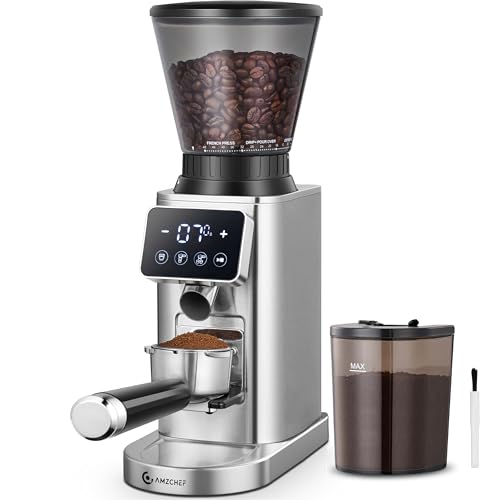
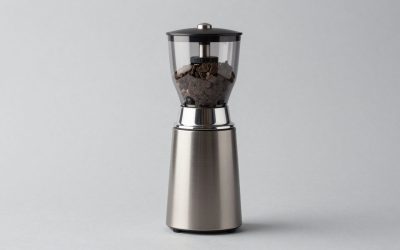
AMZCHEF Burr Coffee Grinder, 48 Settings, Less Static Mess, Metallic Silver | 40mm Burr, Low Retention, 0.5s LED Timer, Stainless Steel Body, Fit 51-54/58 Espresso Portafilter, Cleaning Brush Included
Chosen because it specifies 48 Settings and Less Static Mess.
Check Price on Amazon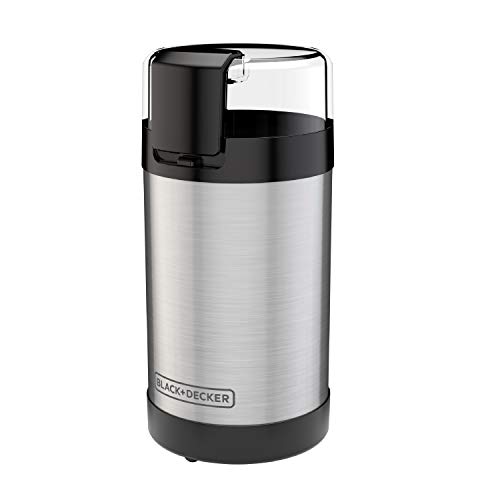
BLACK+DECKER One Touch Coffee Grinder, 2/3 Cup Coffee Bean Capacity, Spice Grinder, One Touch Push-Button Control -150 Watts -Stainless Steel Blades
Chosen because it specifies 2/3 Cup Coffee Bean Capacity and Spice Grinder.
Check Price on Amazon
Gevi Burr Grinder, 35 Settings Espresso Drip French Press,Anti-Static Black | 35 Adjustable Grind Levels for Espresso, Drip & French Press, Anti-Static Burr, Low-Speed Grind Preserves Aroma
Chosen because it specifies 35 Settings Espresso Drip French Press and Anti-Static Black.
Check Price on Amazon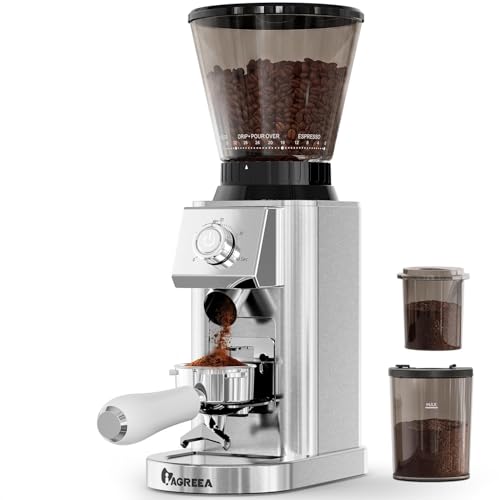
IAGREEA Coffee Grinder for Home Use, Conical Burr Espresso Grinder 48 Grind | 450RPM Low-Speed Anti-Static, Precision Timer For Drip, French Press, Cold Brew, No Mess, Metallic Silver
Chosen because it specifies Conical Burr Espresso Grinder 48 Grind and 450RPM Low-Speed Anti-Static.
Check Price on AmazonThis is a research-based guide. We did not personally use these products. Specs come from maker pages and listing details, cross-checked with independent coverage where available, and we mark anything unconfirmed as not listed. We use tier words rather than prices, because prices change often.
Top Picks at a Glance
- Best Overall: Breville Barista Express: 54 mm portafilter, built-in conical burr grinder, 15-bar pump, 67 oz tank
- Best 3-in-1: Ninja Luxe Café Premier: espresso, drip and cold brew with a 25-setting conical burr grinder
- Best Smart-Features Pick: Café Bellissimo Semi-Automatic: grinder, milk frother and WiFi app control per the listing
- Best Value with Wide Settings: AMZCHEF Espresso Machine with Grinder: 44 grind settings, temperature control
- Best Budget-Friendly Cold Brew Option: GeniCup Espresso Machine with Grinder: 20 bar, 68 oz tank, cold brew function
- Best Compact-Looking Option: Spacekey Espresso Machine with Grinder and Frother: 30 grind settings, 20 bar
Comparison Table
| Product | Best for | Key specs | Watch for | Price tier |
|---|---|---|---|---|
| Breville Barista Express | Learning real espresso | 54 mm portafilter; conical burr grinder; 15-bar pump; 67 oz tank | Takes counter space; grind setting count varies by source | Premium |
| Ninja Luxe Café Premier | One machine for all coffee | 25-setting conical burr; 70 oz tank; scale; hands-free frother | Large; limited dose control | Premium |
| Café Bellissimo | App-connected kitchens | Grinder; frother; WiFi control (listing) | Specs thin; higher tier | Premium |
| AMZCHEF with Grinder | Feature-rich at a lower tier | 44 settings; temperature control; hot and cold brew | Newer brand | Mid-range |
| GeniCup with Grinder | Large tank on a budget | 20 bar; 68 oz tank; cold brew | Limited coverage | Mid-range |
| Spacekey with Grinder | Entry-level combo | 30 settings; 20 bar; steam wand | Pump bar rating is a marketing figure | Mid-range |
A note on pump pressure: many listings advertise 15 or 20 bar, but espresso extraction targets about 9 bar at the puck. The higher number is the pump’s maximum, not the pressure you brew at, so do not choose a machine on that figure alone.
The tier labels are relative. Mid-range means entry-level for a machine with a built-in grinder, while Premium is a clear step up in materials, support and typically in the grinder itself.
If you are unsure which tier suits you, look at the warranty and the availability of replacement parts before you look at features. A built-in grinder is a wearing part: burrs dull, chutes clog and motors age. Machines from established makers usually have clearer service routes, published manuals and replacement burrs, while newer brands may only offer a short warranty and a customer-service email. That difference rarely shows up in a spec table, but it often decides whether the machine is still in use three years later.
1. Breville Barista Express: Best Overall Espresso Machine With Grinder
- Portafilter: 54 mm stainless steel, ideal dose about 18 g (retailers)
- Grinder: integrated conical burr with dose control; burrs are removable for cleaning
- Pump: 15-bar with 9-bar extraction and low-pressure pre-infusion (retailers)
- Water tank: 67 oz (about 2 L) with a replaceable filter
- Bean hopper about 8 oz
- Grind settings: sources list 15, 16 or 18, so confirm in the manual
Best for: Beginners who want to learn real espresso with a manual workflow and a built-in grinder.
Skip if: You want fully automatic drinks, a quiet machine or minimal cleaning.
The Barista Express is the template for built-in grinder machines. You grind into the portafilter, tamp, lock it in and pull the shot, so you learn the same steps used on a café machine. The grinder is integrated, and the burrs are removable for cleaning, which is helpful for long-term use.
Retailers disagree about the number of grind settings, listing 15, 16 or 18, and about whether it has PID temperature control. The likely explanation is the adjustable upper burr extending the range, but the maker’s own sheet is the safest check. The machine uses a thermocoil heater, which heats quickly, and offers low-pressure pre-infusion to help extraction.
The 54 mm portafilter is slightly smaller than the 58 mm commercial standard, so some third-party baskets and tampers will not fit. The hopper holds around half a pound of beans, and it is best to keep only a few days’ supply in it. Expect a learning curve: dose, grind and tamp all change the result.
Pros
- Real espresso workflow
- Removable conical burrs
- Thermocoil heating with pre-infusion
- Large 67 oz tank
Cons
- Premium tier
- 54 mm accessories are less common
- Setting counts and PID claims conflict between sources
2. Ninja Luxe Café Premier: Best 3-in-1 for Espresso, Drip and Cold Brew
- Brews espresso, drip coffee and cold brew from whole beans (maker)
- Grinder: conical burr with 25 settings; a review describes 40 mm steel burrs
- Built-in scale for weight-based dosing
- Reservoir: 70 oz, removable
- Hands-free frother with several foam styles
- Drip and cold brew sizes: 6 to 18 oz
Best for: Households that drink lattes, drip coffee and iced coffee and want one machine for all three.
Skip if: You want direct control over each shot or limited counter space.
The Luxe Café Premier reduces the steps. It grinds, doses by weight and brews, and an assisted handling system recommends grind sizes for each drink. That makes it much easier to use than a manual machine.
One review notes the machine grinds roughly 18 g for a double shot and that this is hard to change, so enthusiasts who like to tune dose may be frustrated. Some listings confuse the Premier and Pro names, so check the model before buying.
If your household has different tastes, the flexibility is a strong selling point: one person can have a flat white while another has a large drip mug.
Pros
- Three brew types in one
- Built-in scale and frother
- 25-setting conical burr
- Easy to use
Cons
- Premium tier
- Large footprint
- Limited control over dose
3. Café Bellissimo Semi-Automatic: Best for App-Connected Kitchens
- Semi-automatic espresso machine with grinder and milk frother (listing title)
- WiFi app control and copper accents per the listing
- Water tank size, pump pressure and grinder type: not listed in the snippet
- Premium tier
Best for: Buyers who like smart appliances and want a design-forward machine.
Skip if: You need documented specs, or you do not want to rely on an app.
The listing highlights a grinder, a milk frother and WiFi control. App-connected controls can store recipes and let you adjust settings from your phone, which is a useful convenience for households with several coffee drinkers.
We could not confirm the burr type, setting count or tank size from the information we reviewed. Those details matter, so read the full specification before buying.
If you choose it, plan for regular cleaning, since the grinder, brew group and frother each need attention.
Pros
- App control per the listing
- Integrated grinder and frother
- Design-forward
Cons
- Key specs not listed
- Premium tier
- Reliance on an app for some functions
4. AMZCHEF Espresso Machine With Grinder: Best Feature-Rich Value
- 44 grind settings (listing)
- Temperature control
- Hot and cold brew functions, cappuccinos and lattes
- Built-in grinder, burr type not listed
- Mid-range tier
Best for: Buyers who want many features at a lower tier and accept limited long-term coverage.
Skip if: You want a well-documented grinder or a long track record.
The AMZCHEF lists 44 grind settings and temperature control, which are the right features for a first built-in grinder machine. The cold brew function adds variety.
The brand is newer, and the information we found came mainly from the listing. Check the grinder type and the warranty before buying.
With any lower-tier combination machine, the grinder is often the weak link. If you find shots running too fast even at the finest setting, the grinder is not fine enough for your coffee.
Pros
- 44 settings
- Temperature control
- Hot and cold brew
Cons
- Limited coverage
- Burr details not listed
- Unknown long-term reliability
5. GeniCup Espresso Machine With Grinder: Best Large-Tank Budget Combo
- 20 bar (listing)
- 68 oz water tank
- Cold brew function
- Built-in grinder, setting count not listed
- Mid-range tier
Best for: Households that want a large tank and a cold brew option.
Skip if: You want published details on the grinder and heater.
A 68 oz tank means fewer refills, which is practical for a busy kitchen. The listing mentions cold brew and a built-in grinder, and the machine sits in a mid-range tier.
We could not confirm the grinder type or setting count. Pump pressure is stated as 20 bar, but remember that is a pump rating, not the pressure at the coffee.
If you try it, run a few trial pulls with a scale and timer, and return it if you cannot reach a good flow rate.
Pros
- Large tank
- Cold brew function
- Mid-range tier
Cons
- Grinder details not listed
- Limited coverage
- Bar rating is a marketing figure
6. Spacekey Espresso Machine With Grinder and Frother: Best Entry-Level Combo
- 30 grind settings (listing)
- 20 bar pump rating
- Steam wand for milk
- Hot and cold brew per the listing
- Mid-range tier
Best for: Beginners who want a built-in grinder and steam wand at an approachable tier.
Skip if: You want a proven long-term brand.
The Spacekey checks the boxes beginners look for: a grinder, a steam wand and a compact look. With 30 settings, it gives a basic range for tuning.
As with other lower-tier combos, check reviews for grinder fineness and the quality of the steam. A steam wand needs practice, and low power can produce weak foam.
If you are unsure whether you will stick with espresso, a lower-tier combo is a reasonable way to learn, as long as you can return it.
Pros
- Built-in grinder and steam wand
- 30 settings
- Accessible tier
Cons
- Limited coverage
- Grinder details not listed
- Bar rating is a marketing figure
Also Consider
Mooye Espresso Machine With Grinder
A 20-bar machine with a steam wand and a compact design. Specs beyond the listing summary are not listed.
CUSIMAX Espresso Machine With Grinder
A mid-range combo with a steam wand. Check the grinder details before buying.
HOMTINEX Semi-Automatic Espresso Maker With Grinder
A semi-automatic machine with a built-in grinder and steam milk frother. Limited independent coverage.
Breville Bambino plus a separate grinder
A compact machine paired with a separate burr grinder, such as the Breville Smart Grinder Pro, often outperforms an integrated grinder at the same combined tier, at the cost of two devices.
How We Chose
We began with a question that matters for a built-in grinder: does the grinder reach espresso fineness, and can you control the dose? For each machine, we read the maker or listing specs for grinder type, portafilter, pump, tank and controls, then compared them with independent coverage.
Where sources disagreed, such as the Barista Express grind setting count, we describe the disagreement. Where the listing omitted a spec, we say so. We limited each brand to one pick, and we chose machines that span manual, automatic and app-connected approaches.
This guide is research-based and we did not personally use these products. We do not quote prices, and tier words are relative. We left out capsule machines and models without a grinder.
Buying Guide
Why a built-in grinder is convenient and limited
A built-in grinder saves counter space and removes the step of matching a grinder to a machine. It also means the grinder cannot be upgraded separately, and its quality is capped by the machine’s price tier. For espresso, a grinder needs fine, repeatable steps. If the finest setting is still too coarse, shots will run fast and taste sour.
If you plan to take espresso seriously, consider the separate-components route. If you want convenience, a built-in grinder is a sensible start.
Manual, semi-automatic and automatic workflows
Manual machines such as the Barista Express make you grind, dose, tamp and stop the shot. Semi-automatic machines automate part of this, such as grinding or timing. Automatic machines like the Ninja Luxe handle most steps. The more automatic, the easier, but the less control.
Choose based on how much you want to learn and how much time you have in the morning.
Portafilter size and accessories
A 54 mm portafilter, like the Barista Express, uses a smaller basket than the 58 mm commercial standard. Accessories such as tampers and baskets for 54 mm are widely available but less varied. Check that the accessories you want fit before buying.
A pressurized basket is more forgiving. A non-pressurized basket rewards a fine, even grind.
Tank, space and noise
Large tanks reduce refills: the Barista Express holds 67 oz and the Ninja Luxe 70 oz. Measure your counter and cabinet clearance, as combination machines are tall. Grinders are loud for 15 to 30 seconds. If you share walls with sleepers, factor that in.
Decision matrix: match your situation to a machine
If you are a beginner who wants to learn and is willing to spend ten minutes each morning, the Barista Express is the strongest fit, because the workflow teaches dose, grind and tamp. If you share the kitchen with a drip-coffee drinker and an iced-coffee drinker, the Ninja Luxe Café Premier suits mixed households. If you like connected appliances and design, look at the Café Bellissimo once you have confirmed its specs. If you want to try espresso with the smallest possible commitment, the AMZCHEF, GeniCup or Spacekey keep the entry cost down, though you accept a bigger risk that the grinder limits you.
Ask three questions. How many drinks do you make on a typical morning? How much time do you want to spend per drink? And would you rather learn technique or press a button? One drink, plenty of time and an interest in technique points to a manual workflow. Four drinks and a rushed morning points to automation.
A worked example: time and cost per drink
A manual workflow on a machine like the Barista Express takes about two to three minutes per double shot once you are practiced, counting grinding, tamping, pulling and wiping the portafilter. An automatic machine can cut this to under a minute of active time. Over a year of 300 mornings, the difference is roughly 10 to 12 hours of your time, which may or may not matter to you.
On the cost side, 18 g of beans per double shot from a 12 oz (340 g) bag gives about 19 shots per bag. If a good bag costs in the mid-range of what specialty roasters charge, each shot costs a small fraction of a café drink, and the machine pays for itself over a year or two for a daily drinker. The grinder’s job is to make sure those 18 g are used well, which is why fineness and consistency matter more than the headline features.
Maintenance and cleaning
Brush the grinder chamber and chute weekly, backflush or clean the brew group as the maker advises, and descale on schedule. Coffee oils build up in grinders and affect taste. Machines with removable burrs, such as the Barista Express, are easier to clean thoroughly.
Common Mistakes to Avoid
- Choosing by pump bar rating rather than extraction quality
- Expecting a built-in grinder at a low tier to match a standalone burr grinder
- Leaving beans in the hopper for weeks
- Skipping weekly grinder cleaning
- Ignoring accessory compatibility for the portafilter size
- Buying a machine that is too tall for the cabinet
Frequently Asked Questions
What is the best espresso machine with a grinder?
The Breville Barista Express is the best all-round pick thanks to its conical burr grinder, 54 mm portafilter and 67 oz tank. The Ninja Luxe Café Premier is better if you also want drip and cold brew.
Is an espresso machine with a built-in grinder worth it?
It is worth it if you value convenience and limited counter space. For maximum quality and upgrade flexibility, a separate machine and grinder usually perform better.
What does 20 bar mean on an espresso machine?
It is usually the pump’s maximum pressure. Espresso extraction targets about 9 bar at the puck, so a higher bar rating does not mean better espresso.
How many grind settings do I need?
Around 30 to 60 settings is common, but quality matters more than count. Check that the finest setting is fine enough for your machine and beans.
How do I clean a built-in grinder?
Unplug the machine, remove the hopper and brush out the chamber and chute. Some machines have removable burrs for deeper cleaning. Follow the maker’s instructions.
Can I use pre-ground coffee in a machine with a grinder?
Many machines allow it through a bypass or by using the portafilter directly. Check the manual, since some models are designed only for whole beans.
Do I need a separate grinder later?
Not necessarily. If your shots are consistent and you enjoy the results, the built-in grinder can last for years. If you want finer control, you can add a separate grinder and still use the machine.
Which One Should You Buy?
If you want to learn real espresso, buy the Breville Barista Express. If you want maximum convenience and variety, the Ninja Luxe Café Premier is better. For a lower tier, the AMZCHEF, GeniCup and Spacekey offer a built-in grinder, but verify the grinder’s fineness and the warranty. If you value app control, the Café Bellissimo is worth a look once you confirm its specs.
Whichever you choose, keep a scale and timer handy, clean the grinder regularly and use fresh beans.
If you are still undecided, a useful tiebreaker is repair and return. Buy from a seller with a generous return window, spend the first week pulling shots with a scale, and judge the machine on three things: whether the finest grind setting is fine enough, whether shots are repeatable from one day to the next, and whether you enjoy the cleaning routine. A machine that passes all three is worth keeping, whatever its tier. One that fails the first should go back, because no technique can compensate for a grinder that cannot reach the right fineness. Keep in mind too that milk drinks forgive small grind errors better than straight espresso, so a machine that struggles with a ristretto may still make perfectly good lattes.
Sources
- Breville Barista Express product page and retailer specifications
- Ninja Luxe Café series product pages and independent reviews from CoffeeGeek and RoastRig
- Café Bellissimo product listing
- Listing details for AMZCHEF, GeniCup and Spacekey espresso machines
- Independent espresso machine guides
Last updated: October 2026
Write Your Review
No reviews yet. Be the first to share your experience!