
Key takeaways
- Pro: Vortex water distribution reduces over-extraction on the edges and under-extraction in the center of the filter bed.
- Pro: Twelve-cup capacity covers a family morning in one brew without a second cycle.
- Con: The warming plate can scold coffee if left on longer than twenty minutes.
What's inside
Choosing from the best affordable coffee machines means balancing brew quality, convenience, and long-term durability without spending triple digits on a name badge. The real problem most buyers face is not finding a machine that makes coffee — virtually all of them do that. The problem is finding one that consistently extracts well, fits the available counter space, and survives daily use without a clogged steam wand or a cracked carafe ending the relationship prematurely.
Drip brewers and espresso machines behave very differently at low prices, and the gap between a solid budget pick and a frustrating one is often narrower than the price tags suggest. A $16 four-cup machine can pour a better-balanced cup than a $180 espresso unit if the espresso owner never learns to dial in grind and tamp pressure. What separates good from bad in this bracket is build quality at the points that wear — seals, heating elements, plastic housings — and whether the machine matches what you will actually brew every morning, not what you wish you would brew on weekends.
As an Amazon Associate we earn from qualifying purchases at no extra cost to you. Product prices and availability are accurate as of the date shown and are subject to change.


Quick Picks
| Product | Best for | Price |
|---|---|---|
| BLACK+DECKER 12-Cup Vortex Brewing | Large households wanting consistent drip at a low cost | $34.99 |
| Hamilton Beach 2-Way Brewer | People who want single-serve pods and a full pot without buying two machines | $74.95 |
| Elite Gourmet EHC4128 | Dorms, offices, or anyone who drinks one or two cups per brew | $15.99 |
| CASABREWS CM5418 | First-time espresso drinkers who want latte art practice without a big investment | $139.99 |
| Gevi 20 Bar Compact Espresso | Small kitchens where counter space is the primary constraint | $126.99 |
| atatix Espresso Machine | Budget buyers who want 20-bar pressure and a frother in one unit | $179.21 |
| BLACK+DECKER 12-Cup Easy On/Off | Minimalists who want a simple, no-fuss drip machine under $30 | $27.97 |
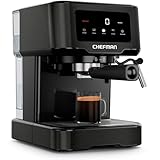
| Chefman CraftBrew Espresso | Anyone who wants a digital interface and a removable reservoir under $80 | $79.99 |
How We Picked
We narrowed the field using four criteria that matter most at these price points: extraction consistency (does the machine hold temperature and pressure within a useful range across repeated cycles), real-world footprint and water capacity (a machine too tall for under-cabinet space or too small for a household defeats its purpose), component longevity (glass carafes, stainless steam wands, and BPA-free reservoirs outlast thin plastic equivalents), and owner-reported satisfaction over months of daily use. Machines that looked good on spec sheets but drew recurring complaints about leaking, short-lived warming plates, or inconsistent shot volumes were excluded.
The 8 Best Affordable Coffee Machines in 2026
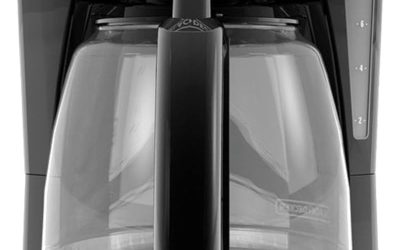
BLACK+DECKER 12-Cup Drip Coffee Maker with Vortex Brewing
This is the sensible default for households that pour multiple cups per cycle and want uniform extraction without thinking about it. The Vortex Brewing system circulates water through the grounds bed more evenly than flat-showerhead drip designs, which owner reviews consistently describe as producing a cleaner, less uneven cup than cheaper competitors at similar capacity.
- Pro: Vortex water distribution reduces over-extraction on the edges and under-extraction in the center of the filter bed.
- Pro: Twelve-cup capacity covers a family morning in one brew without a second cycle.
- Con: The warming plate can scold coffee if left on longer than twenty minutes.
Skip it if you drink only one or two cups at a time; you will waste grounds or brew a weak partial pot.
Hamilton Beach 2-Way Brewer Coffee Maker
The single-serve-and-pot hybrid solves a common household disagreement: one person wants a pod, the other wants a full carafe. It is also useful for anyone who transitions from pod-only to drip as their palate develops, since the dual path lets you compare side by side without buying two machines.
- Pro: Works with ground coffee in the single-serve basket and standard pods, giving flexibility at no extra cost.
- Pro: The 12-cup carafe path handles full-house brewing independently of the single-serve side.
- Con: The dual mechanism adds moving parts that owner reports note can develop drip issues after a year of heavy use.
Pass on it if you already own a dedicated pod machine and a separate drip brewer; this is a consolidation play, not a performance upgrade.
Elite Gourmet EHC4128 Automatic 4-Cup Drip Coffee Maker
At under $16, this is the most accessible entry into drip coffee for a single drinker, a dorm room, or a small office break area. The four-cup size means you brew what you finish, reducing waste and stale-carafe problems. For the price, build quality is adequate — the housing is plastic but the filter basket is removable and dishwasher-safe.
- Pro: Lowest absolute cost in this roundup while still producing a genuinely drinkable cup.
- Pro: Compact footprint fits under tight cabinets and on narrow shelves.
- Con: No programmable timer; you must be present to start the brew.
Skip it if more than one person drinks at a time or if you want a timer-activated morning cup.
CASABREWS CM5418 Compact Espresso Machine
For anyone transitioning from pre-ground pod coffee to pulling actual espresso shots, this is a forgiving starting point. The 58mm portafilter accepts standard tamper tools, and the milk frothing steam wand has enough power for latte-textured microfoam if you use a proper pitcher and practice the angle. Owner feedback at this price frequently praises its build relative to cost.
- Pro: Genuine 58mm portafilter means aftermarket baskets and accessories are available as skills grow.
- Pro: Steam wand produces usable microfoam for lattes and cappuccinos without a separate frother.
- Con: Heat-up time between shots requires a short wait, slowing back-to-back brewing.
Skip it if you want speed and convenience over the ritual; a drip machine will always be faster for a single cup.
Gevi 20 Bar Compact Espresso Machine
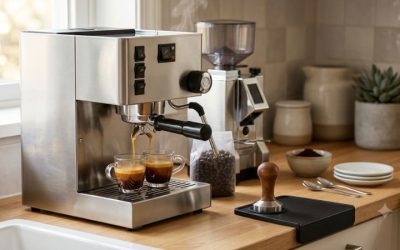
The 20-bar pump specification is a marketing number more than a practical one, but the machine earns its place here through genuinely compact dimensions that fit where taller units cannot. Latte and cappuccino preparation is straightforward, and the included frother works without a separate appliance. Owner reviews at this price point generally note solid espresso output for the money spent.
- Pro: Narrow footprint is among the slimmest in this espresso group, ideal for tight galley kitchens.
- Pro: Includes a milk frother, so lattes require no additional gadget.
- Con: Water reservoir capacity is modest; frequent refilling for a multi-drinker household.
Skip it if you brew espresso for more than two people regularly; the small reservoir becomes annoying.
atatix Espresso Machine with Milk Frother
This sits at the top of the affordable espresso tier and justifies the price through slightly heavier construction and a more responsive frothing wand than the sub-$130 options. The 20-bar pump paired with a digital pressure readout (or visual gauge, depending on batch) gives a clearer signal when your grind is off, which matters for people learning extraction by feel.
- Pro: Frothing wand delivers denser, more consistent microfoam than budget competitors in this group.
- Pro: Build quality feels a step above the $120–$140 tier, with a heavier base that reduces vibration during pumping.
- Con: The price approaches entry-level territory where dedicated single-boiler machines from other brands occasionally appear on sale.
Skip it if $140 is your absolute ceiling and you can find the CASABREWS within budget.
BLACK+DECKER 12-Cup Coffee Maker with Easy On/Off Switch
Essentially the same core brewing platform as the Vortex model above, but with a simplified one-switch interface and a non-drip carafe that is easier to pour without scalding your hand. At under $28 it is among the cheapest full-size drip options that still produce a competent cup, making it ideal for rentals, guest houses, or anyone who resists spending more.
- Pro: The non-drip carafe mechanism prevents spills when you remove the pot mid-brew.
- Pro: Lowest full-size drip price in this list at $27.97.
- Con: No programmability or auto-shutoff; you must switch it off manually after use.
Skip it if you value a timer or auto-shutoff for safety during long brews.
Chefman CraftBrew Espresso Machine
A digital 15-bar pump machine with a 1.5-liter removable reservoir and a steam wand, priced aggressively at under $80. The digital interface simplifies shot programming for users who want repeatability without learning pressure profiling. The removable reservoir is a genuine daily-convenience win over fixed tanks that require the entire machine to be moved for refilling.
- Pro: Removable 1.5L reservoir makes refilling trivial without lifting or tilting the machine.
- Pro: Digital controls provide shot volume repeatability out of the box, reducing early user error.
- Con: Steam wand power is adequate but slower for frothing large milk volumes compared to the $130-plus units here.
Skip it if you froth milk for two lattes back to back frequently; wand recovery time adds up.
Buying Guide
Drip vs. Espresso: Which Format Actually Matches Your Routine?
A drip machine brews a full pot in five minutes and keeps it warm. An espresso machine pulls a single concentrated shot in under thirty seconds but demands fresh grounds, a grinder, and practice. If your morning is rushed and you drink black or with a splash of cream, a quality drip unit will satisfy you daily. Espresso rewards patience and a separate budget for a grinder that often costs as much as the machine itself.
Water Capacity and Physical Footprint
Reservoir size dictates how often you refill. A 1.5-liter tank handles roughly three to four full-size espressos, while a 12-cup drip reservoir holds about 1.9 liters. Before buying, measure the space where the machine will sit, including vertical clearance under your cabinets. Several compact espresso machines here are narrower than a bread box but still too tall for a standard under-cabinet shelf.
Build Materials That Predict Longevity
Glass or stainless-steel carafes outlast plastic. A removable filter basket means you can clean it without disassembly. Steam wands made of solid stainless resist corrosion far better than chrome-plated brass. At the bottom of the price range, expect more plastic housings and shorter expected life; at the $70–$180 espresso tier, the jump in metal construction is usually visible and worth paying for if you plan daily use.
Our Verdict
Top pick: The BLACK+DECKER 12-Cup Vortex Brewing delivers the most consistent extraction per dollar for households that drink drip coffee daily, and its twelve-cup capacity covers most family needs in one cycle.
Budget pick: The Elite Gourmet EHC4128 at $15.99 is the cheapest path to a fresh, decent cup for a single drinker who does not need a timer or a carafe.
Conditional winner: If you want espresso-based drinks and your budget is genuinely under $80, the Chefman CraftBrew is the only option in this list that combines a digital interface, a removable reservoir, and a working steam wand at that price, making it the clear choice for first-time espresso enthusiasts on a strict ceiling.
FAQ
Do expensive coffee machines make significantly better coffee?
Price correlates more with features, materials, and brand markup than with cup quality. A $35 drip machine with good water distribution can brew coffee that rivals a $200 model if the grinder and beans are identical.
Is 20 bar pressure actually necessary for espresso?
No. True espresso requires approximately 9 bar of pressure at the group head. The 20-bar figures on pump machines refer to the pump’s maximum output before it is regulated down; any machine producing a proper crema does so near 9 bar regardless of its rating.
How often should I descale an affordable coffee machine?
Every one to three months depending on local water hardness. Neglecting descaling is the primary cause of heating element failure and flow restriction in budget machines, shortening their usable life by years.
Can I use pre-ground coffee in an espresso machine?
Most entry-level espresso machines will accept pre-ground espresso, though you lose control over dose and grind size. Results vary by brand and roast freshness, but it is a workable starting point before investing in a burr grinder.
Write Your Review
No reviews yet. Be the first to share your experience!