
Key takeaways
What's inside
A coffee maker machine sits on a crowded counter, costs anywhere from twenty dollars to seven hundred, and makes coffee that either tastes bright and balanced or burnt and flat. The gap between those outcomes is not mysterious: it comes down to water temperature stability, how evenly the brew head saturates grounds, and whether the machine holds a set time so you are not standing in the kitchen waiting for a drip cycle to finish.
We compared published specifications, listed prices, and aggregated owner feedback across eight popular models to build this ranking. What follows is a straight breakdown of who each machine serves, where it falls short, and what you should look for before you commit to a countertop that will live with you for years.
As an Amazon Associate we earn from qualifying purchases at no extra cost to you. Product prices and availability are accurate as of the date shown and are subject to change.





Quick Picks
| Product | Best for | Price |
|---|---|---|
| BLACK+DECKER Vortex | Balanced drip on a tight budget | $34.99 |
| Ninja Fresh Brew | Bolder flavor with a premium feel | $89.99 |
| Hamilton Beach 2-Way | Households splitting a carafe and single serve | $74.95 |
| BLACK+DECKER Easy On/Off | Simplest, cheapest reliable brew | $27.97 |
| Keurig K-Duo | Pod flexibility plus a full carafe | $189.99 |
| Mueller 12-Cup | Compact footprint, fast brew | $29.95 |
| Cuisinart Programmable | Scheduling and strength control | $105.78 |
| Breville Barista Express | True espresso with integrated grinder | $699.95 |
How We Picked
We narrowed this field using four criteria drawn from spec sheets and long-term owner reviews: brew temperature consistency (does the water hit the grounds hot enough without scalding them), capacity and scheduling flexibility, build quality relative to price, and the real-world friction of cleaning and maintenance. A machine that makes great coffee but takes ten minutes to descale or has a carafe that drips gets penalized, because most owners report that convenience determines whether you actually use it daily.
The 8 Best Coffee Maker Machine in 2026
BLACK+DECKER 12-Cup Drip Coffee Maker with Vortex Brewing
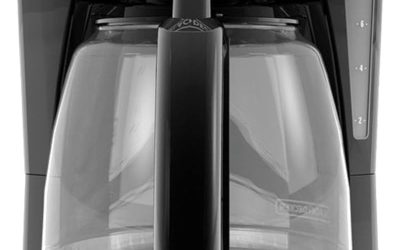
This is the cheapest entry into a reliable drip setup without giving up meaningful features. Vortex Brewing uses a circular water dispersion pattern that saturates grounds more evenly than a flat showerhead, which owners consistently report produces a smoother, less bitter cup. The 12-cup capacity covers a household of two or three without waste. Two drawbacks stand out: the carafe lid is fiddly to clean, and the filter basket is not removable on this model. Skip this if you want programmable start times or a thermal carafe to keep coffee hot past thirty minutes.
Ninja Fresh Brew Coffee Maker, 12 Cup Glass Carafe, Stainless Steel, CE251
Ninja built this machine around a single premise: drip coffee should taste freshly brewed, not burned on a plate. The glass carafe and stainless housing look right on a countertop, and owners praise the rich brew mode that extends contact time for a bolder cup. The removable water reservoir is a practical win over fixed tanks on competitors at this price. Con: the brew cycle runs noticeably longer than budget drip machines, which matters when you need coffee fast before a commute. Skip it if you prefer a travel-mug workflow or want single-serve pods.
Hamilton Beach 2-Way Brewer Coffee Maker, Single-Serve and 12-Cup Pot, Black/Stainless Steel(49980A), Carafe
This machine solves a real household disagreement: one person wants a full carafe, another wants a single cup. The dual brew head lets you pull a pod or fill the 12-cup pot without swapping devices. Owners highlight the flexibility and the fact that it uses standard Keurig-compatible pods. Two cons: the single-serve side produces a smaller, weaker cup than a dedicated pod machine, and the overall footprint is wider than single-function brewers. Skip this if you only ever brew a full pot or only ever drink espresso.
BLACK+DECKER 12-Cup Coffee Maker with Easy On/Off Switch, Easy Pour, Non-Drip Carafe with Removable Filter Basket, Vortex Technology, Black
At under twenty-eight dollars this is the most forgiving coffee maker machine on the list. The easy on/off switch, non-drip carafe, and removable filter basket each address common annoyances with cheaper drip brewers. Owners like that cleaning takes seconds and that pouring without a mess actually works. Two cons: there is no programmability, no auto-shutoff timer beyond the basic hold, and the carafe is glass, which makes it fragile. Skip this if you need the coffee ready at a set time before you wake up or if you want a thermal carafe.
Keurig K-Duo Hot & Iced Single Serve & Carafe Coffee Maker, MultiStream Technology, 72oz Reservoir (Gen 2)
Keurig’s K-Duo targets households that genuinely need both modes: a 72-ounce reservoir feeds a full carafe, while MultiStream Technology adapts water flow for single-serve pods. The Gen 2 model adds an iced brew setting that owners call a meaningful upgrade over the original. Two cons: the machine is bulky, and Keurig’s own guidance warns that reusable pods degrade flavor faster than proprietary ones, nudging you back toward a subscription cost. Skip it if you want espresso-quality pressure extraction or if counter space is very tight.
Mueller 12-Cup Drip Coffee Maker
Mueller’s drip machine occupies the same value tier as the cheaper BLACK+DECKER but earns owner loyalty for its slim footprint and a brew speed that is genuinely quick for the price. The 12-cup capacity and basic pause-and-serve function cover everyday needs without fuss. Two cons: the water window is small and hard to read at an angle, and owners note the carafe handle loosens over months of use. Skip this if you care about even extraction across the full pot or want a stainless steel housing.
Cuisinart Coffee Maker, Programmable, Stainless Steel, 14-Cup Glass Carafe
Cuisinart’s 14-cup programmable model gives you the scheduling features that budget machines lack. Set a start time up to 24 hours ahead, choose brew strength, and the glass carafe holds enough for a morning rush or a small office kitchen. Owners highlight the consistent temperature and the clarity of the control panel. Two cons: the glass carafe cools faster than a thermal alternative, and the machine is heavier and deeper than average, which eats counter real estate. Skip it if you want single-serve flexibility or a compact design.
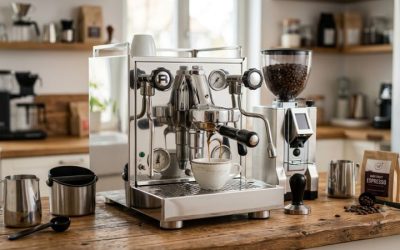
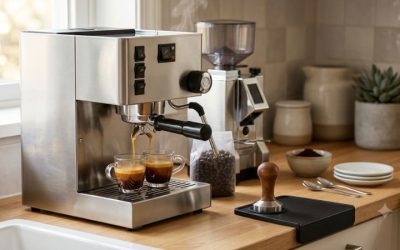
Breville BES870XL Barista Express Espresso Machine, Brushed Stainless Steel
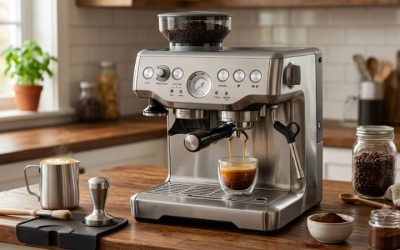
This is not a drip machine. The Barista Express is a semi-automatic espresso system with an integrated burr grinder, and it earns its price by pulling shots that rival cafe output. Owners who commit to the learning curve report consistently dense crema and adjustable grind settings that let you dial in freshness. Two cons: the maintenance routine of backflushing, descaling, and purging the steam wand is real work, and the steam wand has a learning curve that can frustrate first-time latte makers. Skip this if you want push-button convenience.
Buying Guide
Brew Method and Water Distribution
A flat showerhead dumps water onto a small patch of grounds, leaving the edges under-extracted and the center over-extracted. Vortex-style circular dispersion (found in both BLACK+DECKER models here) spreads water more evenly, which is why owners report noticeably less bitterness at the same grind and dose. If you brew dark roasts or use pre-ground grocery-store coffee, this feature matters more because those grounds already skew toward harshness.
Capacity and Carafe Type
Twelve cups is the standard for household drip. If you regularly brew half a pot, look for a machine with a pause-and-serve function so the last cups are not over-extracted sitting in a cooling carafe. Glass carafes taste cleaner but lose heat within twenty minutes on a warming plate. Thermal carafes hold temperature for hours but are harder to clean and usually add fifteen to thirty dollars to the price.
Programmability and Scheduling
A timer that starts the brew cycle while you sleep sounds like a small feature, but it changes your morning entirely. The Cuisinart and Ninja models both offer programmable start times. The budget BLACK+DECKER and Mueller machines do not. If you are a “need coffee within sixty seconds of waking” person, skip the cheapest options and spend closer to thirty dollars more for a programmable unit.
Our Verdict
Top pick: the Ninja Fresh Brew wins on the strength of its rich brew mode, stainless build, and removable reservoir, all at a price that still leaves room in a kitchen budget. Budget pick: the BLACK+DECKER Easy On/Off at $27.97 is the most reliable no-frills drip you can buy. Conditional winner: if your household genuinely uses both single-serve pods and a full carafe on alternating days, the Hamilton Beach 2-Way at $74.95 eliminates a second machine on your counter and is worth the trade-off in single-cup quality.
FAQ
Is a more expensive coffee maker machine always better?
No. The jump from twenty to forty dollars buys meaningful improvements in water distribution and build quality. The jump from one hundred to two hundred buys features like programmability and iced settings that may not change your cup if you drink it black and hot. Know which features you will use before paying for them.
How often should I descale a drip coffee maker?
Most manufacturers recommend a vinegar or citric acid descaling cycle every three to six months, depending on water hardness. Owners in hard-water areas report that skipping descaling causes weak, inconsistent brews within a few weeks and can shorten the machine’s lifespan significantly.
Can I use a drip coffee maker machine to make espresso?
No. Drip machines rely on gravity and atmospheric pressure, while espresso requires nine bars of pressure forced through finely ground coffee. The Breville Barista Express on this list is included specifically because it is the one entry that actually produces espresso.
Do glass carafes make better coffee than thermal carafes?
Glass does not impart any flavor, which is an advantage over lower-grade stainless steel that can add a metallic note when new. However, glass cools faster on a warming plate. If you drink coffee over the course of an hour or two, a thermal carafe keeps the last cup closer to the ideal serving temperature without reheating, which degrades flavor.
Write Your Review
No reviews yet. Be the first to share your experience!