
Our Top Picks
The Bosch Universal Plus is the best stand mixer for bread dough in this group, because its belt-driven 500 watt motor, 6.5-quart bowl and low-mounted dough hook are built for heavy, stiff dough in a way that tilt-head mixers are not. Home bakers who mix a loaf or two at a time and care more about bowl size per square inch of counter than raw capacity will find the 6-quart and 6.5-quart tilt-head models more comfortable on the counter. Bread dough is hard on a mixer because it is dense, sticky and needs eight to ten minutes of kneading, so the motor, gears and bowl shape matter more than the speed count.
Quick List
- Kitchen in the Box 3.2-Quart Stand Mixer (Black) – best for tiny kitchens and single small loaves
- VIVOHOME 6-Quart Tilt-Head Stand Mixer (660W) – best for all-purpose baking with the occasional loaf
- Bosch Universal Plus Stand Mixer (6.5-Quart, with Dough Hook Extender) – best for serious bread baking and big batches
- Aucma 6.5-Quart 660W Tilt-Head Stand Mixer – best for large batches on a tilt-head budget
- Martha Stewart 5.3-Quart Tilt-Head Stand Mixer – best for lighter baking with a stainless steel bowl
- Kitchen in the Box 3.2-Quart Stand Mixer (Blue) – best for colorful small-batch baking
Which Mixer Fits Your Baking?
| If you… | Choose |
|---|---|
| bake bread every week and want the strongest dough machine | Bosch Universal Plus Stand Mixer (6.5-Quart, with Dough Hook Extender) |
| want a 6.5-quart tilt-head with metal gears | Aucma 6.5-Quart 660W Tilt-Head Stand Mixer |
| mix cake batter and the occasional loaf | VIVOHOME 6-Quart Tilt-Head Stand Mixer (660W) |
| like finer speed control and a stainless bowl | Martha Stewart 5.3-Quart Tilt-Head Stand Mixer |
| live in a tiny kitchen and bake small loaves | Kitchen in the Box 3.2-Quart Stand Mixer (Black) |
| want the same small mixer in a color finish | Kitchen in the Box 3.2-Quart Stand Mixer (Blue) |
If you knead dough more than twice a month, start with the drive type: belt-driven for stiff, big batches, a tilt-head planetary for a loaf at a time.
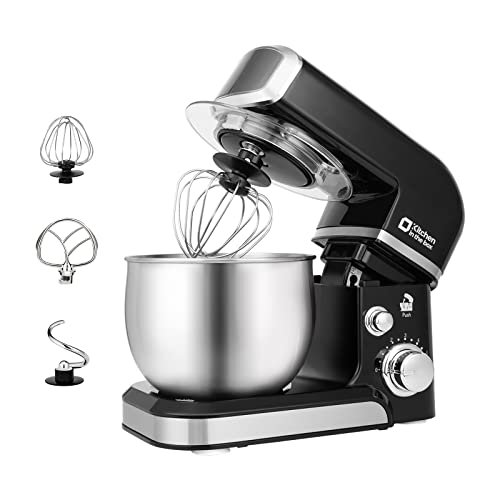
Kitchen in the box Stand Mixer,3.2Qt Small Electric Food Mixer,6 Speeds Portable Lightweight Kitchen Mixer for Daily Use with Egg Whisk,Dough Hook,Flat Beater (Black)
Chosen because it specifies 3.2Qt Small Electric Food Mixer and Dough Hook.
Check Price on Amazon
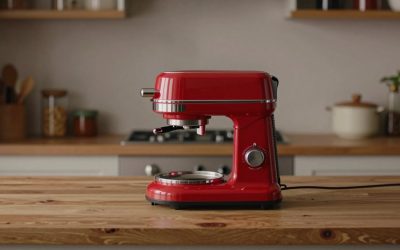
VIVOHOME Stand Mixer, 6-Quart Tilt-Head Kitchen Mixer with Bowl, Red | 10 Speeds, Splash Guard, Dough Hook, Beater, Whisk, Egg Separator, for Cake & Bread
Chosen because it specifies 6-Quart Tilt-Head Kitchen Mixer with Bowl and Red.
Check Price on Amazon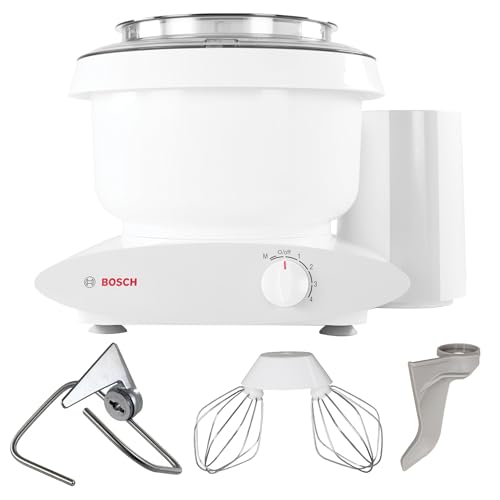
Bosch Universal Plus Stand Mixer 500 Watt, 6.5 Quarts with Wire Whips, Dough Hook & NutriMill Dough Hook Extender Bundle
Chosen because it specifies 6.5 Quarts with Wire Whips and Dough Hook & NutriMill Dough Hook Extender Bundle.
Check Price on Amazon
Aucma Stand Mixer,6.5-QT 660W 6-Speed Tilt-Head Food Mixer, Kitchen Electric Mixer with Dough Hook, Wire Whip & Beater (Black, 6.5QT)
Chosen because it specifies 6.5-QT 660W 6-Speed Tilt-Head Food Mixer and Kitchen Electric Mixer with Dough Hook.
Check Price on Amazon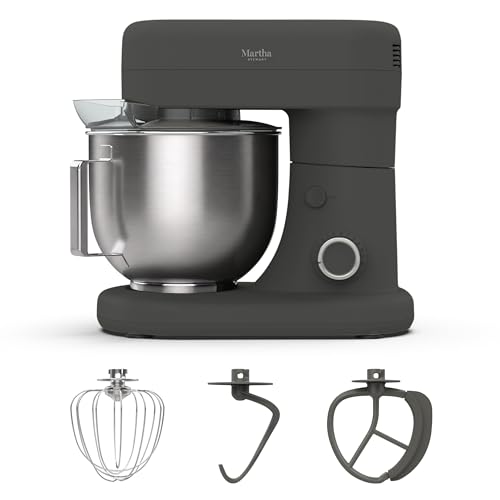
Martha Stewart 5.3QT Tilt Head Stand Mixer, 12 Speeds, Stainless Steel Bowl | Dough Hook, Stainless Whisk, Beater, Removable Splash Shield, Bread, Cake & Whipping, Electric Kitchen Mixer, Caviar Gray
Chosen because it specifies 12 Speeds and Stainless Steel Bowl.
Check Price on Amazon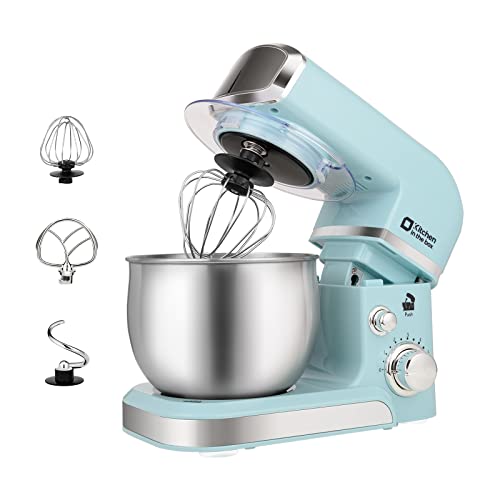
Kitchen in the box Stand Mixer,3.2Qt Small Electric Food Mixer,6 Speeds Portable Lightweight Kitchen Mixer for Daily Use with Egg Whisk,Dough Hook,Flat Beater
Chosen because it specifies 3.2Qt Small Electric Food Mixer and Dough Hook.
Check Price on AmazonAfter that, match the bowl to your batch. One 500-gram-flour loaf needs a lot less machine than three whole-wheat loaves in a row.
All 6 Picks in Detail
1. Kitchen in the Box 3.2-Quart Stand Mixer (Black) – Best for Tiny kitchens and single small loaves
As an Amazon Associate we earn from qualifying purchases at no extra cost to you.

This portable mixer is the smallest in the guide and honestly the weakest match for bread dough. The listing describes a 3.2-quart bowl, six speeds and a 300 watt rating on the manufacturer’s pages, with a dough hook, flat beater and whisk. It is designed for one or two people and weighs under ten pounds, which makes it fine for a small apartment and a modest loaf or a batch of pizza dough.
Treat it as a runner-up for bread. Kneading firm dough strains a small motor and plastic housing, so use lower-hydration recipes carefully, keep batches to a small fraction of the bowl, and avoid whole-wheat or stiff bagel dough. It shines at what small mixers do best: meringues, whipped cream, cake batter and cookie dough in a compact, portable body that stores easily in a cabinet or on a pantry shelf.
- Bowl capacity: 3.2 quarts, stainless steel
- Motor listed at 300 watts by the manufacturer
- Six speeds with tilt-up head
- Dough hook, flat beater and whisk included
- Anti-splash lid and suction feet
- Manufacturer aims it at one to two people; confirm on listing
Pros
- Compact and light for small kitchens
- Easy to store and move
Cons
- Not suited to stiff or large dough batches
- Low wattage and small bowl limit bread work
It is the budget-size alternative to the Martha Stewart, trading speed range and bowl volume for portability.
2. VIVOHOME 6-Quart Tilt-Head Stand Mixer (660W) – Best for All-purpose baking with the occasional loaf

This is a conventional tilt-head planetary mixer with a 6-quart bowl, ten speeds, a splash guard and the classic trio of dough hook, flat beater and wire whisk. Retail copy puts the motor at 660 watts and describes the capacity as roughly three loaves or about 2.2 pounds of flour, which is a realistic envelope for a household that bakes on weekends. Planetary action means the hook moves around the bowl as it spins, so the bowl stays put.
The tilt head makes loading simple, the suction-cup feet help keep it steady, and the red finish is a style choice rather than a spec. The dough hook is aluminum, and the manufacturer notes dishwasher-safe accessories on its listing. As with any tilt-head, a stiff dough can make the head bounce during a long knead, so keep batches modest and stay nearby.
- Bowl capacity: 6 quarts
- Motor listed at 660 watts
- Ten speeds, tilt-head design
- Dough hook, flat beater, wire whisk, splash guard and egg separator
- Listing copy suggests about 2.2 pounds of flour or three loaves
- Suction-cup base; confirm details on listing
Pros
- Broad speed range for cakes and batters
- Big bowl at an approachable size
Cons
- Tilt-head can wobble with stiff dough
- Plastic and aluminum construction rather than all-metal
Against the Aucma, it gives you more speed steps, and the Aucma gives you an all-metal gear train and a slightly larger bowl.
3. Bosch Universal Plus Stand Mixer (6.5-Quart, with Dough Hook Extender) – Best for Serious bread baking and big batches

The Universal Plus is a different kind of mixer from the tilt-head models around it. The motor sits below the bowl and drives the attachments through a belt system, and the listing describes a 500 watt motor and a 6.5-quart bowl. Bosch and retailers describe a capacity of up to about 15 pounds of dough in a single batch, and the retailer wording mixes dough weight and flour weight, so treat 15 pounds as a dough ceiling, not a flour figure and keep to far less in daily use.
The bundle in this listing adds a NutriMill dough hook extender to the standard dough hook and wire whips. Speeds are limited to four plus a pulse, which sounds modest until you see how the low-mounted hook folds and stretches dough around a central column. The bowl is plastic, which is lighter than steel but less pleasant for temperature control, and the pouring shield sits on top of a larger footprint than a typical tilt-head.
- Bowl capacity: 6.5 quarts
- Motor listed at 500 watts with a belt-driven transmission
- Four speeds plus a pulse setting per retailer descriptions
- Includes dough hook, wire whips and a dough hook extender (per listing name)
- Retailers describe capacity of up to roughly 15 pounds of dough
- Plastic bowl with pouring shield; confirm details on listing
Pros
- Designed around heavy dough from the start
- Large bowl with a low, centered dough hook
Cons
- Bulkier footprint than a tilt-head
- Limited speeds and attachments for cake work
Compared with the Aucma and VIVOHOME tilt-heads, it trades fine speed control and a metal bowl for a motor that is meant to knead for long sessions.
4. Aucma 6.5-Quart 660W Tilt-Head Stand Mixer – Best for Large batches on a tilt-head budget

Aucma’s 6.5-quart mixer, listed with 660 watts and six speeds, is the tilt-head in this group that most directly targets bread bakers. The manufacturer describes a pure-copper motor and full-metal gears, and the bowl is stainless steel with two handles. Metal gears matter because bread dough puts a steady load on the drive train, where nylon gears can strip over time.
It ships with a dough hook, a wire whip and a beater, plus a splash guard with a feeding hatch. A pulse setting joins the six speeds. Suction-cup feet hold it down, and the head tilts back for bowl changes. Listings disagree on whether the attachments are dishwasher safe, so hand wash the dough hook to be safe. Keep batches below the limit and expect a loaf or two per session rather than commercial volume. It makes the most sense for a baker who wants a big stainless bowl and plenty of headroom without moving to a bottom-drive machine.
- Bowl capacity: 6.5 quarts, stainless steel with handles
- Motor listed at 660 watts
- Six speeds plus a pulse setting
- Full-metal gear drive per the manufacturer
- Dough hook, wire whip and beater included
- Tilt-head with suction-cup feet; confirm details on listing
Pros
- Metal gears suit long kneading sessions
- Largest bowl among the tilt-head choices
Cons
- Only six speeds
- Large size takes a lot of counter space
It is the stronger value for dough than the Martha Stewart, since the bowl is bigger and the manufacturer cites a metal gear train.
5. Martha Stewart 5.3-Quart Tilt-Head Stand Mixer – Best for Lighter baking with a stainless steel bowl
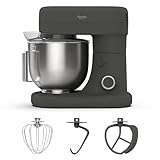
Martha Stewart’s 5.3-quart tilt-head leans toward everyday baking more than heavy bread, but it can handle a loaf. The listing highlights twelve speeds, a stainless steel bowl, a dough hook, a stainless whisk, a flat beater and a splash shield with a pour chute. Retail pages describe a motor of about 660 watts and a body weight around 9 pounds, so confirm both on the product page.
That lightweight body is the compromise. A light mixer can walk across the counter during a long knead, and it will feel less planted than the Bosch or Aucma. Use it for a single loaf, keep the dough on the softer side with higher hydration, and stay near the machine. The twelve speeds are handy for delicate work like meringue and whipped cream, and the stainless bowl and pour-chute shield make it a pleasant everyday mixer for cookies, frosting and cake batter between bread days.
- Bowl capacity: 5.3 quarts, stainless steel
- Twelve speeds, tilt-head design
- Dough hook, stainless whisk, flat beater and splash shield
- Retail pages list about 660 watts; confirm on listing
- Body weight listed near 9 pounds; confirm on listing
- Available in several colors per retail pages
Pros
- Wide speed range for gentle mixing
- Stainless bowl and attractive finish
Cons
- Light body may shift during stiff dough kneads
- Smaller bowl limits loaf count
It is smaller than the VIVOHOME and Aucma, so choose it only if you bake one loaf at a time and value the finer speed control.
6. Kitchen in the Box 3.2-Quart Stand Mixer (Blue) – Best for Colorful small-batch baking
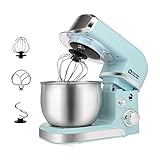
This listing is another color of the same compact 3.2-quart mixer, and the two share a motor, bowl and attachment set. Everything said about the black version applies here: the manufacturer lists 300 watts and six speeds, a stainless steel bowl, an aluminum dough hook and flat beater, and a stainless whisk, with a design aimed at one to two people.
If you love small tools and only bake the odd loaf, the color might be the deciding factor. For regular bread baking, though, a larger mixer is a better investment. Verify the exact color, bowl and accessory set on the product page before you buy, since listings for this brand often vary by variant. If bread is the main goal, think of this mixer as the whisk-and-batter machine in your kitchen and the dough work as an occasional bonus. Soft sandwich dough, pizza dough made in small amounts and enriched buns are the realistic ceiling, and you should stop and rest the motor if it feels hot to the touch.
- Bowl capacity: 3.2 quarts
- Motor listed at 300 watts by the manufacturer
- Six speeds, tilt-up head
- Dough hook, flat beater and whisk
- Anti-splash lid and suction feet
- Color variant listing; confirm details on listing
Pros
- Same compact footprint as its twin
- Bright color options for small kitchens
Cons
- Same limits on large or stiff dough
- Duplicate of the other 3.2-quart listing in function
Functionally it matches the black listing, so choose between the two on color and availability.
Specs Compared
| Model | Bowl | Motor (as listed) | Speeds | Design | Bread-dough fit |
|---|---|---|---|---|---|
| Kitchen in the Box 3.2-qt (black) | 3.2 qt, stainless steel | 300 W | 6 | Tilt-head planetary | Small batches only |
| VIVOHOME 6-qt | 6 qt | 660 W | 10 | Tilt-head planetary | Good for one to three loaves |
| Bosch Universal Plus | 6.5 qt | 500 W, belt-driven | 4 plus pulse | Bottom-drive, low dough hook | Best for heavy dough |
| Aucma 6.5-qt | 6.5 qt, stainless steel | 660 W, metal gears | 6 plus pulse | Tilt-head planetary | Good for larger loaves |
| Martha Stewart 5.3-qt | 5.3 qt, stainless steel | About 660 W (confirm) | 12 | Tilt-head planetary | Fair for single loaves |
| Kitchen in the Box 3.2-qt (blue) | 3.2 qt, stainless steel | 300 W | 6 | Tilt-head planetary | Small batches only |
Motor ratings are not directly comparable across designs: belt-driven mixers deliver torque differently from planetary tilt-heads. Confirm figures on each product page.
How We Chose These
This ranking comes from reading manufacturer specification pages and listing details, not from running dough through the machines. We compared bowl size, listed motor wattage, drive type, gear material, speed range, attachments and weight, because those traits predict how a mixer copes with long, heavy kneads.
We gave extra weight to dough-specific signals such as a hook designed for stiff dough, metal gears and a larger bowl, and we marked the compact models plainly as small-batch tools. Where retailers repeat conflicting numbers we flag them rather than guess. We also separated mixers that are genuinely built for dough from those that are general-purpose, and we say so plainly in each entry, including where a compact model is a runner-up for bread.
What to Look For
Drive type and motor power
Bread dough is a heavy, sticky load, so how the motor reaches the hook matters as much as the watt number. Tilt-head planetary mixers swing the hook around a stationary bowl and are excellent at batters and light-to-medium doughs. Belt-driven machines like the Bosch place the motor beneath the bowl and use a central column and low hook, which is better at stiff dough because it works the load toward the center.
Sensible wattage guidance: roughly 500 watts is a practical floor for regular bread work, and more is helpful for stiffer doughs or multiple loaves. Under 350 watts, as on the compact 3.2-quart models, limit yourself to soft dough and small batches.
Bowl size and realistic dough capacity
Quart size is bowl volume, not safe dough weight. A common rule of thumb is that a 5 to 6-quart planetary mixer comfortably handles about 1 kilogram (roughly 2.2 pounds) of flour in a dough. Stiff, low-hydration dough, such as bagels, needs a smaller batch than a wetter ciabatta dough. Avoid running any mixer at its stated maximum; stay at about two-thirds of the maker’s figure for regular use.
Worked example: if a mixer is rated for 2.2 pounds of flour, mix 1.5 pounds of flour for a stiff dough. That is enough for roughly two small sandwich loaves while leaving headroom for the motor.
Gears, hook shape and kneading technique
Look for metal gears, such as the full-metal drive Aucma describes, and a dough hook that reaches the bottom of the bowl without scraping. After mixing, check gluten with the windowpane test: stretch a small piece of dough thin enough that light shows through without tearing. Most doughs need 6 to 10 minutes of kneading at a low speed, so listen for strain and stop if the motor sounds labored.
Friction warms the dough, so start with cool water, aim for a finished dough temperature around 75 to 78 degrees Fahrenheit, and rest dough 20 minutes before kneading (autolyse) to reduce the work the motor has to do.
Stability, safety and cleaning
Weight and feet keep a mixer in place. Suction-cup feet help, but a light body can still creep. Never leave a loaded mixer unattended during a long knead, never put a hand or spatula in the bowl while it runs, and unplug the unit before changing attachments. Wash the aluminum dough hooks by hand if the manual advises, because dishwasher detergent can discolor aluminum.
Hydration, flour and the loaves you plan to bake
Dough hydration changes how hard the mixer works. A sandwich loaf at around 60 to 65 percent hydration (weight of water compared with flour) is stiff, while ciabatta at 75 to 80 percent is wet and slack, easier on the motor but harder to gather. Whole wheat absorbs more water and takes longer to develop.
Check the weight guidance in your manual and compare it with your recipe. If a recipe calls for 1,000 grams of flour and 700 grams of water, the dough weighs about 1.7 kilograms before salt and yeast. That fits comfortably in a 6 to 6.5-quart mixer but sits near the limit for a smaller one. For two loaves back to back, let the motor cool between batches, and clean flour from the vents so the motor can breathe.
Counter height matters as well: a tilt-head needs clearance above it to lift, so measure under wall cabinets before you choose a tall model.
Questions
Can a tilt-head stand mixer knead bread dough?
Yes, within limits. A 6 to 6.5-quart tilt-head with a motor around 600 watts can handle one to three loaves of soft to medium dough, but stiff doughs and long sessions are harder on the head and gears.
How many watts do I need for bread?
Aim for roughly 500 watts or more for regular bread baking, and understand that design counts too. A belt-driven 500 watt mixer can outwork a planetary mixer of similar rating on stiff dough.
Is a 3.2-quart mixer enough for bread dough?
It can handle a small loaf of soft dough, but it is not ideal. Its small bowl and 300 watt motor are better suited to batters, whipped cream and cookie dough.
Why does my mixer move across the counter during kneading?
Light mixers vibrate under the heavy resistance of stiff dough. Use a smaller batch, a lower speed, a clean dry counter and stay near the machine.
Should I knead by hand after the mixer?
A short hand knead helps you judge the dough texture. Turn it out, give it a few folds and check that it is smooth, elastic and passes the windowpane test.
How long should I knead dough in a stand mixer?
Most bread doughs take six to ten minutes at a low speed. Stop when the dough pulls from the bowl and passes the windowpane test, and let the motor rest if it feels hot.
Update History
- October 20, 2026 – Initial publication; product set drawn from current catalog listings.
- Check the product page for current specifications and availability before buying.
Sources
- Manufacturer product and specification pages for Bosch, Aucma, VIVOHOME, Martha Stewart and Kitchen in the Box
- Retailer listing titles and specification fields for each mixer
- Independent baking guides discussing mixer capacity, wattage and planetary versus spiral designs



Write Your Review
No reviews yet. Be the first to share your experience!