
Key takeaways
- Two foods can cook at once. You can prepare salmon and asparagus, chicken and fries, or a main dish and side without waiting for the first batch to finish.
- Separate controls add flexibility. Different temperatures, times, and cooking programs are useful when foods do not naturally cook together.
- Finish-together functions reduce timing stress. Synchronization can make it easier to serve a complete meal hot instead of letting one component sit.
- Less batch cooking for families. Two baskets can handle more food than many compact air fryers, especially when cooking separate items.
- Useful for selective eaters. One basket can hold vegetables or a meat-free option while the other cooks a different preference.
- More versatile than a toaster oven for some jobs. The smaller baskets heat quickly and are convenient for crisping frozen foods, reheating pizza, and cooking small portions of protein.
The Short Answer
Probably not—unless you regularly cook two different foods at the same time. A dual basket air fryer is worth the extra counter space when you want to prepare a main dish and a side at different temperatures or for different cooking times, such as chicken tenders at 400°F and vegetables at 375°F. If you mainly cook one food, reheat leftovers, or serve one or two people, a single-basket model is usually cheaper, smaller, and just as useful.
The key condition is simple: buy a dual basket air fryer only if you will use both baskets often enough to avoid cooking in batches. In 2026, the format is more affordable than it used to be, but “more capacity” does not automatically mean better value.
Our top picks
 Ninja DZ201 Foodi 8 Quart 6-in-1 DualZone
- DualZone Technology allows you to choose between the…
- Includes 6 versatile cooking programs: Air Fry, Air…
- The 8-quart air fryer capacity lets you fit…

As an Amazon Associate we earn from qualifying purchases at no extra cost to you. Ratings are shown as listed on Amazon.
What You Actually Get
A dual basket air fryer is essentially two smaller air fryers housed in one appliance. Each basket has its own cooking zone, and most models let you set separate temperatures and times. A synchronization feature—often called Smart Finish—can delay one basket so both foods finish together. A Match Cook setting can copy the same settings to both zones.
Capacity is usually advertised as a combined figure. For example, an 8-quart model may have two 4-quart baskets, while a 10-quart model may use two 5-quart baskets. That number describes the total space, not the size of one uninterrupted cooking chamber. Each basket is generally suitable for a small amount of protein, vegetables, fries, or another side, but neither basket is as flexible as one large drawer.
Expect a fairly substantial appliance. Many dual-basket models measure roughly 15 to 18 inches wide, 13 to 16 inches deep, and 12 to 14 inches high. Weights commonly fall between 15 and 22 pounds. Check your counter and cabinet clearance before buying: the appliance needs room around its sides and back for ventilation, and the baskets need to pull fully forward.
Power use is also higher than with compact single-basket units. Most dual-zone air fryers draw approximately 1,700 to 2,000 watts, which can be close to the limit of a 15-amp kitchen circuit when other high-wattage appliances are running. The exact cooking cost depends on your electricity rate and how long you use it, but running both zones at once will use more energy than running one basket alone.
Pros
- Two foods can cook at once. You can prepare salmon and asparagus, chicken and fries, or a main dish and side without waiting for the first batch to finish.
- Separate controls add flexibility. Different temperatures, times, and cooking programs are useful when foods do not naturally cook together.
- Finish-together functions reduce timing stress. Synchronization can make it easier to serve a complete meal hot instead of letting one component sit.
- Less batch cooking for families. Two baskets can handle more food than many compact air fryers, especially when cooking separate items.
- Useful for selective eaters. One basket can hold vegetables or a meat-free option while the other cooks a different preference.
- More versatile than a toaster oven for some jobs. The smaller baskets heat quickly and are convenient for crisping frozen foods, reheating pizza, and cooking small portions of protein.
Cons
- It takes up considerable space. A dual model may occupy much of a countertop, and its width can make storage inconvenient.
- The capacity is divided. Two 4-quart baskets do not function like one 8-quart basket. Large items, a whole small chicken, or a long piece of fish may not fit comfortably.
- More parts mean more cleanup. You may need to wash two baskets and two crisper plates after every meal. Some are dishwasher-safe, but hand washing can help protect nonstick coatings.
- Results may not be identical in both zones. Basket position, food quantity, and airflow can affect browning. You may still need to shake or turn food during cooking.
- Controls can be unnecessarily complicated. Presets, synchronization, Match Cook, and multiple cooking modes are convenient once learned but can feel excessive for simple meals.
- It can cost more than you need to spend. A standard single-basket air fryer can cost less than $100, while a premium dual-zone model may approach or exceed $200.
- It is not a replacement for a full oven. The baskets are useful for portions and sides, but their shape limits large casseroles, baking pans, and oversized foods.
Who Should Buy It
A dual basket air fryer makes sense for households that frequently cook two separate foods at dinner. Families with three or more people may appreciate the reduced need for batches, particularly when everyone wants a different side or when the oven is already occupied. It is also a practical choice for meal prep if you often cook protein in one basket and vegetables or potatoes in the other.
Consider an 8-quart dual-zone model such as the Ninja DZ201 Foodi when you want clearly separated cooking zones and convenient Match Cook and Smart Finish features. Its listed price is about $199.95, so it is best suited to buyers who will use the timing flexibility regularly rather than occasionally.
A larger 10-quart design, such as the Gourmia stainless-steel dual-basket model listed around $99.99, may appeal to shoppers focused on capacity and price. Just remember that the baskets still divide that 10-quart total, and features, controls, basket dimensions, and included accessories can vary by model.
Choose dual baskets if you can answer yes to at least two of these questions: Do you cook different foods at different temperatures? Do you often prepare meals for several people? Do you dislike waiting between batches? Do you have a permanent counter location for a wide appliance?
Who Should Skip It
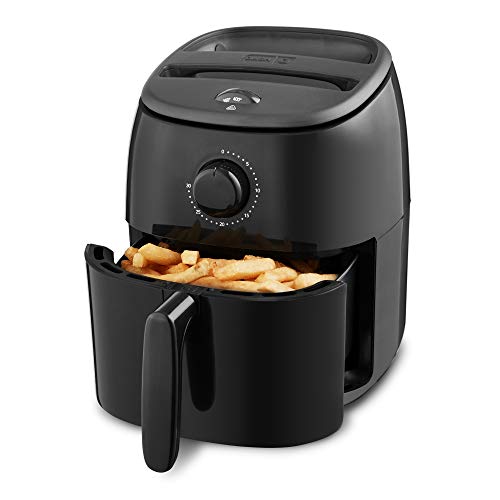
Skip the dual format if you live alone, cook mostly one food at a time, or have limited counter space. A single 4- to 6-quart air fryer will usually handle everyday portions with less storage hassle. It is also the better choice if you mainly reheat leftovers or cook frozen snacks for one or two people.
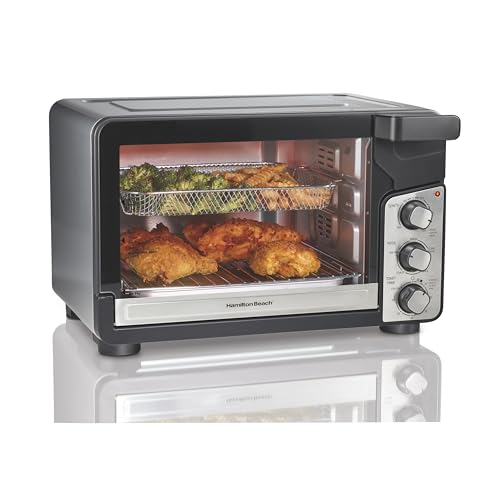
You may also prefer a toaster oven-style air fryer if you want to cook flatter or larger foods, use baking pans, or replace more of your oven’s functions. Its cooking chamber is generally more flexible, even if it takes longer to preheat and may not crisp small portions as quickly.
Cheaper Alternatives
| Option | Cost | Trade-off |
|---|---|---|
| Compact single-basket air fryer, 3 to 4 quarts | About $50–$90 | Best for one or two people, but you may need to cook in batches. |
| Standard single-basket air fryer, 5 to 7 quarts | About $70–$140 | Offers more uninterrupted space, but cannot cook two foods at separate settings. |
| Air fryer toaster oven | About $120–$250 | More versatile for baking and larger foods, but uses more counter space and may cook small portions less efficiently. |
| Two basic small air fryers | About $100–$180 total | Provides genuinely separate appliances, but needs even more space and power outlets. |
| Conventional oven with a sheet pan | Usually no additional cost | Handles larger meals, but generally takes longer and may not crisp small portions as quickly. |
FAQ
Is a dual basket air fryer better than a single basket?
It is better for cooking two different foods simultaneously, not universally better. A single basket often offers more usable space in one continuous compartment, costs less, and is easier to store and clean. Choose dual baskets for flexibility; choose single-basket capacity and simplicity when those matter more.
Can I cook different temperatures in each basket?
Yes, that is one of the main reasons to buy one. Most dual-zone models allow separate temperature and time settings. A synchronization feature can delay the faster-cooking basket so both foods finish at approximately the same time. You should still check food for doneness with a thermometer when appropriate.
How much food fits in a dual basket air fryer?
It depends on the basket shape and the food. An 8-quart model commonly has two 4-quart baskets, while a 10-quart model may have two 5-quart baskets. Those sizes are generally suitable for a main and side or several servings of smaller foods. Avoid packing the baskets tightly, since overcrowding can reduce airflow and crisping.
Is a dual basket air fryer worth $200?
It can be, if you use both zones several times a week and value synchronized meals. At around $200, you are paying for convenience, controls, and build features rather than a guarantee that every food will cook better. If you only need extra capacity occasionally, a single-basket model in the roughly $70–$140 range is likely the more sensible purchase.




Write Your Review
No reviews yet. Be the first to share your experience!