
Key takeaways
- Fast for small portions. Many foods cook in roughly 8 to 25 minutes, compared with 15 to 30 minutes of preheating and cooking in a conventional oven. Actual time depends on the food and whether it is frozen or fresh.
- Less oven heat. A compact air fryer is useful in a studio apartment, dorm-style kitchen, or warm climate because you do not need to heat a large oven for one serving.
- Good texture from convenience foods. Frozen fries, tater tots, chicken tenders, fish sticks, dumplings, and similar foods usually benefit from circulating heat and a dry cooking surface.
- Useful for reheating. Pizza, roasted vegetables, fried chicken, and breaded foods often regain some crispness instead of becoming soft in the microwave.
- Simple portion control. A small basket naturally limits how much you cook, which can be helpful when you live alone and do not want a large batch of leftovers.
- Lower oil use. You can often use a light spray or brush of oil rather than filling a pan for shallow or deep frying. This changes the texture and flavor, but it can reduce mess.
- Easy cleanup when designed well. A removable, dishwasher-safe basket is a meaningful convenience for someone cooking one meal at a time.
- Helpful for small kitchens. Slim and mini models are easier to fit than toaster ovens or full-size air fryers, especially when cabinet storage is limited.
The Short Answer
Yes—an air fryer is worth it for one person if you cook frozen foods, vegetables, chicken, fish, or reheated leftovers at least a few times a week and have about 12 inches of counter space to spare. The one condition is that you must use it often enough to justify another appliance; if you mostly eat soups, pasta, salads, or microwave meals, a small oven-safe pan may be more useful.
For solo cooking, an air fryer is less about making enormous batches and more about making one or two portions quickly with little cleanup. A compact 2-quart model can handle a single serving of fries, nuggets, vegetables, or a small piece of protein. A 4-quart model gives you more flexibility for leftovers and meal prep without taking up the space of a full-size machine.
Our top picks
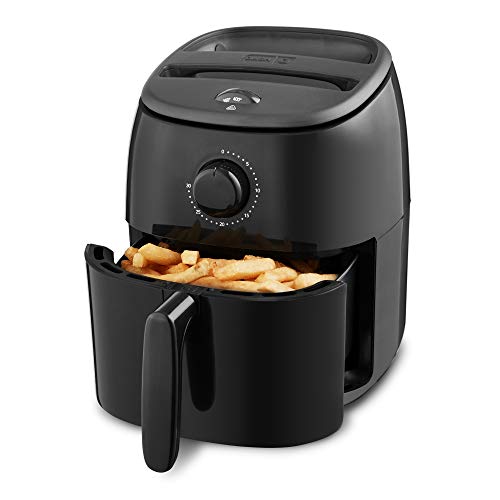
 CHEFMAN 2 Qt Mini Air Fryer
- This small air fryer comes prepared for any…
- Say goodbye to excess oil and fat, and…
- The square basket maximizes its 2-quart capacity
 bella Fits-anywhere™ Slim 4qt Air Fryer
- The bella 4qt Air Fryer features a sleek,…
- EverGood Non-Toxic* Ceramic Nonstick Coating for easy food…
- The innovative XL basket of the air fryers…
As an Amazon Associate we earn from qualifying purchases at no extra cost to you. Ratings are shown as listed on Amazon.
What You Actually Get
An air fryer is a compact convection oven. A heating element and fan circulate hot air around a perforated basket, helping food brown and crisp with less oil than deep frying. It does not truly “fry” food, and it cannot make every meal better, but it is very good at high-heat, relatively quick cooking.
For one person, the useful capacity range is usually 2 to 4 quarts. A 2-quart basket is best for one modest serving. You may fit roughly 6 to 8 ounces of fries, one chicken breast, a handful of vegetables, or two to four small frozen snacks, depending on their shape. A 4-quart basket is more comfortable for a full meal, two smaller portions, or food that needs to remain in a single layer.
Compact units commonly use about 1,000 to 1,500 watts. That is generally manageable on a standard kitchen outlet, but avoid plugging one into an overloaded power strip. The footprint can range from approximately 8 by 10 inches for a very small model to about 10 by 13 inches for a slim 4-quart design. Check the height, too: many air fryers stand 10 to 14 inches tall, which can make storage beneath upper cabinets inconvenient.
The CHEFMAN 2 Qt Mini Air Fryer is the more space-conscious option of the two reference models, with a listed price of $42.44. Its digital timer, shake reminder, nonstick basket, and dishwasher-safe parts are useful for small, uncomplicated meals. The bella Fits-anywhere Slim 4qt Air Fryer costs $53.99 and offers more cooking room in a narrow format. That extra capacity is valuable if you want to cook a protein and vegetables in separate rounds or save a portion for later.
Neither size eliminates the need to turn or shake food. Airflow works best when the basket is not crowded. For crisp results, you will often need to cook in a single layer, pause once to shake or flip, and add a few minutes for thicker foods. The payoff is a faster routine than using a conventional oven for a small amount of food.
Pros
- Fast for small portions. Many foods cook in roughly 8 to 25 minutes, compared with 15 to 30 minutes of preheating and cooking in a conventional oven. Actual time depends on the food and whether it is frozen or fresh.
- Less oven heat. A compact air fryer is useful in a studio apartment, dorm-style kitchen, or warm climate because you do not need to heat a large oven for one serving.
- Good texture from convenience foods. Frozen fries, tater tots, chicken tenders, fish sticks, dumplings, and similar foods usually benefit from circulating heat and a dry cooking surface.
- Useful for reheating. Pizza, roasted vegetables, fried chicken, and breaded foods often regain some crispness instead of becoming soft in the microwave.
- Simple portion control. A small basket naturally limits how much you cook, which can be helpful when you live alone and do not want a large batch of leftovers.
- Lower oil use. You can often use a light spray or brush of oil rather than filling a pan for shallow or deep frying. This changes the texture and flavor, but it can reduce mess.
- Easy cleanup when designed well. A removable, dishwasher-safe basket is a meaningful convenience for someone cooking one meal at a time.
- Helpful for small kitchens. Slim and mini models are easier to fit than toaster ovens or full-size air fryers, especially when cabinet storage is limited.
Cons
- Limited capacity. A 2-quart basket can feel cramped quickly. Cooking a complete meal may require two or three batches, which removes much of the speed advantage.
- It takes counter or storage space. Even a mini model has to live somewhere, and moving a 10-pound appliance in and out of a cabinet can discourage frequent use.
- Not ideal for every food. Soups, sauces, rice, pasta, and many delicate foods still belong on the stovetop or in the microwave. An air fryer is a specialist, not a replacement for a kitchen.
- Noise and heat are unavoidable. The fan makes a noticeable hum, and the exhaust releases hot air. Leave clearance around the unit and keep it away from curtains, paper, and the edge of the counter.
- Small baskets can be awkward to clean. Nonstick surfaces need gentle tools, and baked-on grease may require soaking even when parts are dishwasher safe.
- Cooking can be uneven when overloaded. A crowded basket blocks airflow. The result may be pale food on the bottom and overcooked food near the top.
- Energy savings are not guaranteed. A small appliance may use less total energy than a large oven for one serving, but the difference depends on cooking time, wattage, and how often you run it.
Who Should Buy It
Buy an air fryer if you regularly cook for yourself and want quick, crisp food without heating a full oven. It is especially useful for people who eat frozen foods, chicken, fish, roasted vegetables, potatoes, or reheated leftovers. It also suits renters, students, first apartments, and anyone who wants a low-effort way to make dinner after work.
Choose a 2-quart model if your priority is the smallest footprint and you usually make one snack or one modest serving. A model in this category, such as the $42.44 CHEFMAN mini, can be enough for a single diner who values simplicity over flexibility.
Choose a slim 4-quart model if you have a little more counter space and want fewer batches. The $53.99 bella slim model is the more practical size for a full serving of vegetables and protein, larger frozen foods, or occasional cooking for two. A 4-quart basket is not huge, but it gives you more room to spread food out.
Who Should Skip It
Skip an air fryer if you already own a toaster oven with a strong convection setting and are happy with its results. Also skip it if storage is difficult, you rarely eat crisp foods, or you would need to run multiple batches for nearly every meal.
It may not be worthwhile for someone who primarily cooks one-pot meals. A small saucepan, skillet, or microwave can cover those needs more efficiently. Likewise, if you are trying to minimize appliances, an air fryer may duplicate equipment you already own.
Cheaper Alternatives
| Option | Cost | Trade-off |
|---|---|---|
| Sheet pan or small roasting pan | About $10–$25 | Very inexpensive and easy to store, but usually slower and less effective at crisping one serving. |
| Nonstick skillet with lid | About $20–$40 | More versatile for eggs, vegetables, and proteins, but requires stovetop attention and some oil. |
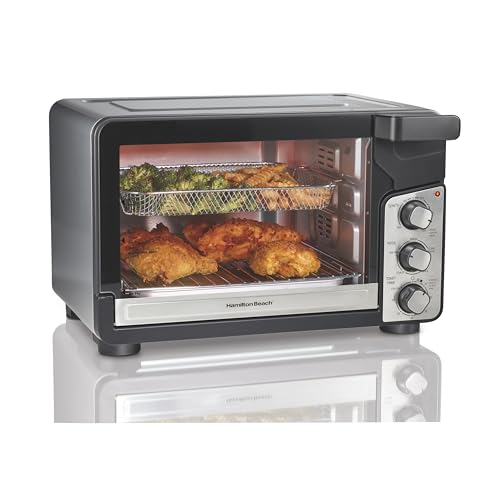
| Toaster oven | About $35–$100 | Can toast, bake, and reheat more types of food, but often has a larger footprint and may preheat more slowly. |
| Microwave with a crisping pan | About $25–$70 for an add-on pan | Fast and convenient, but texture is less consistent and capacity remains limited. |
| 2-quart air fryer | About $35–$60 | Compact and quick for one serving, but too small for many meals or cooking for guests. |
| Slim 4-quart air fryer | About $50–$90 | More practical capacity, though it costs more and still requires counter or storage space. |
FAQ
Is a 2-quart air fryer big enough for one person?
Usually, yes. A 2-quart air fryer works for one serving of vegetables, fries, appetizers, or a small protein. It may feel too small for bulky foods, thick cuts, or a complete meal that needs everything cooked together. If you dislike cooking in batches, a 3.5- to 4-quart model is the safer choice.
Does an air fryer save money for one person?
It can, but the savings come from reduced food waste and quicker small-batch cooking—not automatically from lower electricity use. Buying a $40–$60 appliance only makes financial sense if you use it consistently. Cooking inexpensive ingredients such as potatoes, frozen vegetables, chicken thighs, and leftovers can make the cost easier to justify.
How much counter space does a solo air fryer need?
Plan for roughly 8 to 13 inches of width and depth, plus 10 to 14 inches of height, depending on the design. Leave open space around the air vents and enough room to pull out the basket safely. Measure the area with cabinet doors open, not just the empty counter.
What should one person cook in an air fryer?
Start with foods that reward dry, circulating heat: frozen fries, salmon, chicken breasts, tofu, broccoli, green beans, potatoes, quesadillas, and reheated pizza. Avoid filling the basket to the top. A single layer, a light coating of oil when appropriate, and one shake or flip usually produce more reliable results than maximum capacity.
For 2026, the honest verdict is simple: an air fryer is worth it for one person when it solves a specific weekly problem. If you want fast, crisp, low-mess meals and can give the appliance a permanent home, choose the smallest size that will not force constant batch cooking.




Write Your Review
No reviews yet. Be the first to share your experience!