
Key takeaways
- Better fit for artisan slices. Long slots accommodate broad, irregular, and unevenly shaped sourdough slices with less cutting and repositioning.
- More even contact with the heating elements. When a slice lies flat instead of bending above the slot, the exposed bread is more likely to brown across its full surface.
- Useful for homemade loaves. Home-baked bread rarely has standardized dimensions. Extra width and length provide welcome flexibility for boules, batards, and rustic loaves.
- Fewer crumbs on the counter. A slice that fits properly is less likely to shed pieces as you force it into a narrow opening or pull it out at an angle.
- Can replace a four-slice toaster. Two long slots may toast four ordinary slices, depending on their dimensions, while also handling larger bread.
- Good for more than sourdough. Long slots are useful for thick Texas toast, baguette sections, English muffins, large bagels, and some gluten-free breads.
- Usually simple to operate. A toaster with browning controls, cancel, reheat, and defrost functions can cover most daily needs without turning breakfast into a setup routine.
The Short Answer
Yes—long-slot toasters are worth it for sourdough bread if you regularly toast full-size artisan slices, boules cut into broad slabs, or homemade bread that does not fit neatly into a standard toaster slot. The extra length reduces the need to trim or rotate each slice, and the wider opening is more forgiving of uneven, thick-cut bread.
That said, a long-slot toaster is not automatically better for every kitchen. If you mostly eat conventional sandwich bread, toast only occasionally, or already use a countertop oven, the added size may not justify the cost. For sourdough fans, the key condition is simple: choose a model with both extra-long and genuinely wide slots, not one that is merely marketed as “artisan” or “four-slice.”
Our top picks


As an Amazon Associate we earn from qualifying purchases at no extra cost to you. Ratings are shown as listed on Amazon.
What You Actually Get
A long-slot toaster replaces the short, narrow openings found on many two-slice models with slots designed to accommodate longer pieces of bread. Depending on the design, one long slot may hold two standard slices, or the toaster may have two extra-long slots that can accept unusually shaped slices side by side.
For sourdough, slot width matters just as much as slot length. A typical slice from a compact sandwich loaf may be about 4 to 5 inches long and 3½ to 4½ inches wide. A generously cut sourdough slice can measure 5 to 7 inches long, 4 to 5 inches wide, and roughly ¾ to 1½ inches thick. Some homemade slices are thicker still. A slot that is long but only about 1 to 1¼ inches wide may still squeeze, tilt, or leave the center untoasted.
Most long-slot models offer several browning settings, a cancel button, and a high-lift function for retrieving small pieces. The practical difference between inexpensive and premium models is usually consistency, control layout, build quality, and how smoothly the bread carriage operates—not a magical ability to toast sourdough better.
Expect a long-slot toaster to take up approximately 12 to 16 inches of counter width, 6 to 8 inches of depth, and 7 to 9 inches of height. Exact dimensions vary, but the footprint is important in a small kitchen. Weight commonly falls in the 3- to 6-pound range. Many household models draw roughly 1,200 to 1,800 watts, so they should be plugged directly into a suitable wall outlet rather than a lightweight extension cord.
As a price reference, a basic extra-long toaster can cost about $30 to $45. Midrange touchscreen or more heavily featured models commonly land around $50 to $80, while premium stainless-steel designs can cost $100 or more. The Bella Fits-Anywhere™ Slim Toaster, a four-slice extra-long-and-wide-slot model in Oatmilk, is listed at $33.99. A long-slot sourdough toaster with a smart touchscreen is listed at $58.97. Those prices illustrate the main value question: you can solve the fit problem without necessarily buying an expensive appliance.
Pros
- Better fit for artisan slices. Long slots accommodate broad, irregular, and unevenly shaped sourdough slices with less cutting and repositioning.
- More even contact with the heating elements. When a slice lies flat instead of bending above the slot, the exposed bread is more likely to brown across its full surface.
- Useful for homemade loaves. Home-baked bread rarely has standardized dimensions. Extra width and length provide welcome flexibility for boules, batards, and rustic loaves.
- Fewer crumbs on the counter. A slice that fits properly is less likely to shed pieces as you force it into a narrow opening or pull it out at an angle.
- Can replace a four-slice toaster. Two long slots may toast four ordinary slices, depending on their dimensions, while also handling larger bread.
- Good for more than sourdough. Long slots are useful for thick Texas toast, baguette sections, English muffins, large bagels, and some gluten-free breads.
- Usually simple to operate. A toaster with browning controls, cancel, reheat, and defrost functions can cover most daily needs without turning breakfast into a setup routine.
Cons
- Larger counter footprint. The extra length can be inconvenient if your toaster needs to live in a cabinet or share a narrow prep area.
- Not every “long-slot” model is truly wide. Read the slot-width measurement when available. Length alone does not guarantee that a thick sourdough slice will fit.
- Uneven bread can still toast unevenly. A toaster cannot correct for dramatically different thicknesses, a very dense crumb, or a slice that sits off-center.
- More capacity than some people need. If you usually toast one thin slice at a time, a large four-slice-capacity appliance may be unnecessary.
- Potentially higher power draw. Models in the 1,500- to 1,800-watt range may use more electricity during a cycle than a small two-slice toaster, although the difference per use is generally modest.
- Extra features can add cost without improving toast. Touchscreens, countdown displays, and multiple modes may be convenient, but they do not compensate for narrow slots or weak browning control.
- Cleaning still matters. Sourdough produces loose flour and crumbs. A removable crumb tray is highly preferable, but the tray does not eliminate the need to occasionally shake out debris safely.
Who Should Buy It
Buy a long-slot toaster if sourdough is part of your normal breakfast routine and you often slice bread wider or thicker than supermarket sandwich bread. It is especially useful for people who bake at home, buy naturally shaped loaves from a bakery, or dislike trimming the ends of a slice just to make breakfast work.
It is also a sensible choice for households with several bread preferences. One person can toast rustic sourdough while another uses the same appliance for standard bread or bagels. Look for slots at least around 1½ inches wide if thick slices are common, independent controls for separate slots, a high-lift lever, and a removable crumb tray. A cool-touch exterior is helpful if the toaster will sit near children or in a crowded kitchen.
At the budget end, a roughly $30-to-$40 model can be enough if your priorities are capacity and fit. A model near $50 to $80 may make sense if you value a clearer display, more precise controls, or a sturdier feel. Do not pay a premium solely for a touchscreen.
Who Should Skip It
Skip a long-slot toaster if your bread is nearly always standard sliced sandwich bread and you have limited counter space. A compact two-slice toaster will usually be easier to store and may toast those slices just as well.
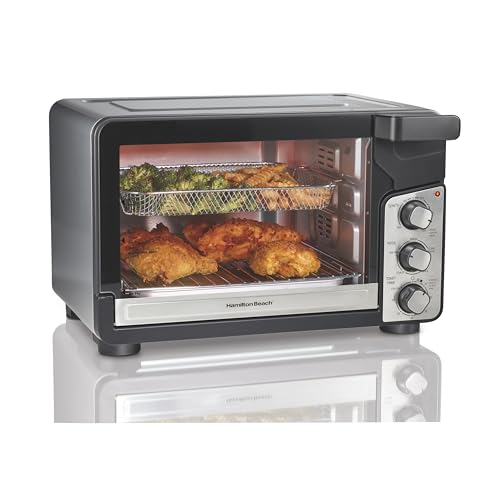
You may also prefer a toaster oven if you toast open-faced sourdough with cheese, oil, vegetables, or other toppings. A toaster cannot safely handle many toppings, while a small toaster oven can offer more flexibility for reheating, broiling, and cooking. Likewise, if you toast baguette halves, very thick slabs, or several different foods at once, a countertop oven may be the more versatile purchase.
Cheaper Alternatives
| Option | Cost | Trade-off |
|---|---|---|
| Standard two-slice toaster | $15–$30 | Lowest cost and smallest footprint, but broad sourdough slices may need trimming or rotating. |
| Basic extra-long toaster | $30–$45 | Best value for fit; may have less consistent browning, lighter construction, and fewer controls. |
| Compact toaster oven | $40–$80 | Handles open-faced toast and irregular shapes, but takes longer to preheat and uses more counter space. |
| Cast-iron skillet | $20–$40 | Excellent control over thick bread, but requires stovetop attention, flipping, and a little oil or butter. |
| Broiler or oven rack | $0 if already owned | Works for batches and large slices, but is slower and less convenient for one or two pieces. |
For most sourdough eaters, the basic extra-long toaster offers the clearest balance of price and convenience. The $33.99 Bella model is positioned in that value range, while the $58.97 touchscreen model costs more for a more feature-focused experience. Neither price alone proves better browning; slot measurements, controls, and ease of cleaning remain more important.
FAQ
Are long-slot toasters better for sourdough?
They are better for fitting sourdough, especially when slices are wide, thick, or irregular. They do not guarantee perfectly even browning, but they reduce bending and exposed un-toasted areas compared with narrow slots.
What slot width is best for artisan bread?
A slot around 1½ inches wide is a practical minimum for many thick sourdough slices. If you regularly cut slices closer to 1½ inches thick or buy very dense bakery loaves, look for the widest opening available and compare it with the manufacturer’s listed dimensions.
Can one long slot toast two slices?
Sometimes. Many long-slot toasters are designed to hold two standard slices in each slot, but the heating pattern and divider design vary. Check the product description and internal slot layout rather than assuming every long slot provides identical coverage.
Is a touchscreen toaster worth the extra money?
Usually only if you enjoy the interface or want features such as a countdown display and precise digital controls. For sourdough itself, slot size, browning adjustment, high-lift access, and a removable crumb tray matter more than a touchscreen. A well-designed basic model can be the smarter buy.




Write Your Review
No reviews yet. Be the first to share your experience!