
Key takeaways
What's inside
Fuzzy logic rice cookers have transformed grain preparation by replacing simple thermal cut-offs with onboard microprocessors that dynamically adjust cooking time and heat. Instead of relying on a rigid mechanical switch or single temperature threshold, these intelligent machines respond in real time to ambient room conditions, humidity levels, and bath volume to produce perfectly fluffed grains. As appliance manufacturers expand their feature lists in 2026, selecting the right model requires cutting through marketing jargon to understand what truly affects daily performance.
Choosing the ideal cooker comes down to evaluating core specifications against your actual eating habits, kitchen space, and household size. A unit loaded with specialized pre-sets won’t bring value if the inner vessel lacks thermal mass, just as a high-end induction system is overkill for someone who only steams white jasmine rice once a week. In this guide, we break down capacity measurements, heating technology, pot construction, and control features so you can invest in a model that fits seamlessly into your daily kitchen routine.
As an Amazon Associate we earn from qualifying purchases at no extra cost to you. Product prices and availability are accurate as of the date shown and are subject to change.
Understanding Cup Capacity: Raw vs. Cooked Yield
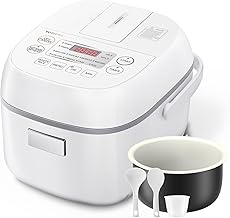
One of the most common mistakes buyers make is misinterpreting rice cooker sizing standards. In the world of rice cookers, a “cup” refers to the traditional Japanese rice measuring cup, which equals approximately 180 milliliters (or about 3/4 of a standard 240-milliliter US measuring cup). When a manufacturer lists a 5-cup capacity, it refers to raw rice cups, which translates to roughly 10 cups of cooked yield.
Selecting the right size depends on your typical batch volume rather than maximum kitchen storage space. A 3-cup raw capacity model is optimal for singles, couples, or small households preparing 1 to 4 cooked portions per meal. A 5.5-cup model serves medium-sized families well and offers enough flexibility for meal prepping without forcing you to cook oversized batches. Buying a 10-cup machine when you typically cook only 1 cup of raw rice can actually hurt cooking performance, as shallow rice beds reduce thermal efficiency and result in dry or unevenly hydrated grains.
Heating Systems: Micom vs. Induction Heating (IH)
Fuzzy logic appliances broadly fall into two main heating categories: traditional micro-computerized (Micom) units and Induction Heating (IH) units. Micom cookers utilize a heating element built into the bottom of the housing. Heat transfers upward from the base through the inner bowl, while thermal sensors send data to the microprocessor to fine-tune energy output throughout the cycle.
Induction Heating models, by contrast, convert the entire inner pot into the heating element using magnetic coils located around the base and lower sides of the unit. This creates instant, uniform heat distribution across the entire pan surface rather than radiating warmth from a single point. If you regularly cook tough, high-fiber grains like brown rice, wild rice, or sprouted GABA rice, IH technology ensures thorough heat penetration without scorching the bottom layer. For plain white, basmati, or short-grain rice, standard Micom fuzzy logic models deliver exceptional results at a significantly lower cost.
Inner Pot Construction: Mass, Shape, and Coating
The inner vessel is the heart of any rice cooker, directly dictating thermal retention and heat transfer. Inexpensive models feature light, thin aluminum inserts that heat up quickly but suffer from hot spots and quick thermal loss. Superior fuzzy logic cookers feature heavy-gauge, multi-layer inner pots crafted from thick aluminum alloy, stainless steel, or ceramic composites. Thicker walls store thermal energy efficiently, creating a stable cooking environment that prevents sudden temperature dips during processing.
Bowl geometry also plays a vital role in grain movement. Spherical or rounded pot bases promote natural thermal convection currents, tumbling the grains continuously as liquid boils. Pay close attention to the nonstick interior coating as well. High-grade fluoropolymer, ceramic, or diamond-titanium nonstick coatings resist abrasion from washing and prevent rice starch from baking onto the surface. Avoid thin, single-layer coatings that scratch easily, as damaged nonstick surfaces disrupt grain release and make cleanup difficult.
Core Menu Features vs. Unnecessary Presets
While modern digital control panels offer dozens of pre-set modes, most home cooks rely regularly on only four or five key programs. Prioritize machines that include clear, dedicated cycles for white/sushi rice, brown rice, quick cook, and porridge/oats. Quick-cook functions bypass certain soaking or cooling phases to trim 15 to 20 minutes off the cycle, making them ideal for busy weeknights when speed overrides subtle texture optimization.
Specialty programs like GABA brown rice extend pre-soak times at specific temperatures (around 104°F) to activate grain enzymes and boost nutritional content before bringing the pot to a boil. Features like cake baking, slow cooking, or pressure-steaming can be helpful if counter space is strictly limited, but they rarely perform as well as dedicated countertop appliances. Focus on the core grain capabilities and temperature sensing accuracy rather than an inflated count of secondary cooking modes.
Usability and Daily Maintenance Features
A rice cooker should simplify meal prep, not add tedious cleanup steps. Always check whether the inner lid assembly detaches easily for hand washing. Starch-laden steam condensation collects on the ceiling lid during every cycle; if the inner plate is fixed permanently to the lid housing, dried starch quickly builds up, impairing lid seals and creating sour odors over time.
Look for smooth steam vent caps that disassemble easily for rinsing, clear water-level gradation lines inside the pot, and robust handle designs. Bright, backlit display panels make setting delay timers simple in low kitchen lighting. An extended keep-warm feature is equally valuable; lower-tier warm settings can dry out rice after two hours, whereas intelligent warm cycles modulate heat and vapor to keep grains moist and safe for up to 12 to 24 hours without yellowing.
Determining Budget: When to Spend More
Entry-level fuzzy logic cookers offer a dramatic improvement over simple on/off toggle models without requiring a large investment. These budget units provide gentle temperature regulation, good heat retention, and solid daily reliability for everyday white and jasmine rice varieties. Spending more makes sense if rice is a staple at almost every meal or if your diet centers on complex whole grains.
Mid-range models introduce heavier multi-layer pots, specialized soaking profiles, and improved moisture management during extended keep-warm periods. Premium tier units combine fuzzy logic microprocessors with induction heating and variable atmospheric pressure control. Investing in high-end pressure-IH hardware pays off if you regularly cook sticky rice, mixed grains, or tough whole-wheat berries, as high pressure breaks down exterior hulls quickly while lock-in moisture creates optimal stickiness and aroma.
Related Guides
To see how top brands perform in hands-on kitchen testing, explore our comprehensive evaluation of the best fuzzy logic rice cooker models available today. If you are also building out a versatile collection of low-maintenance kitchen electronics for easy meal prep, take a look at our expert roundup of the best cheap slow cooker units to find great value on everyday stewing appliances.
FAQ
What makes fuzzy logic different from standard rice cookers?
Standard rice cookers rely on a simple bimetallic thermostat that turns off the heat as soon as water boils away and temperatures rise above 212°F. Fuzzy logic cookers use onboard microprocessors and thermal sensors to actively monitor temperature changes throughout the cycle. This allows the machine to make micro-adjustments to cooking times and heat levels, compensating for human error or environmental changes.
Why does fuzzy logic take longer to cook rice than basic models?
Fuzzy logic cookers build multi-stage heating phases directly into their program cycles, including low-temperature pre-soaking and high-heat finishing steams. These controlled soaking and resting periods allow water to saturate the grain core evenly before boiling, resulting in better texture and flavor. While a basic cooker forces a hard boil quickly, fuzzy logic prioritizes grain structure over absolute speed.
Is induction heating necessary on a fuzzy logic cooker?
Induction heating is not strictly necessary for delicious white rice, but it offers noticeable improvements for thick brown rice and complex grain blends. By generating heat throughout the entire body of the pot, IH eliminates bottom hot spots and ensures every grain cooks evenly. If you primarily cook white, jasmine, or basmati rice, standard Micom fuzzy logic delivers excellent quality at a lower cost.
How long can rice stay warm in a fuzzy logic cooker?
Most quality fuzzy logic cookers can safely keep rice hot and fresh for 12 to 24 hours depending on the model’s keep-warm technology. Higher-end units lower the warming temperature slightly after cooking to prevent drying out and periodically pulse micro-heaters to maintain humidity. It is best to fluff the rice immediately after the cook cycle finishes to release excess moisture before leaving it on keep-warm mode.





Write Your Review
No reviews yet. Be the first to share your experience!