
Key takeaways
- Better brewing control. Green and white teas can taste bitter when prepared with boiling water. Lower settings give you more control over flavor and strength.
- Useful for pour-over coffee. Coffee brewing commonly uses water around 195°F to 205°F. A temperature setting can make that process more repeatable than waiting for a boil and guessing when the water has cooled.
- Convenient for multiple beverages. One person can make black tea near boiling while another prepares a lower-temperature drink without using separate appliances.
- Less hovering over the stove. Electric kettles shut off automatically after reaching the target temperature or boiling point, reducing the need to monitor a saucepan.
- Keep-warm settings save repeat trips. If you refill your mug throughout the morning, maintaining a target temperature can be easier than reheating water several times.
- Often includes practical extras. Many models have a wide opening, water-level markings, a swivel base, boil-dry protection, and a removable filter. Some also include a tea infuser for brewing directly in the kettle.
- Can reduce overboiling. Heating water to 180°F instead of 212°F may be enough for some drinks and avoids unnecessarily bringing the entire reservoir to a full boil.
The Short Answer
Yes—if you regularly make coffee, tea, instant meals, or baby formula at more than one temperature, a variable temperature electric kettle is worth it. The one condition is that you will actually use the temperature settings; if you only need boiling water, a basic electric kettle usually gives you nearly the same convenience for less money.
For most households, the upgrade is practical rather than revolutionary. A temperature-controlled kettle does not necessarily boil water faster or make it taste better, but it can heat water to a precise range without guesswork. That matters when brewing delicate green tea, preparing pour-over coffee, or reheating water without bringing it all the way to a boil.
Our top picks
 Chefman Electric Kettle with Temperature Control
- Chefman kettles boil water fast
- Custom temperature control includes seven presets with boiling…
- Easily see when your glass teapot with infuser…
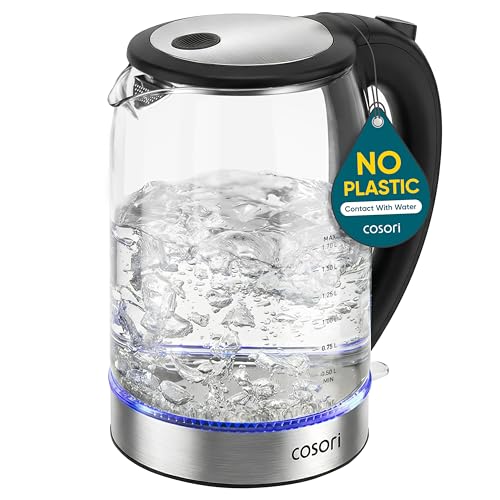 Cosori Electric Kettle
No plastic touches the water for cleaner taste
Wide mouth and lid make cleaning easy
Auto shuts off within 30 seconds of boiling
Speed claim covers only a 0.5 liter portion of the tank
Corded kettle must stay plugged in while boiling
As an Amazon Associate we earn from qualifying purchases at no extra cost to you.
What You Actually Get
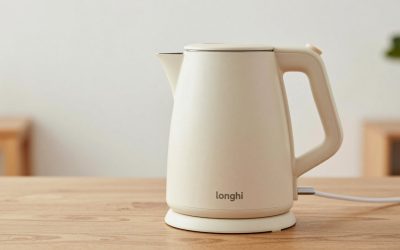
A variable temperature kettle is an electric kettle with a control panel or preset buttons that let you choose a target temperature. Common settings include approximately 160°F, 175°F, 185°F, 195°F, and 212°F (boiling), although the exact presets vary by model.
Some models use a digital display, while others rely on labeled buttons and indicator lights. Many also include a keep-warm function, which maintains the selected temperature for a limited period—often around 30 to 60 minutes. That feature is useful if you are making multiple cups, but it does use electricity and should not be treated as a substitute for a thermal carafe.
Capacity typically falls between 1.0 and 1.8 liters. A 1.7-liter kettle makes roughly seven 8-ounce cups, although filling it to maximum capacity may take more counter space and several minutes to heat. Compact 1-liter models are easier to store and better suited to one or two people.
Most full-size kettles draw between 1,000 and 1,500 watts. Higher wattage generally means faster heating, but it can also matter if your kitchen circuit is already handling a toaster, microwave, or air fryer. A kettle with a 360-degree swivel base is convenient for right- or left-handed use, and a removable, washable filter can help catch loose mineral deposits.
Pros
- Better brewing control. Green and white teas can taste bitter when prepared with boiling water. Lower settings give you more control over flavor and strength.
- Useful for pour-over coffee. Coffee brewing commonly uses water around 195°F to 205°F. A temperature setting can make that process more repeatable than waiting for a boil and guessing when the water has cooled.
- Convenient for multiple beverages. One person can make black tea near boiling while another prepares a lower-temperature drink without using separate appliances.
- Less hovering over the stove. Electric kettles shut off automatically after reaching the target temperature or boiling point, reducing the need to monitor a saucepan.
- Keep-warm settings save repeat trips. If you refill your mug throughout the morning, maintaining a target temperature can be easier than reheating water several times.
- Often includes practical extras. Many models have a wide opening, water-level markings, a swivel base, boil-dry protection, and a removable filter. Some also include a tea infuser for brewing directly in the kettle.
- Can reduce overboiling. Heating water to 180°F instead of 212°F may be enough for some drinks and avoids unnecessarily bringing the entire reservoir to a full boil.
Cons
- More controls mean more ways to be annoyed. Buttons, displays, temperature presets, and keep-warm modes add complexity. A basic one-button kettle is faster to understand and may be more reliable over the long term.
- Temperature accuracy varies. The selected setting is not a guarantee that every drop of water is exactly that temperature. Sensor location, starting water temperature, fill level, and room conditions can affect the result.
- Glass and stainless steel have trade-offs. Glass lets you see the water level but shows mineral buildup and can break. Stainless steel is durable but may become hot to the touch. Plastic interiors can be lighter and less expensive, though some buyers prefer to minimize plastic contact with hot water.
- It still needs descaling. Hard-water deposits can build up inside any kettle. Depending on your water, you may need to descale every few weeks or every few months using citric acid or white vinegar according to the manufacturer’s instructions.
- It takes up permanent counter space. A typical 1.7- to 1.8-liter kettle can be about 8 to 11 inches tall and 7 to 9 inches wide, depending on its shape and base. Measure beneath cabinets before buying.
- Keep-warm mode is not always essential. If you drink your beverage immediately, holding the water at temperature may offer little value and can make the kettle seem more complicated than necessary.
Who Should Buy It
Buy a variable temperature kettle if you drink several kinds of tea, especially green, white, or oolong tea. It is also a sensible purchase for pour-over coffee users who want repeatable water temperatures without buying a separate thermometer and manually waiting for boiled water to cool.
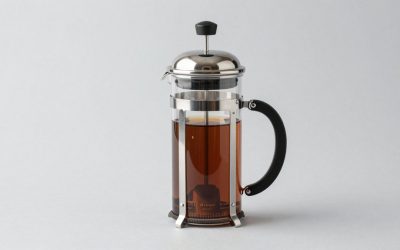
It makes sense for shared households. A 1.5- to 1.8-liter model can serve several people, and independent temperature settings are more convenient than agreeing on one default. Frequent hot-water users—including people who prepare oatmeal, instant noodles, cocoa, or multiple French presses—may also appreciate the speed and automatic shutoff.
Consider one if safety and convenience matter more than minimalist design. Automatic shutoff, boil-dry protection, and a cordless base are helpful features for busy kitchens. Look for clearly labeled controls, a comfortable handle, a stable base, and a lid that opens wide enough for cleaning.
Who Should Skip It
Skip the upgrade if your routine is simply “fill, boil, pour.” A basic electric kettle will handle that job well, often with fewer buttons and a lower price. You also do not need variable temperature control if you primarily boil water for pasta, cooking, or standard black tea.
It may not be worthwhile in a very small kitchen where an extra appliance is difficult to store. A stovetop kettle or saucepan may be adequate if you only heat water once or twice a week. Likewise, skip models with features you will not use, such as built-in tea infusers, elaborate displays, or a large reservoir that takes up valuable counter space.
Cheaper Alternatives
| Option | Cost | Trade-off |
|---|---|---|
| Basic electric kettle | Check on Amazon | Fast and simple, but usually offers only on/off boiling rather than temperature selection. |
| Stovetop kettle | Check on Amazon | Does not need a countertop outlet, but requires more supervision and has no automatic shutoff. |
| Saucepan plus kitchen thermometer | Varies | Can reach a specific temperature, but is slower, less tidy, and less convenient for repeated cups. |
| Cosori 1.7-liter standard electric kettle | Varies | A lower-cost route to fast boiling and a 1.7-liter capacity, but not a substitute for adjustable presets. |
| Chefman 1.8-liter temperature-control kettle | Varies | Adds temperature presets and a tea infuser at a modest price, though its glass body may need more visible cleaning. |
FAQ
Does a variable temperature kettle boil water faster?
Not necessarily. Speed depends mainly on wattage, starting water temperature, fill level, and kettle design. A 1,500-watt kettle will generally heat faster than a 1,000-watt model, but a variable-temperature kettle may intentionally stop below boiling. Check the listed wattage and capacity rather than assuming temperature control means faster heating.
What temperature should I use for tea?
Use the manufacturer’s recommendations for your particular tea, but a practical starting range is 160°F to 180°F for delicate green or white tea, 180°F to 195°F for oolong, and about 200°F to 212°F for black tea and herbal infusions. Taste is personal, so adjust the setting or steeping time if the result is weak or bitter.
Is stainless steel or glass better?
Neither is universally better. Glass makes the water level easy to see and can look attractive, but mineral buildup is more obvious and the body is breakable. Stainless steel is typically more durable and opaque, though the exterior can get hot. Whichever material you choose, prioritize a comfortable handle, a wide opening, and accessible parts for cleaning.
How long should a variable temperature kettle last?
There is no universal lifespan because durability depends on construction, usage, water hardness, and maintenance. Regular descaling, avoiding operation when empty, and not overfilling can help. For a purchase in 2026, also check the warranty length, replacement-part availability, and whether the temperature controls are easy to use before choosing a model.
Overall, the answer to “is a variable temperature electric kettle worth it” is conditional but favorable: it is a worthwhile upgrade for tea drinkers, pour-over coffee makers, and anyone who uses hot water throughout the day. For everyone else, a reliable basic kettle is probably the smarter buy.
Write Your Review
No reviews yet. Be the first to share your experience!