
Key takeaways
- It saves time every morning. Preparing the machine the night before can turn brewing into a hands-off task. The practical benefit is greatest for families, commuters, and anyone who wants coffee immediately after waking.
- It offers consistent timing. A timer produces coffee at the same scheduled time rather than relying on memory or a rushed morning routine.
- It can make a full pot. A 10- or 12-cup brewer is more efficient than single-serve brewing when multiple people want coffee or when you drink several cups over a morning.
- It is inexpensive compared with many alternatives. Functional programmable models commonly cost about $30 to $80. That is a relatively small upgrade for a feature you may use every day.
- It usually includes automatic shutoff. This improves peace of mind and prevents the hot plate from running indefinitely.
- It can support better coffee habits. Because the machine handles the timing, you may be more likely to use fresh grounds and a measured amount of coffee instead of grabbing an expensive café drink.
- It is easy to share. A standard carafe works well for households with different coffee preferences, especially if people drink coffee at roughly the same time.
What's inside
The Short Answer
Yes—if you regularly want coffee ready at a specific time and currently brew one pot manually. A programmable drip coffee maker is worth the upgrade when you will use the timer at least several mornings a week; otherwise, a basic drip machine can deliver nearly the same cup for less money.
The upgrade is mainly about convenience, not dramatically better flavor. Most programmable models use the same basic process as standard drip makers: heated water passes through ground coffee and a paper filter into a carafe. What changes is the control you have over timing, batch size, warming, and sometimes brew strength.
As an Amazon Associate we earn from qualifying purchases at no extra cost to you. Product prices and availability are accurate as of the date shown and are subject to change.


What You Actually Get
A programmable drip coffee maker usually includes a digital clock, a delayed-start timer, automatic shutoff, and a removable filter basket. You add water and coffee the night before, set the desired start time, and the machine brews without further input. Depending on the model, you may also get brew-strength settings, a small-batch mode, a reusable filter, a pause-and-pour function, or a thermal carafe.
Most home models are labeled as 10- or 12-cup machines, but those “cups” are typically 5-ounce servings rather than standard 8-ounce mugs. A 12-cup reservoir therefore holds about 60 fluid ounces, enough for roughly seven or eight average mugs. If you drink large travel-mug portions, a full carafe may serve only three to five people.
Expect a countertop footprint of approximately 8 to 10 inches wide, 9 to 12 inches deep, and 12 to 16 inches tall. Height matters if the machine sits under upper cabinets, particularly when you need to lift out the lid or fill the reservoir. Most glass-carafe models weigh about 4 to 7 pounds and draw approximately 900 to 1,200 watts while brewing.
The timer is the feature that makes the difference in daily use. You can set coffee to start around 6:30 a.m., for example, instead of measuring water and grounds while half-awake. Automatic shutoff—often after two to four hours—also reduces the risk of leaving a hot plate on. However, the machine does not grind beans, measure coffee for you, or eliminate cleaning. You still need to fill the reservoir, add grounds, empty the filter, and periodically descale the brewing system.
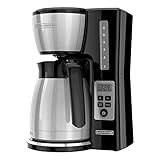
At the budget end, the BLACK+DECKER 12-Cup Drip Coffee Maker with Vortex Brewing, around $34.99, represents the basic programmable formula: large capacity, a glass carafe, a warming plate, and straightforward controls. A step-up option such as the Ninja Fresh Brew Coffee Maker, 12 Cup Glass Carafe, Stainless Steel, CE251, around $69.99, generally appeals to shoppers who want a more polished control panel and additional brewing flexibility without moving into premium pricing.
Pros
- It saves time every morning. Preparing the machine the night before can turn brewing into a hands-off task. The practical benefit is greatest for families, commuters, and anyone who wants coffee immediately after waking.
- It offers consistent timing. A timer produces coffee at the same scheduled time rather than relying on memory or a rushed morning routine.
- It can make a full pot. A 10- or 12-cup brewer is more efficient than single-serve brewing when multiple people want coffee or when you drink several cups over a morning.
- It is inexpensive compared with many alternatives. Functional programmable models commonly cost about $30 to $80. That is a relatively small upgrade for a feature you may use every day.
- It usually includes automatic shutoff. This improves peace of mind and prevents the hot plate from running indefinitely.
- It can support better coffee habits. Because the machine handles the timing, you may be more likely to use fresh grounds and a measured amount of coffee instead of grabbing an expensive café drink.
- It is easy to share. A standard carafe works well for households with different coffee preferences, especially if people drink coffee at roughly the same time.
Cons
- The flavor advantage is limited. A timer does not automatically make coffee richer or more balanced. Fresh beans, a good grinder, the correct coffee-to-water ratio, and regular cleaning matter more.
- Freshness can suffer. Coffee that sits on a warming plate for an hour or more can taste flatter or more bitter. A thermal carafe helps, but it usually raises the purchase price.
- The clock and programming can be fussy. Inexpensive machines may have small buttons, dim displays, or unintuitive timer settings. A power outage may also reset the clock.
- It takes more counter space than a minimalist brewer. A 12-cup machine can be bulky in a small kitchen, and the lid may require additional clearance.
- There is more cleaning than many buyers expect. The carafe, filter basket, and showerhead area need regular washing. Mineral buildup may require a descaling cycle every one to three months, depending on water hardness and use.
- Glass-carafe models keep heating coffee. A warming plate is convenient but not ideal for preserving flavor. If you routinely sip one pot over several hours, a thermal model may be a better upgrade.
- Capacity labels can be misleading. A “12-cup” machine does not mean twelve full 8-ounce servings, so check the reservoir size before buying.
Who Should Buy It
Buy a programmable drip coffee maker if your morning schedule is predictable and you want coffee waiting for you. It is especially useful for households where two or more people drink coffee, anyone who needs four or more cups per day, and people who currently use a nonprogrammable machine but resent waiting for it to finish.
It is also a sensible purchase for a first apartment, a home office, or a guest kitchen. The low entry price means you do not need to commit to a specialty brewing system. If you want straightforward operation, the BLACK+DECKER at about $35 is a reasonable budget benchmark. If you are willing to spend roughly $60 to $80 for more refined controls and brewing options, the Ninja CE251 is the type of step-up model to consider.
Who Should Skip It
Skip the upgrade if you make only one cup, drink coffee at unpredictable times, or already own a fast kettle and a pour-over setup you enjoy using. A programmable machine may also be unnecessary if your existing brewer has a timer that you rarely activate.
It is not the best choice for someone focused primarily on maximum flavor quality. In that case, put the money toward a burr grinder, freshly roasted beans, a scale, or a brewer with stronger temperature and extraction controls. Likewise, if you dislike cleaning appliances, a simple manual method may be less frustrating than maintaining a large automatic machine.
Cheaper Alternatives
| Option | Cost | Trade-off |
|---|---|---|
| Basic nonprogrammable drip coffee maker | $20–$35 | Lowest price, but you must start brewing manually and may get fewer controls. |
| BLACK+DECKER 12-Cup Drip Coffee Maker with Vortex Brewing | About $34.99 | Affordable programmable capacity, though the glass carafe and warming plate are less ideal for long holding. |
| French press | $15–$40 | Inexpensive and flavorful, but requires hands-on brewing and cleanup; it does not make coffee automatically. |
| Pour-over cone and kettle | $20–$60 | Compact and easy to store, but you must heat water and brew each time. |
| Ninja Fresh Brew Coffee Maker, CE251 | About $69.99 | More expensive than entry-level machines, but a practical middle ground for buyers wanting extra convenience and flexibility. |
FAQ
Does a programmable coffee maker make better coffee?
Not necessarily. It makes brewing more consistent and convenient, but flavor depends on the beans, grind size, water quality, recipe, and cleanliness of the machine. A $35 programmable brewer with fresh coffee and the right ratio can outperform a more expensive machine filled with stale grounds.
How much coffee should I use in a programmable drip maker?
A useful starting point is about 1 to 2 level tablespoons of ground coffee per 6 fluid ounces of water. For a 12-cup machine, begin with approximately 10 to 12 tablespoons for a full reservoir, then adjust to taste. Use the brewer’s marked water lines rather than assuming its “cup” equals a standard mug.
Is a glass or thermal carafe better?
A glass carafe is usually cheaper and lets you see how much coffee remains, but it relies on a hot plate and is best when coffee will be consumed within about an hour. A thermal carafe costs more and may be heavier, but it generally preserves flavor better during a longer morning. Neither option replaces prompt cleaning.
How long should a programmable coffee maker last?
With regular cleaning and descaling, a basic machine can reasonably serve for several years, though switches, seals, and heating elements eventually wear out. Replace it sooner if the brewer leaks, takes much longer to brew, produces inconsistent heat, or leaves a persistent plastic or burnt taste after cleaning. For 2026, the best value is still a reliable timer and easy maintenance rather than a long list of rarely used settings.




Write Your Review
No reviews yet. Be the first to share your experience!