
Key takeaways
- It makes batch cooking convenient. You can cook several cups of dry beans, a large pot of chili, shredded chicken, pulled pork, rice, or steel-cut oats in one vessel. That can produce four to eight servings, depending on the recipe and cooker size.
- It reduces active cooking time. Once ingredients are added and the lid is locked, the cooker regulates heat and pressure for you. You can wash dishes, portion meals, or prepare another component instead of standing over a simmering pot.
- It excels at tough and inexpensive ingredients. Dry beans, lentils, beef chuck, pork shoulder, and chicken thighs become tender without hours of stovetop simmering. This can make budget-friendly meal prep more appealing.
- It cooks grains and legumes consistently once you learn the ratios. Rice, quinoa, farro, and beans can be made in repeatable batches. Keeping a simple note of water ratios and cooking times removes much of the trial and error.
- It saves burner space. During a larger cooking session, the pressure cooker can handle beans or a protein while your stovetop remains available for vegetables, pasta, or sauce.
- It supports freezer-friendly cooking. Soups, stews, braised meats, beans, and cooked grains usually portion well into containers. A batch can provide lunches for several days or be frozen for later.
- It can replace several appliances. Sauté, slow-cook, steam, and warming functions may reduce the need for separate equipment, particularly in a small kitchen.
The Short Answer
Yes—an electric pressure cooker is worth it for meal prep if you regularly cook beans, grains, shredded meat, soups, stews, or large batches of vegetables and will use it at least once a week. Its biggest advantage is not that every recipe cooks instantly; it is that the machine handles repetitive, hands-off cooking while you prepare several portions at once.
If your meal prep mainly consists of salads, roasted vegetables, crispy foods, or small servings for one person, the answer is more conditional. An electric pressure cooker takes counter space, requires a pressure-release period, and does not brown or crisp food as well as an oven, skillet, or air fryer. For the right cooking habits, though, it can become one of the most practical appliances in a home kitchen.
Our top picks

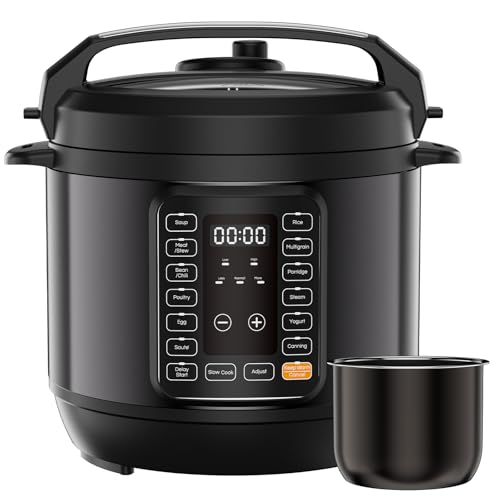
As an Amazon Associate we earn from qualifying purchases at no extra cost to you. Ratings are shown as listed on Amazon.
What You Actually Get
An electric pressure cooker combines a sealed cooking pot, electric heating element, digital controls, and safety mechanisms in one countertop appliance. Most models also function as slow cookers, rice cookers, steamers, sauté pans, and warming pots. Some include settings for yogurt, cake, beans, poultry, or sterilizing.
The useful capacity is smaller than the number printed on the box. A 6-quart cooker generally holds about 4 to 5 quarts of food when you leave room for safe pressure cooking. An 8-quart model may give you roughly 6 to 7 quarts of working capacity, making it better for large families or freezer meal prep but also larger and heavier.
Expect most 6-quart models to measure approximately 12 to 14 inches wide and 12 to 15 inches deep, with a weight of about 10 to 15 pounds. An 8-quart unit can approach 15 inches wide or deep and weigh 14 to 18 pounds. Measure the space beneath your cabinets before buying; the lid, steam, and power cord also need clearance.
Typical electric pressure cookers use roughly 800 to 1,200 watts. That is enough power to build pressure and cook food efficiently, but it does not mean dinner is ready the moment you press a button. Total time includes heating, pressure building, cooking, and releasing pressure. A recipe listed as 10 minutes under pressure may take 25 to 40 minutes from start to finish.
For comparison, a familiar 6-quart option such as the Instant Pot Duo 6 Qt 7-in-1 is listed at $109.99. A larger DUMOS 16-in-1 8-quart model is listed at $59.91. Feature count matters less than reliable temperature control, a removable inner pot, an easy-to-clean sealing ring, and controls you can understand without consulting the manual every time.
Pros
- It makes batch cooking convenient. You can cook several cups of dry beans, a large pot of chili, shredded chicken, pulled pork, rice, or steel-cut oats in one vessel. That can produce four to eight servings, depending on the recipe and cooker size.
- It reduces active cooking time. Once ingredients are added and the lid is locked, the cooker regulates heat and pressure for you. You can wash dishes, portion meals, or prepare another component instead of standing over a simmering pot.
- It excels at tough and inexpensive ingredients. Dry beans, lentils, beef chuck, pork shoulder, and chicken thighs become tender without hours of stovetop simmering. This can make budget-friendly meal prep more appealing.
- It cooks grains and legumes consistently once you learn the ratios. Rice, quinoa, farro, and beans can be made in repeatable batches. Keeping a simple note of water ratios and cooking times removes much of the trial and error.
- It saves burner space. During a larger cooking session, the pressure cooker can handle beans or a protein while your stovetop remains available for vegetables, pasta, or sauce.
- It supports freezer-friendly cooking. Soups, stews, braised meats, beans, and cooked grains usually portion well into containers. A batch can provide lunches for several days or be frozen for later.
- It can replace several appliances. Sauté, slow-cook, steam, and warming functions may reduce the need for separate equipment, particularly in a small kitchen.
Cons
- Pressure cooking is not truly instant. The cooker may need 10 to 20 minutes to reach pressure, followed by natural or quick release. A full pot can take longer to cool and release safely.
- It is not ideal for crisp textures. Pressure creates moist heat. It is excellent for tender foods but poor at browning chicken skin, roasting vegetables, baking bread, or making crispy potatoes. You may need a skillet, oven, or air fryer to finish the meal.
- The learning curve is real. Liquid requirements, maximum fill lines, natural release, quick release, and food-specific timing all matter. A few recipes may require adjustment before the texture is right.
- Cleaning is more involved than cleaning a saucepan. The lid, sealing ring, steam-release parts, and anti-block shield need regular attention. The silicone ring can retain aromas, especially after cooking chili, curry, or fish.
- It occupies substantial storage space. A cooker is tall and bulky, and many owners leave it on the counter because moving a 12- to 18-pound appliance is inconvenient.
- It can encourage too much food at once. Batch cooking is efficient only if you enjoy leftovers and have enough refrigerator or freezer space. A large pot of one recipe may become repetitive by day four.
- Safety rules cannot be ignored. Never overfill the pot, force the lid open, or block the steam-release valve. The machine has safety features, but it still needs correct use and maintenance.
Who Should Buy It
Buy an electric pressure cooker if you want practical, repeatable meal prep rather than restaurant-style finishing. It is especially useful for households that cook two or more servings at a time, eat beans or whole grains often, or want affordable proteins that can be portioned for lunches.
It is also a strong choice for people with limited stovetop space, busy weeknights, or a preference for one-pot meals. A 6-quart model is usually the most versatile size for two to four people. Choose an 8-quart model if you routinely feed five or more people, freeze large batches, or cook big cuts of meat. For one person, a 3-quart model may be easier to store, although its smaller capacity limits bulk cooking.
Who Should Skip It
Skip it if you rarely cook, dislike leftovers, or mainly prepare foods that need browning and crisping. It may also be a poor fit if your kitchen has no safe place for steam release or if you find multi-function appliances frustrating to operate.
Consider skipping it if you already own a slow cooker and a rice cooker and do not need faster batch cooking. An electric pressure cooker can duplicate those functions, but replacing appliances is valuable only if you will actually use the new machine. A basic saucepan may be enough for occasional rice, lentils, or soup.
Cheaper Alternatives
| Option | Cost | Trade-off |
|---|---|---|
| Basic 6-quart slow cooker | $25–$60 | Usually cheaper and simple to use, but cooking takes several hours and it cannot quickly prepare grains or tenderize meat. |
| Stovetop pressure cooker | $50–$100 | Often reaches pressure faster and may last for years, but it requires burner monitoring and does not offer automatic shutoff. |
| Programmable rice cooker | $25–$80 | Excellent for rice, grains, and some steaming, but less versatile for tough meats, beans, and soups. |
| Large Dutch oven or stockpot | $35–$150 | Works for nearly any stovetop or oven recipe, but uses more active heat and takes longer for beans and braised meats. |
| Sheet pans and freezer containers | $25–$75 total | Affordable for roasting several portions at once, but does not provide the hands-off cooking or moist results of pressure cooking. |
Among electric models, a realistic price range is about $60 to $150 for a mainstream 6- or 8-quart cooker, with premium machines costing more. The less expensive DUMOS 8-quart example at $59.91 may appeal to shoppers who want maximum capacity for minimum cost. The $109.99 Instant Pot Duo 6 Qt is a more conventional middle-market reference point. Whichever you choose, prioritize replacement sealing rings, a sturdy inner pot, readable controls, and a warranty over an unusually long list of presets.
FAQ
Is an electric pressure cooker good for weekly meal prep?
Yes. It is particularly effective for recipes that hold their texture for three to four days or freeze well, such as chili, lentils, beans, shredded chicken, pulled pork, soups, and cooked grains. For best results, cool food promptly, divide it into shallow containers, refrigerate what you will eat soon, and freeze the rest.
How much food can a 6-quart pressure cooker make?
A 6-quart model commonly makes about four to six entrée portions, depending on the recipe. You cannot safely fill it to the top; foamy foods such as beans and grains generally require extra headroom. If you want eight or more servings in one batch, an 8-quart cooker is more practical.
Does pressure cooking save money?
It can, but the savings come from what you cook rather than from the appliance alone. Using dried beans, inexpensive cuts of meat, bulk grains, and leftovers can lower the cost per serving. Buying a cooker that sits unused does not save money, and its electricity savings compared with a stovetop or oven will vary by recipe and cooking time.
What should a beginner make first?
Start with a forgiving recipe such as chicken stock, rice, lentils, beans, chili, or shredded chicken. Choose a recipe with clear liquid measurements and a stated release method. Avoid filling the pot near its maximum line until you understand how your model handles foaming foods.




Write Your Review
No reviews yet. Be the first to share your experience!