
Key takeaways
- Only a vague wattage claim: “Powerful motor” without a wattage or rating method makes comparisons difficult.
- Oversized capacity with a very small motor: A 64- to 72-ounce pitcher paired with less than about 700 watts may struggle with dense loads.
- No liquid guidance: If the instructions do not explain frozen ingredients or minimum liquid levels, be cautious about thick recipes.
- Unstable construction: Lightweight bases, smooth feet, and loose jar connections are warning signs when crushing ice.
- Hard-to-clean seals: Narrow crevices around the blade and gasket can trap fruit and sour odors.
- Unclear warranty terms: Avoid assuming that a listed warranty covers wear items, cups, or blades.
- Overfilling instructions: The container should have visible headroom. Packing it to the lid can prevent circulation and overload the motor.
What's inside
Choosing a blender for frozen fruit is less about chasing the biggest number on the box and more about matching wattage to the way you blend. Many shoppers see “1,400 watts” and assume it will automatically make smoother smoothies, while others buy a compact 600- to 700-watt personal blender and expect it to handle a full load of rock-hard berries with little liquid. Both approaches can lead to frustration.
The answer to “what wattage blender do I need for frozen fruit” depends on portion size, ingredient hardness, blending time, and whether you want a drinkable smoothie or thick bowls and nut butters. For most individual frozen-fruit smoothies, look for at least 700 to 900 peak watts. For larger batches, dense mixtures, or frequent ice blending, 1,000 to 1,500 watts is a more comfortable range. This 2026 buying guide explains what the wattage label does—and does not—tell you before you spend your money.
As an Amazon Associate we earn from qualifying purchases at no extra cost to you. Product prices and availability are accurate as of the date shown and are subject to change.


Decide These 3 Things First
- How much will you blend? A 20- to 24-ounce cup is suitable for one smoothie. A 64- to 72-ounce pitcher is better for several servings, but larger containers usually need more motor power to move ingredients effectively.
- How frozen and thick are your recipes? Frozen banana pieces, berries, mango, and pineapple are easier when cut into smaller chunks and combined with liquid. Ice-heavy drinks, smoothie bowls, and low-liquid recipes place much more strain on the motor.
- How often will you use it? Occasional smoothies do not require the same construction as daily blending. If you blend every morning, a sturdier full-size model with a stronger warranty may provide better value than repeatedly replacing a budget personal blender.
Size and Capacity
Container size affects both convenience and blending performance. Personal blenders with 20- to 24-ounce cups are compact, easy to store, and commonly designed for one serving. A 700- to 900-watt personal blender can handle frozen fruit well when the cup is not overfilled and contains approximately 4 to 8 ounces of liquid.
For two to four servings, choose a full-size blender with a 48- to 72-ounce pitcher. A 1,000- to 1,500-watt motor is generally a better match for this capacity, especially if you regularly use frozen fruit, ice, protein powder, or leafy greens. Do not assume a larger pitcher is always better: a very small smoothie in a large jar may circulate poorly, while a packed personal cup can stall if there is not enough liquid.
Check the blender’s footprint before buying. Compact personal bases are often around 5 to 7 inches wide and 6 to 8 inches deep. Full-size bases commonly occupy about 7 to 9 inches in width and 8 to 10 inches in depth, with a total height of roughly 15 to 19 inches when the pitcher is attached. Measure beneath your cabinets, not just across the counter.
Material and Blade Design
Most blender jars are made from plastic, glass, or a combination of materials. Plastic pitchers are lighter—often 1.5 to 3 pounds empty—and less likely to shatter if dropped. They can, however, scratch and retain odors over time. Glass is more resistant to staining and odor but may weigh 4 to 7 pounds before ingredients are added, making it less convenient for frequent pouring.
For frozen fruit, stainless-steel blades are the normal choice. Look for a blade assembly with four to six blades or a manufacturer-designed blade system that creates a strong downward-and-outward circulation. Blade count alone is not a guarantee of performance. The angle of the blades, jar shape, motor torque, and programmed speeds matter just as much.
Check whether the blade assembly is removable and dishwasher-safe. Some personal blender blades remain attached to the drinking cup lid, so inspect the threads and gasket for trapped fruit. A wide, tapered jar generally gives frozen pieces more room to circulate than a narrow, straight-sided container.
Construction and Durability
Wattage describes electrical power, not necessarily durability. A blender advertised at 900 peak watts may be suitable for a single smoothie, but the base, coupling, bearings, jar, and cooling system determine how well it handles repeated use. “Peak watts” usually refers to the motor’s maximum output under specific conditions; operating or rated watts may be lower. Compare like with like whenever the manufacturer provides both figures.
For occasional use, a plastic base and a 700- to 900-watt motor can be perfectly practical. For daily use, favor a heavier base—roughly 5 to 10 pounds for a full-size machine—with rubber feet, a metal or reinforced drive coupling, and a jar that locks securely. A stable base is particularly important when blending ice or thick frozen mixtures, which can cause cheaper machines to walk across the counter.
Do not blend frozen fruit that is completely frozen into one solid block. Separate pieces first, cut large chunks to about 1 inch, and add liquid before starting. These simple steps reduce stress on the drive system more effectively than buying a dramatically higher wattage.
Comfort and Performance
Controls should match your habits. A simple personal blender with one-touch operation is convenient for smoothies, but it may offer little control if the mixture stalls. Full-size models commonly provide low, high, pulse, and preset programs. A pulse button is useful for breaking up frozen pieces without immediately committing to a long blend cycle.
Automatic programs can help with consistency, but they do not replace adequate liquid or correct loading. When making a frozen-fruit smoothie, start on low for 10 to 15 seconds, increase speed, and use the tamper or pulse function if the manufacturer permits it. Allow the motor to rest between demanding cycles; two or three short blends are kinder to a small motor than one prolonged, stalled cycle.
Noise is another practical consideration. High-powered blenders are typically loud, particularly when crushing ice. Look for a unit with a secure lid, non-slip feet, and a cord at least 24 to 36 inches long if your outlet is not directly behind the appliance. Dishwasher-safe cups and lids can save more time over a year than an extra 100 watts.
Price Tiers
Budget personal blenders usually cost about $25 to $70 and offer roughly 600 to 900 peak watts, a 20- to 24-ounce cup, and basic controls. The Consciot 11-Piece Blender, listed at $27.99 with 900 peak watts, represents this category. At this price, inspect the warranty, replacement-cup availability, and whether the blade lid is easy to clean.
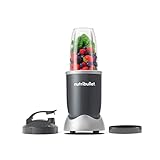
Midrange personal and full-size models generally cost $60 to $130. They may include multiple cups, a 48- to 72-ounce pitcher, preset programs, or improved controls. The 900-watt Ninja Nutri-Plus Personal Blender at $69.97 and the 700-peak-watt nutribullet personal blender at $59.96 illustrate how personal models can differ in accessories and capacity even when their prices overlap.
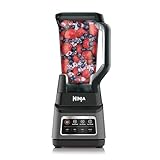
Premium and high-powered household blenders often begin around $130 and can exceed $400. For a more affordable full-size option, the 1,400-watt Ninja Professional Plus Blender at $109.99 offers a larger 72-ounce pitcher and automatic programs. Compare the actual included accessories rather than assuming a higher price always means smoother results. For frozen fruit alone, a well-designed 900-watt personal blender may be enough.
Warranty and Service
A warranty is particularly important when buying a blender for thick mixtures. Budget products may include coverage for one year, while some midrange and premium models provide one to several years depending on the product and registration requirements. Confirm whether the warranty covers the motor only or also includes the pitcher, cups, blade assembly, and seals.
Also check whether replacement parts can be purchased separately. A $60 blender is less economical if a cracked cup requires replacing the entire base. Before purchase, verify that the manufacturer lists replacement containers, lids, gaskets, and blade assemblies. Keep the receipt and register the product if registration is required for extended coverage.
Delivery and Assembly
Most countertop blenders require little assembly, but count every component when the package arrives: base, jar or cup, blade assembly, lid, gasket, tamper, and any travel lids. A personal blender may weigh about 3 to 6 pounds packaged, while a full-size model can arrive at 10 to 16 pounds depending on accessories.
Inspect the pitcher for cracks and check that the blade spins smoothly by hand only when it is safely disconnected from the base. Do not operate a blender with a missing gasket or an improperly seated jar. If delivery leaves the box in a cold garage or hot vehicle, let the appliance reach room temperature before use. Retain the packaging until you have completed several test blends.
Spec Checklist
| Spec | Budget | Mid | Premium |
|---|---|---|---|
| Best use | Occasional single smoothies | Daily smoothies and small family batches | Frequent thick blends and large batches |
| Motor label | 600–900 peak watts | 900–1,400 peak or advertised watts | 1,200–1,800+ watts, depending on rating method |
| Container | 20–24 ounces | 24–72 ounces | 48–72+ ounces |
| Typical price | $25–$70 | $60–$150 | $150–$400+ |
| Ideal frozen-fruit load | 4–8 ounces of fruit plus liquid | 8–24 ounces of fruit plus liquid | Large batches, ice, and thicker recipes |
| Useful features | Travel cup and dishwasher-safe parts | Pulse, multiple speeds, or presets | Heavy base, variable speed, tamper, longer warranty |
Red Flags
- Only a vague wattage claim: “Powerful motor” without a wattage or rating method makes comparisons difficult.
- Oversized capacity with a very small motor: A 64- to 72-ounce pitcher paired with less than about 700 watts may struggle with dense loads.
- No liquid guidance: If the instructions do not explain frozen ingredients or minimum liquid levels, be cautious about thick recipes.
- Unstable construction: Lightweight bases, smooth feet, and loose jar connections are warning signs when crushing ice.
- Hard-to-clean seals: Narrow crevices around the blade and gasket can trap fruit and sour odors.
- Unclear warranty terms: Avoid assuming that a listed warranty covers wear items, cups, or blades.
- Overfilling instructions: The container should have visible headroom. Packing it to the lid can prevent circulation and overload the motor.
FAQ
Is 700 watts enough to blend frozen fruit?
Yes, for one serving when the fruit is cut into manageable pieces and blended with enough liquid. A 700-watt personal blender is less suitable for large quantities, mostly frozen mixtures, or frequent ice crushing.
Is 1,000 watts enough for frozen fruit smoothies?
For most household smoothies, 1,000 watts is a strong middle ground. It can handle larger portions than a personal blender, but jar shape, blade design, ingredients, and loading technique still affect the result.
Do I need 1,500 watts for frozen fruit?
Not usually. Choose around 1,500 watts if you make large batches, thick smoothie bowls, ice-heavy drinks, or dense recipes several times a week. For ordinary single-serve smoothies, 700 to 900 watts may be sufficient.
What liquid-to-frozen-fruit ratio should I use?
Start with about 1 cup of liquid for 1 1/2 to 2 cups of frozen fruit, then adjust for texture. Add liquid first, followed by softer ingredients and frozen pieces. Use less liquid for a bowl, but expect to pulse, stop, and scrape according to the manufacturer’s instructions.



Write Your Review
No reviews yet. Be the first to share your experience!