
Key takeaways
- What will you make most often? Cakes, whipped cream, and cookie dough require less sustained power than whole-wheat bread, bagels, pizza dough, or pasta dough.
- How much do you make at once? For one household, a 4.5- to 5.5-quart bowl is often enough. Large families and frequent batch bakers may benefit from 6- to 8-quart capacity.
- Where will the mixer live? A mixer weighing 20 pounds may be easy to store but can move during kneading. A 30- to 45-pound model is steadier, but it needs a permanent, deep countertop location.
What's inside
- Decide These 3 Things First
- Size: Match Bowl Capacity to Real Batch Size
- Material: Look Beyond a Metal Bowl
- Construction: Wattage Is Only One Part of Power
- Comfort and Performance: Controls Matter Every Time You Bake
- Price Tiers: Pay for Torque and Construction, Not Just Quartage
- Warranty: Treat Coverage as a Construction Clue
- Delivery and Assembly: Plan for Weight and Counter Space
- Spec Checklist
- Red Flags
- FAQ
Choosing a stand mixer by wattage alone is one of the most common buying mistakes. A larger number on the box does not automatically mean a stronger mixer, and a mixer with a generous bowl may still struggle with dense dough if its transmission, motor cooling, or gearing is poorly designed. Capacity can also be misleading: a 6.5-quart bowl does not mean you should fill it with 6.5 quarts of flour or batter.
- Decide These 3 Things First
- Size: Match Bowl Capacity to Real Batch Size
- Material: Look Beyond a Metal Bowl
- Construction: Wattage Is Only One Part of Power
- Comfort and Performance: Controls Matter Every Time You Bake
- Price Tiers: Pay for Torque and Construction, Not Just Quartage
- Warranty: Treat Coverage as a Construction Clue
- Delivery and Assembly: Plan for Weight and Counter Space
- Spec Checklist
- Red Flags
- FAQ
The better approach is to match the mixer to your recipes, batch sizes, and available counter space. A home baker making cookies twice a month has very different needs from someone kneading several loaves every weekend. Use the following guide to compare motor wattage and capacity realistically in 2026, while also considering construction, controls, warranty, and delivery.
As an Amazon Associate we earn from qualifying purchases at no extra cost to you. Product prices and availability are accurate as of the date shown and are subject to change.


Decide These 3 Things First
- What will you make most often? Cakes, whipped cream, and cookie dough require less sustained power than whole-wheat bread, bagels, pizza dough, or pasta dough.
- How much do you make at once? For one household, a 4.5- to 5.5-quart bowl is often enough. Large families and frequent batch bakers may benefit from 6- to 8-quart capacity.
- Where will the mixer live? A mixer weighing 20 pounds may be easy to store but can move during kneading. A 30- to 45-pound model is steadier, but it needs a permanent, deep countertop location.
Size: Match Bowl Capacity to Real Batch Size
Stand mixer capacity is usually listed in quarts, but usable capacity depends on the attachment, ingredient density, and recipe. A 4.5- or 5-quart mixer is suitable for most cakes, frostings, whipped cream, and standard cookie recipes. It can also handle modest yeast-dough batches, commonly around 1 to 2 loaves, depending on the manufacturer’s instructions.
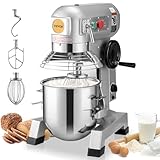
A 6- to 7-quart bowl gives you more working room for double batches and larger amounts of dough. It is a practical range for families, holiday baking, or recipes that use 8 to 12 cups of flour. An 8-quart model is generally aimed at serious home bakers, small catering operations, or users who regularly prepare large batches. Commercial machines with 12- to 15-quart bowls can process substantially more, but they are often too large and heavy for an ordinary kitchen.
Do not compare bowl size without checking the mixer’s stated flour or dough capacity. A 6.5-quart bowl may be advertised with a 660-watt motor, while an 8.5-quart model may list 900 watts; neither number alone tells you how much dough it can safely knead. Leave room for ingredients to circulate and for expansion. Overfilling increases strain, splashing, and uneven mixing.
Material: Look Beyond a Metal Bowl
Stainless steel is the most useful bowl material for most buyers. It is durable, dishwasher-friendly on many models, resistant to staining, and unlikely to retain odors. Bowl thickness matters: a very light bowl can dent more easily and may vibrate during heavy mixing, while a heavier bowl usually feels more secure on its locking platform.
Plastic bowls can reduce weight and cost, but they may scratch, cloud, or retain grease over time. Glass bowls make ingredients visible and can be useful for proofing or microwaving when specifically rated for that purpose, but they are heavy and breakable.
Also inspect the attachments. A coated aluminum beater may be lighter and less expensive, while stainless-steel attachments generally offer better long-term durability. Some aluminum attachments should not go in the dishwasher because the finish can discolor. If you frequently make stiff dough, look for a robust dough hook and a bowl that locks firmly rather than relying on a thin plastic collar.
Construction: Wattage Is Only One Part of Power
Motor wattage measures electrical input, not necessarily the mixing force delivered to the bowl. A well-geared 500- to 600-watt mixer can outperform a poorly designed mixer advertising 900 watts. Continuous operation, cooling, gear quality, and overload protection are all important.
For light-duty baking, roughly 300 to 500 watts is often adequate. For regular cookie dough and occasional bread, look in the 500- to 750-watt range, provided the manufacturer publishes a dough capacity. For frequent heavy dough, a 750- to 1,000-watt home mixer may be more appropriate. Commercial countertop machines can list 500 watts or more while using heavy-duty gearing and a slower, torque-focused design; they should not be compared directly with a lightweight consumer mixer by wattage alone.
Planetary mixing, in which the attachment rotates around the bowl while spinning on its own axis, provides broad coverage for common home recipes. Commercial spiral or gear-driven designs may be better for dense dough but can be less versatile for delicate whipping. Look for a metal drive head, a secure bowl lock, overload shutoff, and vents that are not easily blocked. A mixer weighing less than about 15 pounds may be convenient, but a 25- to 45-pound machine is usually more stable for kneading.
Comfort and Performance: Controls Matter Every Time You Bake
A mixer is only useful if it is comfortable to operate. A tilt-head design makes it easier to add ingredients and remove the bowl, while a bowl-lift design generally offers better stability for large or stiff batches. Bowl-lift models can be taller and less convenient for scraping, so measure the space beneath upper cabinets.
Six speeds are sufficient for most tasks, but a wider speed range is not automatically better. You need a genuinely slow starting speed for flour and liquids, medium speeds for creaming, and a fast setting for whipping. A timer is useful for repeatable mixing, especially on commercial-style models, but it does not replace watching the dough.
Check the machine’s dimensions with the head raised, not just its shipping size. Allow at least 3 inches above a tilt-head mixer if the head must open beneath a cabinet, and leave 2 to 4 inches on the sides for ventilation. A mixer that is difficult to lift, lock, or scrape will become an appliance you avoid, regardless of its motor rating.
Price Tiers: Pay for Torque and Construction, Not Just Quartage
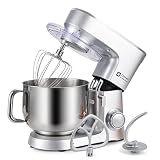
Budget: about $100 to $220. This range includes many 5- to 6.5-quart consumer mixers with approximately 500 to 700 watts and six to 10 speeds. Aucma’s 6.5-quart, 660-watt example falls into this general category at about $169.99. These machines can be good for cakes, cookies, frosting, and moderate dough, but expect more vibration and less refined speed control than on premium models.
Midrange: about $220 to $600. Mixers in this tier may offer heavier housings, stronger gears, better bowl locks, more reliable controls, and larger capacities. An 8.5-quart, 900-watt model priced around $139.99 may appear less expensive than many midrange products, but compare warranty terms, attachment quality, noise, and published dough limits before assuming it is a better value.
Premium and commercial: about $600 to $1,200 or more. These models are built for frequent use, large batches, or demanding dough. A 15-quart commercial mixer priced near $499.99 may prioritize capacity and timed operation, while an 8-quart gear-driven countertop model such as the KitchenAid KSM8990CU, priced around $999.95, emphasizes commercial construction and longevity. Buy this tier when you will use the capacity and durability—not simply because the number on the wattage label is higher.
Warranty: Treat Coverage as a Construction Clue
Budget mixers commonly include one-year limited warranties. That may be adequate for occasional baking, but read the exclusions: commercial use, worn gears, attachments, shipping costs, and accidental damage may not be covered. A longer warranty of two to five years can indicate greater manufacturer confidence, although coverage varies by motor, parts, and labor.
Keep the receipt and record the model number. Confirm whether warranty service requires shipping a 30-pound machine and whether replacement parts are available separately. A mixer with a lower purchase price can become expensive if a bowl, beater, or gear is impossible to replace.
Delivery and Assembly: Plan for Weight and Counter Space
Large mixers can arrive in boxes weighing 30 to 60 pounds, and commercial models may require two people to move safely. Check the packaged dimensions if the appliance must pass through a narrow doorway, stairwell, or elevator. Before delivery, measure the counter depth, cabinet clearance, and distance to the nearest outlet.
Most home mixers require little assembly beyond installing the bowl and attachment. Commercial machines may require a stand, bowl guard, casters, or other components. A mixer that needs a dedicated stand can require a footprint of roughly 20 by 24 inches or more. Never place a heavy appliance where its cord hangs across a walkway, and use a grounded outlet that can handle the manufacturer’s electrical requirements.
Spec Checklist
| Spec | Budget | Mid | Premium |
|---|---|---|---|
| Typical price | $100–$220 | $220–$600 | $600–$1,200+ |
| Bowl capacity | 4.5–6.5 qt | 5.5–8 qt | 8–15 qt |
| Listed wattage | 300–700 W | 500–900 W | 500–1,500 W, depending on design |
| Best use | Cakes, cookies, occasional dough | Frequent baking and larger batches | Heavy dough, high volume, commercial use |
| Typical weight | 12–22 lb | 18–35 lb | 30–60+ lb |
| Warranty target | At least 1 year | 1–3 years | 2–5 years or commercial coverage |
Red Flags
- A very high wattage paired with no published dough limit, motor details, or overload protection.
- A large bowl mounted to a lightweight plastic base that visibly shifts during mixing.
- Attachments that do not reach the bottom or sides of the bowl, leaving unmixed ingredients.
- Noisy grinding, burning odors, excessive heat, or speed surging during a short test run.
- Marketing that treats bowl capacity as flour capacity. These are not the same measurement.
- A one-year warranty with no readily available replacement bowl, beater, hook, or gear.
- Dimensions that omit the raised-head height or fail to account for a bowl handle and attachment clearance.
FAQ
How many watts should a stand mixer have for bread dough?
For occasional bread, 500 to 750 listed watts can be sufficient in a well-built home mixer. Frequent whole-wheat, bagel, or pizza dough is better suited to a sturdy 750- to 1,000-watt home mixer or a commercial-style machine with strong gearing. Always follow the manufacturer’s flour and dough limits.
Is a 6-quart mixer better than a 5-quart mixer?
Not automatically. A 6-quart bowl provides more room for double batches, but a 5-quart mixer may mix small amounts more effectively and fit your counter better. Choose the larger bowl when you regularly make larger recipes, not because the capacity number sounds more powerful.
Is a 900-watt stand mixer powerful enough?
It can be, especially for cookies, cakes, frosting, and moderate dough. Evaluate the transmission, weight, bowl lock, cooling system, and published capacity alongside the 900-watt rating. Wattage is an input measurement, not a guarantee of torque or durability.
Should I buy a commercial stand mixer for home use?
Choose one if you make large batches several times a week, need consistent heavy-dough performance, or operate a small food business. Otherwise, its 30- to 60-pound weight, larger footprint, higher price, and limited convenience may outweigh the extra capacity.



Write Your Review
No reviews yet. Be the first to share your experience!